
Last Updated on April 7, 2026 by UDC Sports
Why Some Schools and Cities Are Replacing Single-Sport Fields with Multi-Purpose Sports Facilities
Drive past enough parks and school athletic fields across the United States, and you start to recognize the difference. In one place, the field is an afterthought—chewed up by October, waterlogged by spring, and patched together with hope by people already working beyond the budget they were given.
In another, the field is treated like what it really is: a gathering place, a proving ground, a front porch for the whole community.
Friday nights matter there. Saturday tournaments matter. Band rehearsal matters. PE matters. The little kids using the same surface at 8 a.m. matter just as much as the varsity crowd under the lights.
That’s the real case for multi-sport facility construction. It’s not about chasing a fad, it’s about stewardship. Land costs too much. Time is too scarce. Maintenance dollars disappear fast. So schools and municipalities are making a more disciplined investment: one surface built to carry football, soccer, lacrosse, PE classes, youth leagues, community events, and long seasons of use without breaking down halfway through the calendar.
Schools and municipalities are under pressure to get more use from every acre they own. Athletic programs are growing, community access matters more than ever, and maintenance budgets rarely keep pace with demand.
That’s why more districts are replacing single-use grass fields with multi-purpose athletic surfaces built to handle constant play, faster turnarounds, and year-round scheduling.
A well-designed multi-sport field does more than combine (for example) football, soccer, and lacrosse onto one surface. It creates a reliable facility that can support PE classes, band practice, youth leagues, tournaments, and evening community programs without the recovery time natural grass requires. Instead of rotating worn-out fields and watching schedules collapse after bad weather, schools can keep one high-performance surface in regular use from morning through the last whistle at night.
At its best, multi-purpose sports field design solves three problems at once: limited land, inconsistent field conditions, and rising maintenance costs. The result is not just a better playing surface. It is a more useful campus/community asset.
Why Multi-Purpose Turf Fields are Gaining Ground

Traditional grass fields can look great under light use, but they break down fast when too many teams share the same space. Heavy traffic creates bare spots, compacted soil, mud, and uneven footing. Rain can shut a field down for days. Recovery takes time, labor, and money.
Synthetic turf changes that equation. A properly engineered surface can absorb far more annual play hours while holding a consistent level of traction, firmness, and drainage. That reliability matters to athletic directors trying to schedule practices back-to-back, parks departments renting to outside groups, and school leaders who need a field that stays open through a long season.
The appeal goes beyond durability. Multi-purpose sports facility construction can ultimately help districts consolidate activity onto fewer surfaces, which frees up surrounding land for other needs. One dependable field can replace the workload of several grass areas, reduce cancellations, and simplify facility management across an entire campus or park system.
For many communities, that shift also changes access. More programs can share the same venue. More hours become available after school and on weekends. A field that once served one sport now supports a much wider mix of athletes, students, and local organizations.
What Makes Multi-Sports Fields Perform under Heavy Use
A multi-purpose field is not a single product rolled out over dirt. It is a layered system engineered for drainage, safety, and repeatable performance.
At the top is the turf surface itself, including the fiber system, infill, and in many cases a shock pad that helps control impact forces. Beneath that sits a compacted aggregate base designed to stay stable under traffic while moving water away from the surface. Below the base, drainage components direct stormwater through the system so the field returns to play faster after rain.
Every layer matters. If grading is off, water can pool. If compaction is inconsistent, the surface may settle unevenly. If infill depth drifts over time, traction and ball response can change. Strong performance comes from the way the full system works together, not from one material alone.
That is why the best multi-sport fields still look and play well after a packed week of practices, games, and events. They are built for workload, not just appearance.
Designing Fields for Multiple Sports without Sacrificing Playability
The smartest fields begin with a clear picture of how the space will actually be used. Football, soccer, lacrosse, field hockey, PE classes, and marching band all place different demands on a surface. Some require better shock absorption for contact. Others rely on predictable ball roll and clean footing across open space.
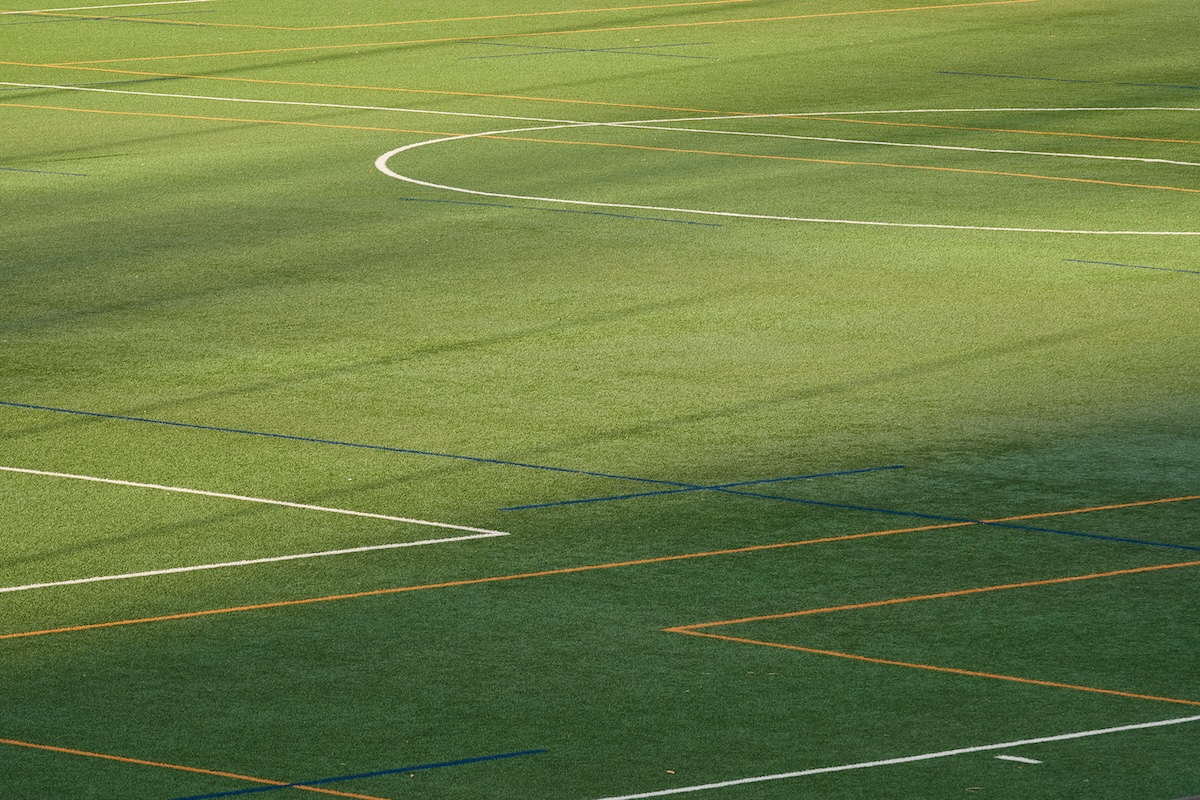
Designers balance those demands by selecting turf systems, infill blends, and shock pad options that support a broad performance range. They also plan field markings, goal placement, and runout zones so multiple sports can share the same surface without creating visual confusion or safety issues.
As you can imagine, line hierarchy is especially important. A field overloaded with markings can become hard to read during play. Good design uses color, spacing, and layout discipline so the primary sport remains clear while secondary sports stay functional.
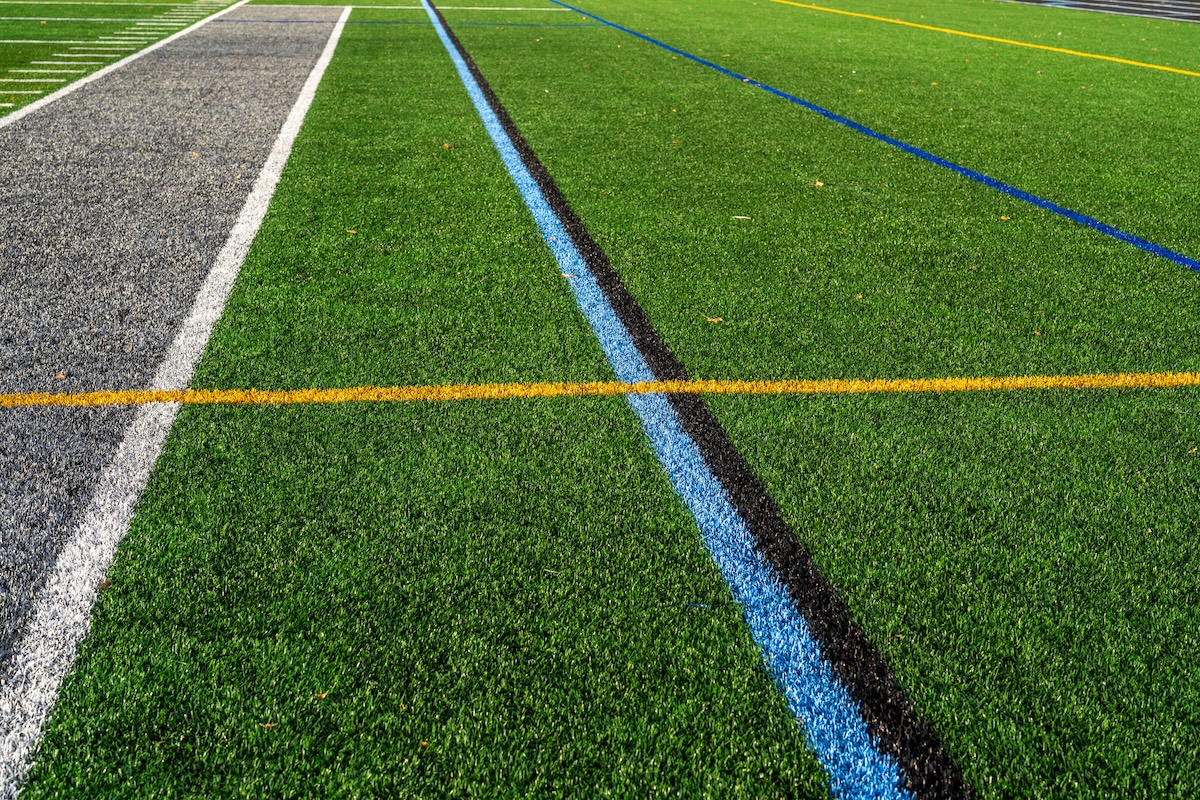
The best designs establish a clear visual pecking order so players, coaches, officials, and even spectators can read the surface at a glance. Usually that means giving the primary sport the strongest line color and the clearest presence, then assigning secondary sports lighter or less prominent colors that stay visible without competing for attention. Football fields may carry the boldest markings, while soccer, lacrosse, or field hockey lines are worked in more subtly. When that hierarchy is done well, the field feels organized instead of busy, and each sport can still use the space confidently.

Good line-marking strategy also has to account for more than color alone. Designers look at how lines intersect, where goals and team areas will sit, how much overlap players can process in motion, and whether the field will still read clearly under stadium lights or from the stands. Too many competing markings in the same zone can create hesitation, especially in fast play, so smart layouts keep conflict points to a minimum and avoid making the playing surface feel too much like a diagram.
When this work is done well, the field does not feel like a compromise. It feels intentional, organized, and ready for a full calendar.
Grass & Turf
The comparison between natural grass and synthetic turf usually starts with cost, but daily operations often drive the final decision.
Grass demands mowing, irrigation, fertilization, aeration, repair work, and recovery time. It is also vulnerable to weather and concentrated wear, especially between the hash marks, in goal mouths, and along sideline traffic paths. Under heavy use, even a well-maintained grass field can struggle to stay playable.
Turf removes many of those variables. There is no mowing, no watering, and far less disruption after storms. Crews can focus on brushing, cleaning, infill management, and inspection rather than rebuilding damaged areas every week. For districts managing multiple programs with limited labor, that predictability is valuable.
Usage capacity is another major factor. A grass field may only support a few hundred safe play hours each year before conditions decline. A synthetic field can support several times that amount while keeping a more consistent surface. That difference can reshape an athletic schedule, reduce dependence on off-site rentals, and create space for community programming that would not fit otherwise.
Turf Installation & Costs for Multi-Sport Fields
How much does it cost to build a multi-sport facility using grass or artificial turf? Well, a synthetic field usually costs more upfront than a grass field, but the long-term picture is far broader than the initial number on the proposal. The return comes from usable hours, greatly-reduced maintenance demands, fewer cancellations, and the ability to host more events on one surface. Districts that once spread activity across several worn grass fields can consolidate onto one high-capacity facility. Municipalities can rent time to clubs, run tournaments, and keep programming active through seasons that would otherwise disrupt play.
Just as important, turf makes costs easier to forecast. Grass fields can become expensive in unpredictable ways after heavy rain, seasonal damage, or repeated repair cycles. A well-built synthetic system shifts those expenses into a more manageable maintenance and replacement plan. That helps administrators budget with fewer surprises.
The real financial advantage is gaining a surface that behaves the same way week after week, which makes staffing, scheduling, and programming easier to manage.
What Changes When The Field is Part of a Stadium
Once a project expands into a larger stadium environment, the design brief gets more complex. The field still has to perform, but so do the surrounding systems.
Lighting must support multiple sports without creating glare problems. Seating layouts should preserve good sightlines across different field configurations. Conduit routes, drainage connections, scoreboard placement, and access paths all need early coordination because late changes become expensive fast.
In larger venues, surface safety standards also receive more scrutiny. Shock attenuation, surface hardness, and player impact performance should align with the relevant testing requirements. Some facilities go further by adding underfield temperature management systems or specialty components that improve playability in extreme conditions.
A successful multi-purpose stadium works as one connected environment. The field, infrastructure, and spectator experience should reinforce each other instead of competing for space.
How Construction Quality Shows up Years Later
Multi-sport fields reward precision. Small installation mistakes can become long-term performance issues, which is why experienced builders pay close attention to grading tolerances, drainage connections, seam integrity, and infill consistency.

Construction usually starts with subgrade preparation and base installation. From there, crews compact aggregate layers, verify elevations, and confirm that water will move through the system as designed. Once the turf is installed, seams are bonded, infill is placed to the correct depth, and performance checks establish the baseline for future maintenance.
What makes a field feel solid underfoot years later is often decided during these less visible stages. Clean drainage exits, stable base layers, and consistent surface finish do not stand out at ribbon-cutting time, but they make a major difference after a full season of hard use.
A field can look finished on day one and still fail early if those fundamentals are rushed. The best projects are built with the long view in mind.
A multi-purpose field does not stay high-performing on its own. Even the most durable systems need structured upkeep and disciplined scheduling.
Regular grooming helps keep fibers upright and infill evenly distributed. Cleaning removes debris before it affects drainage or surface quality. Wear monitoring helps staff address high-traffic zones before they become larger problems. Facilities that track field hours and maintenance history usually make better decisions about budgeting and resurfacing.
Scheduling discipline matters as much as maintenance. When schools and community groups all share one field, a clear use policy prevents overloading the same areas every day. Rotation plans, practice boundaries, and event spacing all help protect the surface and extend service life.
This is where many facilities separate themselves. The field may be engineered for heavy use, but it still performs best when someone is actively managing it.
Planning for Growth From the Start
One of the smartest moves in sports field construction happens before the first game is ever scheduled: planning for what the site may need next.

That can include future seating expansion, conduit for added lighting or broadcast needs, upgraded access for maintenance vehicles, or stormwater capacity that supports later development. Schools and municipalities that think a step ahead can avoid costly rework when participation grows or programming changes.
A multi-purpose field rarely operates in isolation. It connects to parking, pedestrian flow, utilities, security, and broader campus circulation. Treating it as part of a larger facility system creates more flexibility later and usually lowers expansion costs over time.
Where Turf Sports Field Construction is Heading Next
Modern turf systems continue to evolve. Manufacturers are introducing recyclable components, alternative infill options, improved UV stability, and materials aimed at lowering surface heat. Some facilities are also exploring sensor-based monitoring that tracks temperature, compaction, and usage patterns in real time.
These upgrades matter because buyers now expect more from a field than simple durability. They want safer play, longer life, better environmental performance, and maintenance data that supports smarter decisions.
The next generation of multi-purpose fields will likely focus on the same core goal as today’s best systems: more dependable play with fewer operational headaches. The difference is that future designs will have better tools to measure and maintain that performance across the life of the field.
The Bottom Line
Multi-purpose sports field design has become one of the most practical ways for schools and municipalities to expand athletic access without expanding their footprint. A well-planned turf system can handle more play, recover faster after weather, reduce routine maintenance, and support a much wider range of programs on a single surface.
Coaches can schedule with confidence. Maintenance teams can work from a predictable plan. Players get stable footing and consistent conditions. Communities gain a shared facility that stays active through more of the year.
At its best, a multi-sport field does more than host games. It gives a district or a town a dependable asset that works hard every day, holds up under pressure, and reflects well on the people responsible for building a multi purpose sports facility in the first place. When the design is right, you are not merely installing turf. You are creating a place that can serve the whole community with the kind of consistency natural grass rarely delivers under heavy demand.
In the end, the best multi-purpose fields earn their value the old-fashioned way: by showing up every day and doing the job well. They give districts and cities a smarter way to use the land, staff, and budget they already have, while creating a dependable place the whole community can count on season after season. Long after the ribbon-cutting and first kickoff, they keep proving they were worth building.
And on a crisp fall evening or a bright spring Saturday, you can see exactly why: a great field does more than hold up under pressure—it becomes a place people are proud to call their own.

