
Last Updated on April 7, 2026 by UDC Sports
In the sports facility construction world, “multi-purpose” does not just mean a building can host more than one activity. It means the place has to keep performing when the calendar gets crowded and the uses start stacking up. Basketball on Saturday morning. Volleyball in the afternoon. A training clinic the next day. A wrestling event next month. Maybe a banquet, camp, showcase, or community rental in between.
A multi-sport facility’s design has to do more than look flexible on a concept board. It has to work when athletes, coaches, parents, spectators, staff, and vendors all show up at once.
And that is where a lot of projects separate into two groups. Some multi-use facilities are designed around the realities of sports and adapted for other uses from a position of strength. Others might be sold as “multi-purpose” because the open floor plan sounds versatile, but once scheduling gets serious, the weak spots in the design show up fast. Circulation gets messy. Storage runs short. Conversions take too long. Acoustics become a problem. Parking backs up. A space that looked highly adaptable on paper starts feeling like it is asking the staff for a favor every weekend.
For sports construction companies and contractors designing multi-sport or multi-use athletic facilities, the goal should not be to design a building that can “technically” hold different events. The goal is to create one that can support them well, without friction, without constant workarounds, and without watering down the sports experience that drives most of the demand in the first place. Courts, fields, training areas, spectator zones, team flow, equipment storage, restrooms, concessions, and entry sequences all need to be planned with game-day reality in mind, even if the facility will also host community events and outside rentals.
Good multi-purpose sports facility design starts with a simple question: Can this building handle the pace, pressure, and operational demands of athletics, while still giving you room to expand into other revenue-producing uses?
In Sports-Led Facilities, Everything Starts With Game-Day Operations
For multi-sport facilities, the design conversation usually starts with athletics and works outward from there. Courts, fields, team circulation, spectator flow, equipment storage, officials’ space, concessions, restrooms, parking, and tournament turnover all put real pressure on a building long before anyone starts talking about banquets or rentals.
If those sports-driven functions do not work well, the rest of the building will not feel truly multi-purpose in practice. Other event types can add revenue and broaden the calendar, but the athletic experience still has to set the standard.
Tips for Designing Multi-Purpose Sports Facilities
Multi-purpose sports facilities can take different forms, including indoor fieldhouses, court-based recreation centers, and outdoor sports complexes built around fields, seating, support spaces, and flexible event infrastructure. While the sports facility design details vary by facility type, the core challenge stays the same: the property has to handle overlapping uses, shifting schedules, different user groups, and the operational pressure that comes with frequent turnover.
Whether the project centers on indoor courts, outdoor fields, or a combination of both, the goal is not just to create a space that can host different sports and events, but one that can support them efficiently, comfortably, and without constant workarounds.
That said, a lot of buildings are called “multi-purpose” because they can technically hold more than one kind of event. That is not the same as being designed to do it well. A basketball court with folding chairs on it is not automatically an event venue. A conference hall with a scoreboard hanging from the ceiling does not suddenly become a strong athletics space. The difference comes down to planning for conversion, circulation, wear, staffing, storage, acoustics, utilities, and the thousand little handoffs that decide whether a building feels capable or constantly compromised.
If you are designing a multi-purpose facility, the central question is not, “What could this building host?” It is, “What can this building host without creating friction, bottlenecks, excessive labor, or an otherwise subpar experience for the people using it?”
That is where good projects separate themselves. When designing a multi-purpose facility, focus on how the building will switch between uses, how different user groups will move through it, how infrastructure supports different event types, how durable the finishes and systems are under heavy traffic, and how the facility will operate over time, not just how it will photograph when it is new.
Start With the Event Mix
Before anyone gets too attached to a dramatic lobby rendering or a clever room layout, define the building’s job.
A strong multi-purpose facility starts with a grounded event mix. What will it host most often? Youth sports leagues? Weekend tournaments? School assemblies? Banquets? Indoor training? Vendor expos? Corporate events? Community programming? Performances? Private rentals?
Those uses are not interchangeable just because they all happen indoors.
Each one puts different demands on the building. Sports drive concerns like floor resilience, spectator flow, team staging, equipment storage, and restroom peaks between games. Conferences and banquets create different priorities, such as acoustics, lighting control, divisible rooms, AV support, kitchen access, and a lobby that can handle mingling without feeling jammed. Trade shows bring loading, booth power, ceiling height, and freight movement into the picture. Community events may put more pressure on flexibility, public access, and easy supervision.
The best way to avoid a confused building is to rank uses honestly. There is a primary use, a secondary use, and a longer tail of occasional rentals. Design should reflect that hierarchy. If every purpose is treated as equally important, the result is often a compromise that serves none of them especially well.
Design Around Flexibility, Because That’s the Whole Game

On paper, a room can be used for five different things. In practice, it only works if staff can change it over without burning half a day, dragging equipment across the wrong surfaces, or storing chairs and tables in places that block circulation.
This is why conversion planning deserves far more attention than it usually gets in lightweight articles on the subject.
Ask practical questions early:
- Where do tables, chairs, portable bleachers, athletic equipment, pipe and drape, staging, score tables, floor protection, and carts live when they are not in use? How far do they have to travel?
- Are the storage rooms placed where staff can move gear without crossing public paths?
- Are door widths, turning radiuses, and floor transitions suited to carts and large items?
- Can one staff team convert the space efficiently, or does every changeover become an event in itself?
A multi-purpose room that takes too long to flip ends up getting used less flexibly than the brochure promised. Staff begin steering rentals toward the easiest setup instead of the most profitable or appropriate one. Over time, the building starts dictating programming instead of supporting it.
On the other hand, a multi-purpose facility that can be flipped efficiently tends to stay genuinely multi-purpose in practice, not just on paper. Staff are far more willing to book a wider mix of events when the setup change is straightforward, fast, and predictable. That creates more scheduling freedom, better revenue opportunities, and a building that can respond to real demand instead of defaulting to whatever causes the fewest headaches.
Over time, the facility supports programming the way it was supposed to, giving operators room to be strategic rather than defensive. Instead of spending all their energy scrambling to prevent problems, they can start calling plays, taking smart chances, and going after the kinds of events that make the calendar stronger and the building more valuable. That’s when a multi-purpose sports facility stops playing not to lose—and starts looking like one built to move the ball.
Circulation & Crowd Separation
One of the quickest ways a multi-use facility feels poorly planned is when everyone is in everyone else’s way.
A tournament crowd, a birthday party, a seniors’ exercise class, a vendor unloading carts, and a staff member hauling folding tables should not all be fighting over the same stretch of hallway. Multi-purpose facilities attract overlapping user groups, and those groups do not move the same way or at the same pace.
Good circulation design accounts for public traffic, participant traffic, staff traffic, and service traffic as separate needs. That does not mean every building needs grand, elaborate separation. It does mean the layout should reduce conflict points.
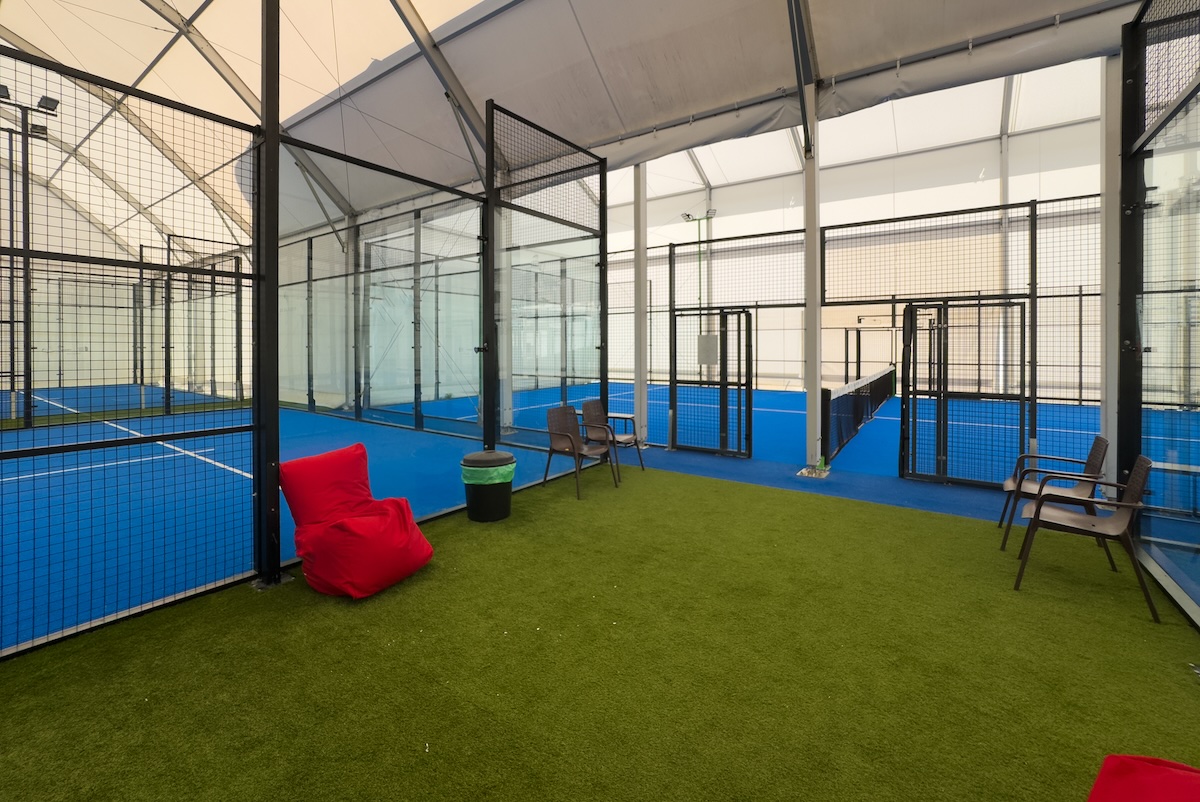
Entrances should be sized and positioned for peak arrival periods, not just average daily use. Corridors should reflect the flow that happens between games, between sessions, and during turnover periods when crowds surge all at once. Viewing areas should not choke off passage. Concession lines should not spill into the same zone where people are trying to reach courts or meeting rooms. Restrooms should be accessible without forcing people to cut through event control zones or backstage areas.
This becomes even more important in facilities serving both youth and adult populations. Parents with strollers, older visitors, athletes carrying gear, vendors with dollies, and staff moving equipment all place different demands on circulation. Good design handles that mix without turning the building into a maze.
Flexibility Means More Than Partitions
Some sports facility construction companies praise “flexibility” as if it is solved by movable partitions and stackable chairs. That might sound good in the huddle, but it’s a pretty shallow read on what a multi-purpose sports facility has to do on game day.
Useful flexibility comes from infrastructure. It means the room proportions make sense for more than one use. It means sightlines still work after the room is divided. It means power, lighting, AV, Wi-Fi capacity, acoustics, HVAC zoning, and storage support several room configurations without awkward workarounds.
For example, a gym that is also expected to host banquets and presentations may need ceiling-mounted power drops, better acoustic treatment than a standard recreation space, controllable lighting scenes, floor protection procedures, and storage planned for non-sports furnishings.
True flexibility is not about saying yes to everything. It is about being able to say yes without turning every event into an improvisation.
Floor Systems
The wrong floor can limit programming, raise maintenance costs, accelerate wear, frustrate users, and complicate conversions. Athletic surfaces (e.g. natural or synthetic grass, courts, etc.), polished concrete, luxury vinyl, retractable floor systems, and temporary floor protection each come with tradeoffs. There is no universal answer because the right choice depends on what the building is expected to host most often.
If sports are a primary use, athlete safety, traction, resilience, and line-striping strategy carry serious weight. If expos, banquets, and community rentals are a major revenue stream, the floor must also stand up to carts, tables, spills, rolling loads, and repeated setup activity. If multiple sports and event types share the same area, owners need to think through how lines will be differentiated, how event furniture will interact with the surface, and how labor-intensive protection measures will be. This is also where a lot of people underestimate maintenance. It is easy to choose a surface that looks great in a sample board review. It is harder to live with that choice when staff are dealing with scuffs, seam issues, moisture exposure, or daily turnover pressure. A smart design team looks at performance over years of operation, not just the first photo shoot.
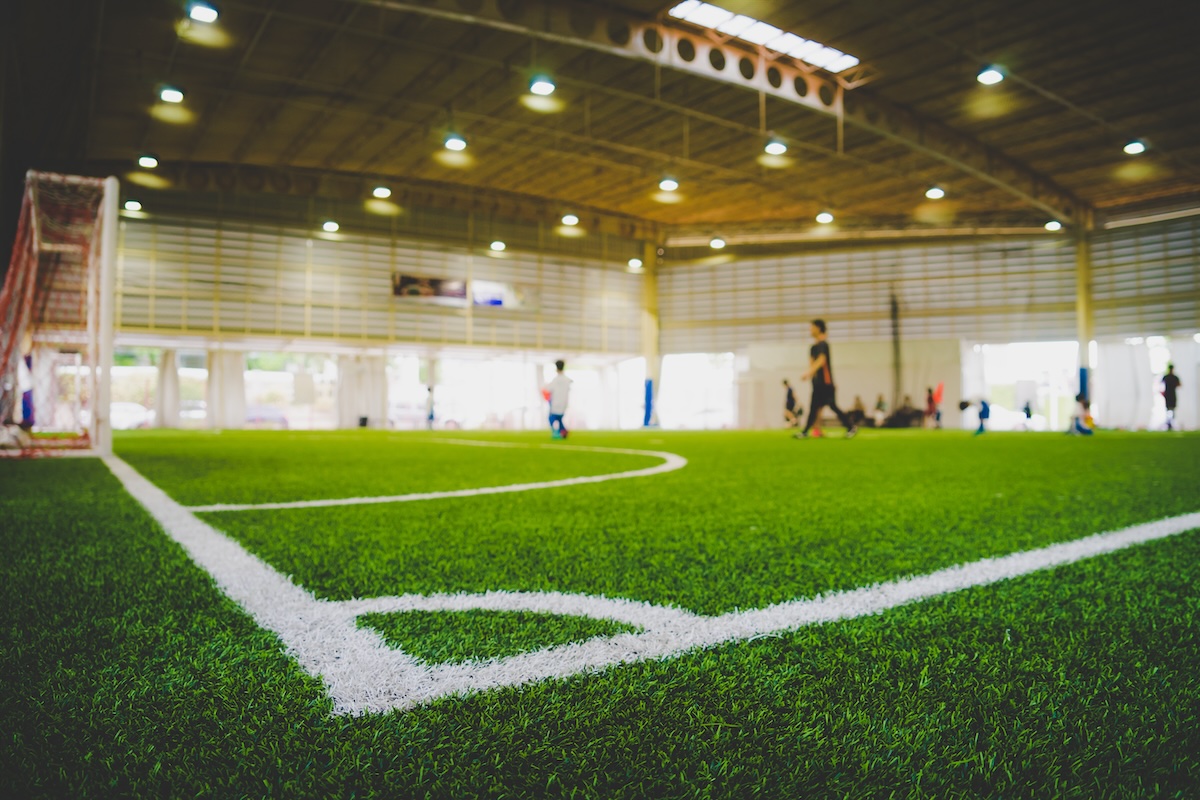
Artificial turf deserves mention here, especially in indoor fieldhouses, training centers, and multi-use complexes that need to support soccer, football, baseball or softball training, speed and agility work, camps, and year-round community programming.
Synthetic grass can expand the event mix and make a facility more marketable, but using grass or artificial turf also brings its own planning questions. Owners need to think through wear patterns, sanitation, infill or maintenance requirements, seam repairs, divider systems, rolling loads, and how turf areas will hold up when the space is used for non-sport activities.
Line Striping, Surface Wear, and Changeover Strategy
This is one of those areas that can seem minor in early planning and become a constant source of friction once the facility is in use.
In a multi-purpose sports facility, the playing surface has to do more than look good on opening day. It has to support different sports, different user groups, different traffic patterns, and repeated setup changes without turning into a visual mess or wearing down faster than expected. That is why line striping, surface durability, and changeover planning should be treated as connected decisions, not separate ones.
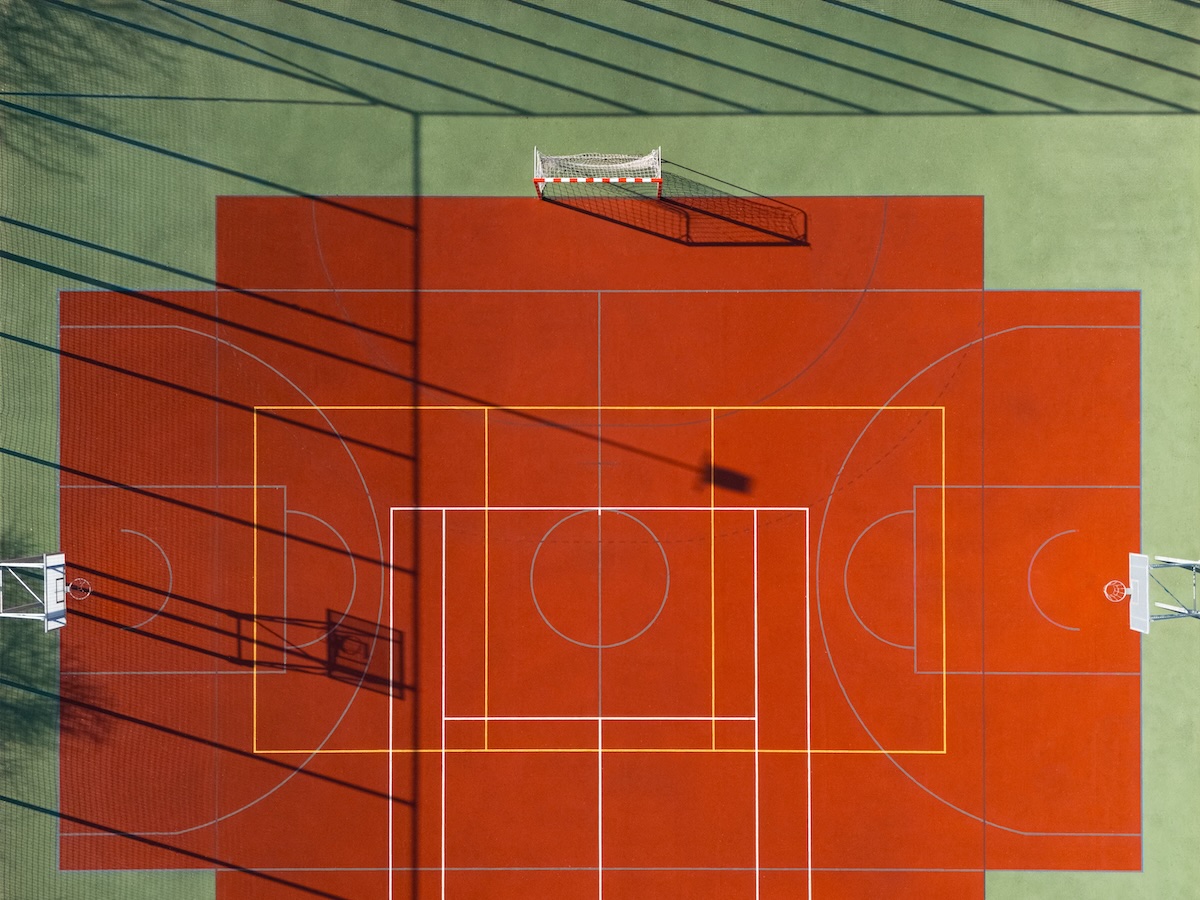
Line striping is a good example. A court that needs to support basketball, volleyball, futsal, pickleball, or other activities can quickly become hard to read if too many markings are layered onto the same surface without a clear hierarchy. Players, coaches, officials, and spectators all need to be able to tell at a glance which lines are active. If the floor starts looking like a road map, the facility may be technically multi-sport, but the user experience takes a hit. Good striping plans usually come down to discipline. Prioritize the sports that will drive the most use. Establish a visual hierarchy. Be selective about how many permanent markings the surface really needs, and think carefully before trying to force every possible use onto the same floor.
Surface wear adds another layer to the equation. Tournament weekends, daily practices, camps, community use, rolling equipment, chair setups, carts, staging, and temporary furnishings all put stress on the same area in different ways. A floor that performs well for athletics may still take a beating during non-sport events if changeovers are not planned properly. That is why owners need to think beyond sport performance alone and consider how the surface will hold up under real operating conditions over time. Protection systems, maintenance routines, cleaning requirements, and the simple reality of repeated traffic all deserve attention before materials are selected.
Then there is changeover strategy, which often determines whether a facility remains genuinely flexible in practice. Converting a space from game play to a banquet, clinic, presentation, or community event should not feel like a small military campaign every time. Staff need room to move equipment efficiently, storage needs to be close enough to make transitions realistic, and the process for protecting or reconfiguring surfaces needs to be manageable. If every turnover is slow, labor-heavy, or risky for the floor itself, the building starts losing flexibility in the real world, even if the design once looked highly adaptable on paper.
The strongest projects treat all three issues as part of one operational conversation. The striping plan should reflect the facility’s actual sports mix. The surface specification should reflect both athletic demands and non-sport wear. The changeover plan should reflect how the building will really be staffed and scheduled. When those decisions are coordinated early, the facility has a much better chance of staying readable, durable, and useful under the kind of pressure a busy multi-purpose sports environment brings.
Ceiling Height, Structure, and Rigging Capacity Can Expand or Limit Revenue
Some facility constraints do not become painful until the building is trying to book higher-value events.
Clear height is one of them.
Ceiling height affects sports use, staging options, lighting positions, temporary drape systems, suspended scoreboards, signage, event production, and the overall sense of openness in a room. Structural coordination also matters if the facility may ever need rigging points, audio equipment, theatrical lighting, divider systems, netting, suspended training gear, or future technology upgrades.
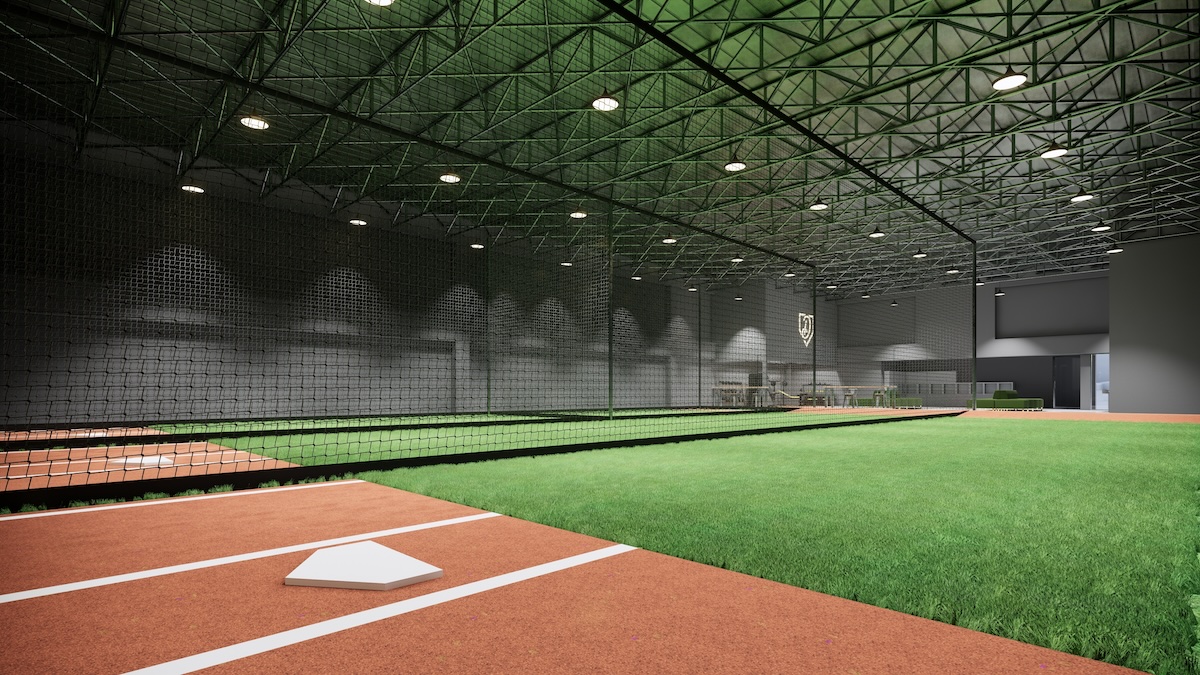
This does not mean every community facility needs arena-level rigging infrastructure. It does mean the team should be honest about what the building may be asked to do later. A room that is too low, too constrained, or too lightly planned overhead can close the door on event types that would have improved the operating model. Once the building is up, fixing those limitations gets expensive in a hurry.
Back-of-House Planning Is What Keeps the Front of House Running Smoothly
Public-facing areas get the glamour. Back-of-house areas determine how well the place functions.
Storage rooms, janitorial spaces, staff work areas, AV closets, receiving areas, loading access, team rooms, catering support, trash handling, furniture staging zones, and mechanical rooms all need thoughtful placement. If those spaces are undersized or scattered carelessly, staff pay the price every day.
A common mistake is treating storage like leftover square footage. In a multi-purpose facility, storage is operational infrastructure. It should be sized based on what the building must hold when room setups change, when sports seasons overlap, when rental inventory grows, and when equipment needs secure, organized access.
Loading and service access deserve the same seriousness. Vendors, caterers, maintenance teams, and event crews should be able to reach the areas they need without parading through the public lobby. That is a dignity issue for the building as much as a logistics issue.
Acoustics
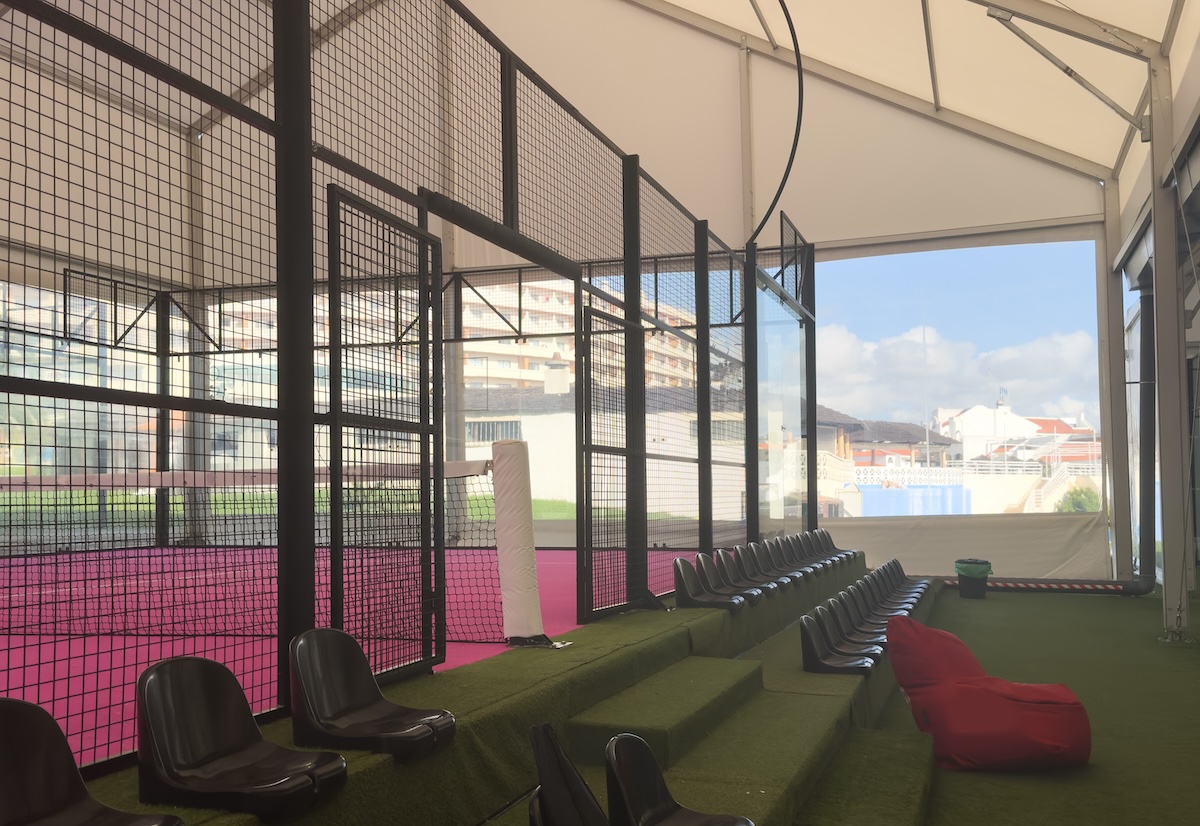
A building that hosts sports, meetings, community events, and presentations cannot rely on the acoustic logic of only one of those uses. Hard surfaces everywhere may seem durable, but they can create a tiring environment with speech intelligibility issues, excessive echo, and a constant sense of disorder when crowds build up.
This affects more than comfort. It affects announcements, meetings, presentations, coaching communication, parent conversations, front desk interactions, and the perceived quality of the facility. Poor acoustics can make a well-built space feel cheap and chaotic.
The right approach varies by room type, but the broader point is simple: if the building is meant to support multiple uses, the acoustic strategy needs to reflect that from the start.
Utilities
A multi-purpose facility should not feel underpowered the moment it hosts something outside its core program.
Power access, data distribution, Wi-Fi density, display infrastructure, broadcast capability, point-of-sale needs, scoring systems, security systems, occupancy controls, charging stations, and event technology all deserve early coordination. Even smaller community facilities are expected to support a level of connectivity and device load that would have been unusual not long ago.
Think through where temporary vendors plug in, where registration tables live, where portable AV is likely to be staged, how guest connectivity holds up during crowded events, and whether different room layouts still have practical access to power and data. It is far easier to distribute this intelligently during design than to spend years patching weak spots with extension cords, carts, and apologetic workarounds.
Accessibility
In a multi-purpose facility, accessibility should shape the design from the beginning because the building is meant to welcome a broad public. That includes visitors with mobility challenges, sensory sensitivities, limited stamina, visual impairments, hearing needs, and a range of other access considerations that influence how people move through and use the facility.
That affects entrances, paths of travel, seating variety, restroom layouts, counter heights, viewing positions, locker and changing spaces, elevator placement when needed, signage legibility, door hardware, parking relationships, and the amount of travel required between key destinations.
The best accessible facilities feel thoughtful. They make movement easier, sightlines better, and navigation less stressful for everyone.
Site Planning
A strong building on a weak site still creates problems.
Parking, drop-off areas, bus access, pedestrian routes, overflow strategies, service access, emergency vehicle access, stormwater planning, lighting, outdoor gathering zones, and wayfinding all shape the visitor experience before anyone reaches the front door.
For multi-purpose facilities, site planning is especially important because arrival patterns can vary wildly depending on the event. A weekday class, a youth tournament, a regional competition, and a vendor expo do not place the same demands on the parking lot or entry sequence. The site needs to absorb those swings without becoming disorganized or unsafe.
Don’t overlook weather exposure: Covered entries, sensible queuing space, slip-resistant surfaces, and protected transitions all improve the building’s performance during high-traffic periods.
Sustainability
A modern, well-designed multi-purpose facility can reduce waste through durable materials, efficient systems, smart controls, manageable maintenance routines, water-conscious fixtures, appropriate zoning, and building envelope decisions that support long operating hours without unnecessary energy loss. Daylighting can help in some spaces. So can occupancy controls, efficient mechanical systems, and durable finishes that do not need frequent replacement.
But operational sustainability is just as important as environmental sustainability. If the building requires excessive labor to convert, overheats during crowded events, burns through replacement finishes, or relies on awkward temporary solutions to host common functions, it is not especially efficient, no matter how nice the sustainability language sounds in the project binder.
The best facilities save resources because they are coordinated well, durable, and practical to run.
Beyond Opening Day
A multi-purpose facility is not a one-week performance. It is a long operating story.
That means the design should anticipate growth, equipment changes, technology upgrades, evolving programming, and staffing realities. Are there spaces that can take on new roles later? Is there room for added storage if rental inventory expands? Can technology be upgraded without tearing apart finished spaces? Are maintenance teams able to access building systems without disrupting public use? Can the schedule become more ambitious over time, or does the building hit its ceiling early?
Future-proofing does not mean throwing money at every hypothetical. It means identifying the areas where modest foresight now prevents costly frustration later.
Capacity vs Capability
A lot of sports facilities can fit different kinds of events.
Fewer are truly equipped to support them.
That distinction is at the heart of good multi-purpose facility design. Capability comes from the relationship between space planning, infrastructure, operations, durability, and the user experience. It comes from knowing that a building has to do more than hold people. It has to move them, serve them, support staff, absorb changeovers, protect surfaces, control noise, and keep functioning under pressure.
That is what separates a building that simply hosts events from one that earns repeat bookings and strong word of mouth.
Final Thoughts
If you are designing a multi-purpose facility, the goal should be broader than flexibility in the abstract. The goal is to create a building that can shift between uses without losing efficiency, comfort, or credibility.
That takes more than movable walls and a broad mission statement. It takes honest programming decisions, smarter storage, better circulation, well-planned utilities, durable materials, accessible layouts, and a respect for the operational side of the building. Get those pieces right, and the facility has a far better chance of staying useful, bookable, and well-regarded long after the ribbon cutting is over. The multi-purpose athletic buildings that age best are usually not the ones that tried to be everything at once. They are the ones that understood their job, were designed with discipline, and gave staff the tools to keep the place running smoothly.
When that happens, a multi-use athletic facility’s design stops sounding good on paper, and starts showing it can play four quarters. It can handle the tournament crowd, the fast turnaround, the schedule squeeze, and the added wear without staff having to reinvent the wheel every weekend. That’s the difference between a multi-purpose sports facility that looks the part and one that performs when the calendar gets full.

