
Last Updated on March 5, 2026 by UDC Sports
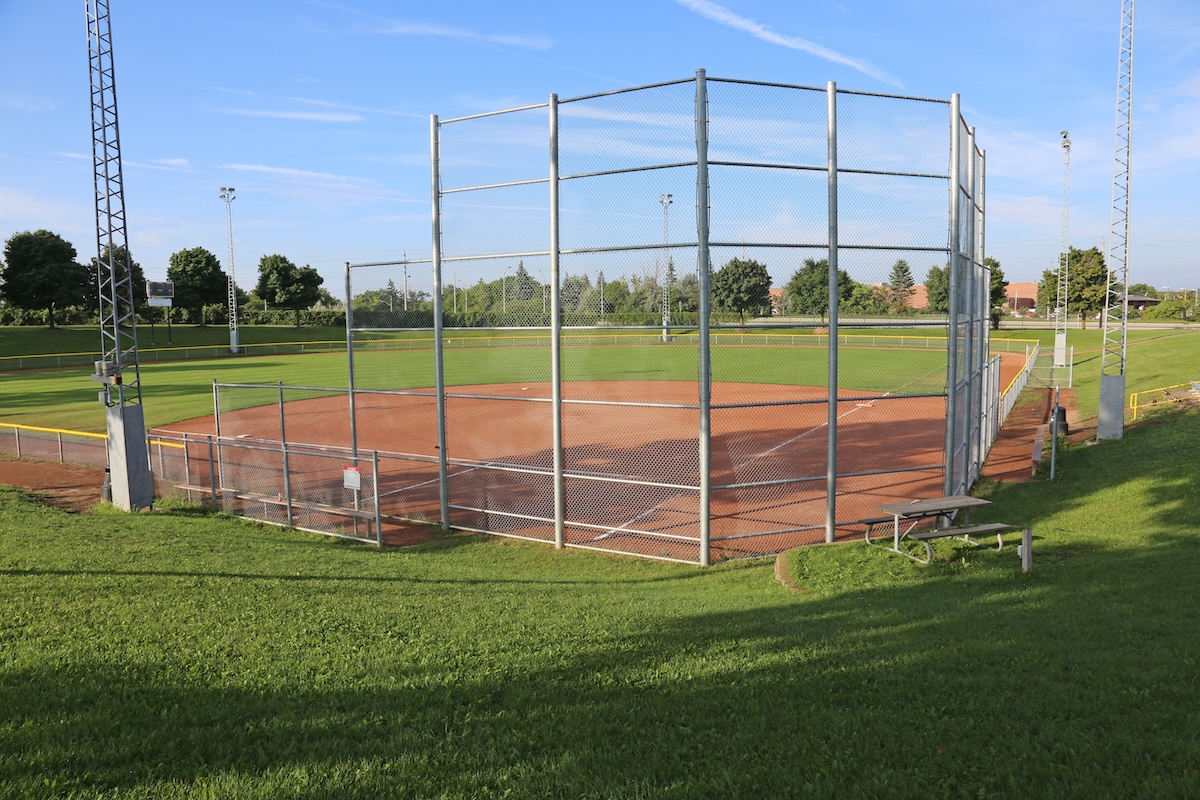
At first glance, a softball field looks a lot like a baseball diamond. Same general shape, same four bases, same familiar layout. But once you start looking closer, the measurements begin to tell a different story. The bases sit closer together, the pitcher works from a different distance, and the outfield fences land at their own set of numbers. Those details shape how the game plays.
Getting a handle on those dimensions is helpful for more than one reason. Coaches and schools often need to know the exact layout when planning a new field. Park departments and facility designers have to think about how much land the field will take up. Even fans of the game sometimes wonder how the size changes between youth leagues, high school, and college.
On a softball field, those measurements don’t stay on paper for long. A 60-foot base path determines how the infield skin is shaped and compacted. The 43-foot pitching distance fixes the center of the pitching circle and influences the grade that carries water away from the rubber. Fence depth affects how much outfield space is needed, how irrigation lines are routed, and how far the warning track sits from the wall.
That’s why softball field construction starts with a tape measure and a set of stakes long before anyone brings in heavy equipment. Once the anchor points of the diamond are established (home plate, second base, the pitcher’s rubber…) the rest of the field begins to take shape around them. Crews mark the baselines, establish the radius of the infield skin, and lay out the arc that will eventually become the outfield fence.
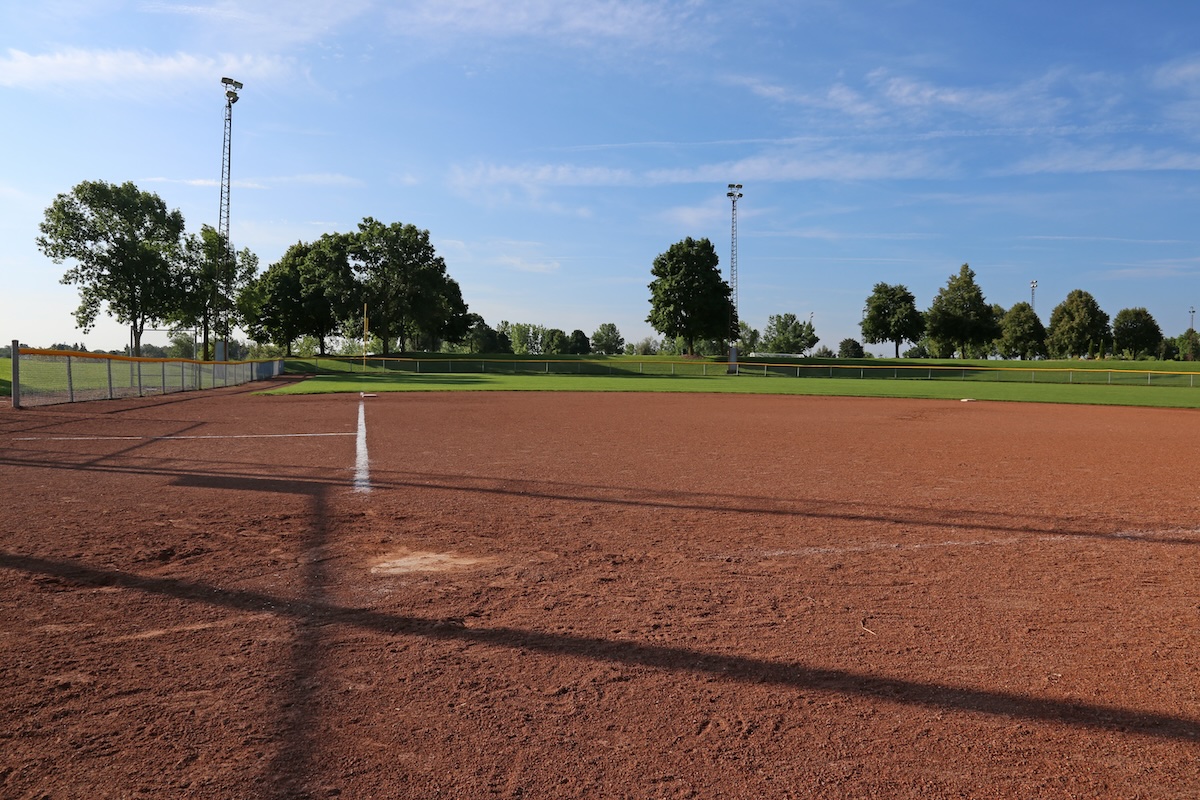
From there the construction work moves into grading, drainage planning, and surface preparation, all built around those fixed distances so the field plays the way it’s supposed to when the first pitch is thrown.
The sections below go over the standard measurements, how they adjust for different levels of play, and roughly how much space you need to build a softball field.
Standard Softball Field Dimensions
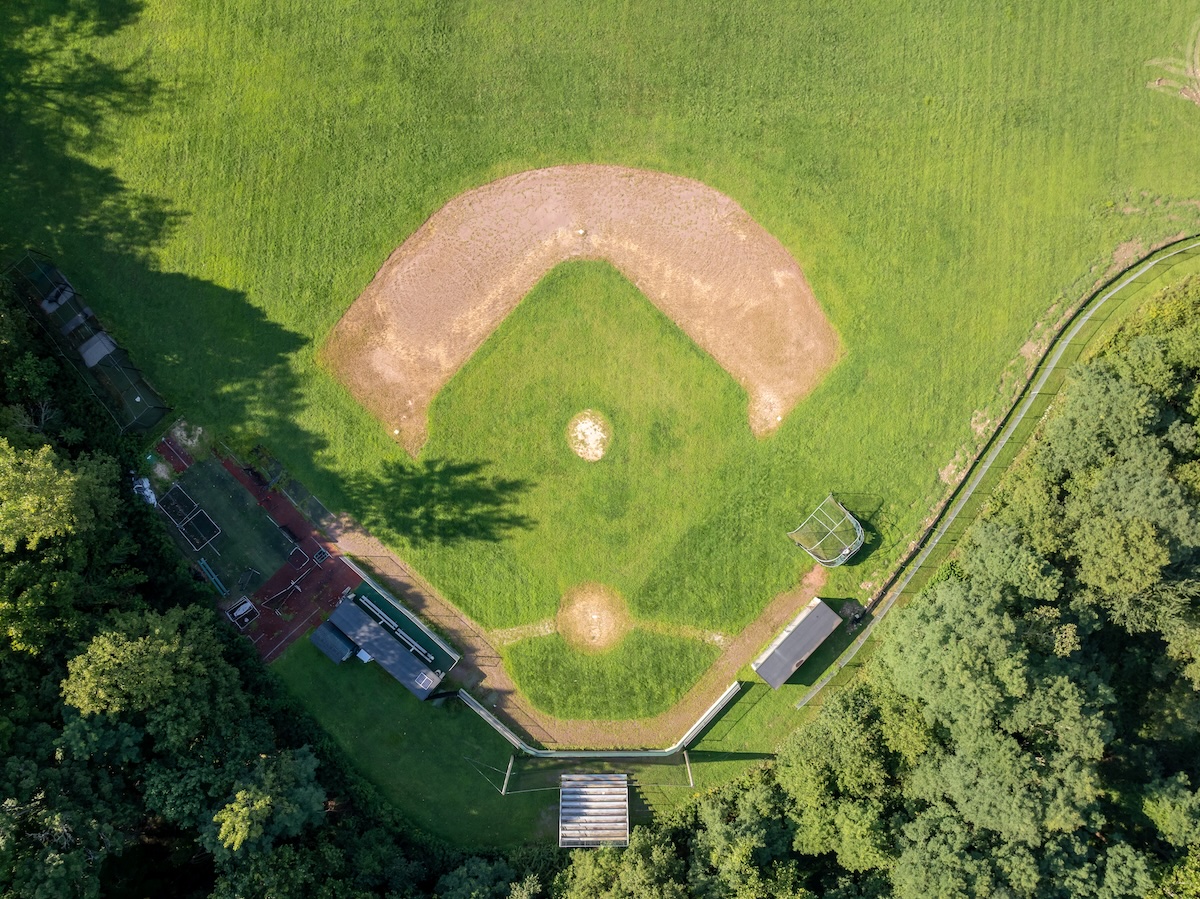
At most levels, the core layout of a softball field stays the same. The infield forms a square with bases set at equal distances, the pitcher throws from a rubber in the center of the diamond, and the outfield expands into a rounded arc toward the fence.
Typical dimensions include:
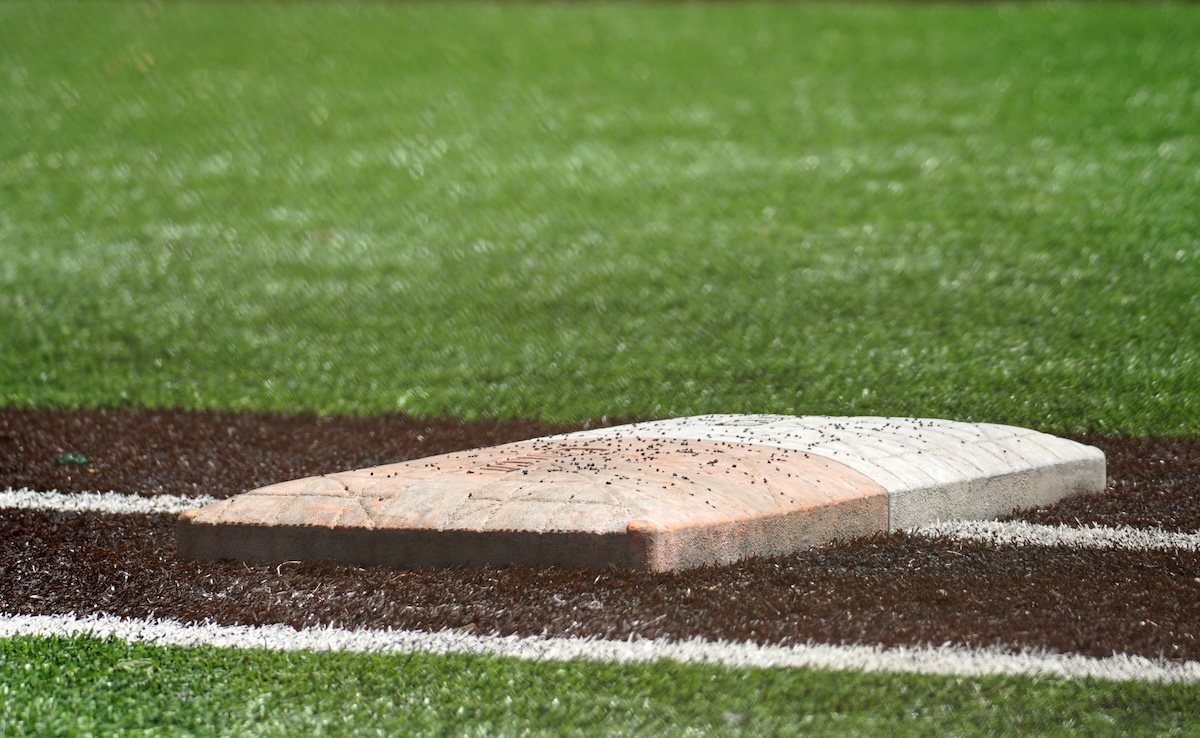
- Base paths: 60 feet between bases
- Pitching distance (fastpitch): 43 feet from pitcher’s rubber to home plate
- Pitching distance (younger leagues): often 35–40 feet
- Outfield fence distance: usually 200–220 feet from home plate for many fields
These numbers form the basic footprint used by high school, college, and many recreational fastpitch fields.
The entire playable space extends beyond the infield square, of course. The outfield grass or turf continues well past the fence, and facilities often include warning tracks, foul territory, dugouts, bullpens, and spectator areas.
How Long and Deep Are Softball Fields?
When people ask how “long” a softball field is, they usually mean the distance from home plate to the center-field fence.
That distance commonly ranges from:
- 200 feet on smaller or youth fields
- 210–220 feet on most competitive fastpitch fields
- Up to around 225 feet on some college stadiums
The corners are slightly shorter because the fence arcs outward. Down the foul lines, distances often fall around 190–200 feet, though exact measurements vary.
This gives softball its characteristic scale. The field is large enough to reward solid contact but compact enough that speed and defensive positioning play a major role.
Softball Field Dimensions in Feet (Quick Reference)
For easy reference, here are the key measurements most often cited when discussing softball field size.
- Bases: 60 feet apart
- Pitcher’s rubber to home plate: 43 feet (fastpitch standard)
- Outfield fence: typically 200–220 feet
- Home plate to second base: about 84 feet 10 inches
Those dimensions define the main geometry of the field regardless of surface type or stadium style.
College and NCAA Softball Field Size
College softball fields follow a standardized configuration used by programs competing under the rules of the NCAA Division I softball and other collegiate divisions.
Key measurements include:
- Base paths: 60 feet
- Pitching distance: 43 feet
- Minimum outfield fence distance: typically 200 feet
- Common fence distances: 210–220 feet
While those numbers establish the baseline, many college programs build slightly deeper outfields to create a balanced playing field between hitters and pitchers.
How Big Are High School Softball Fields?
High school softball fields are very similar to college diamonds.
Most follow these measurements:
- Base paths: 60 feet
- Pitching distance: 43 feet
- Outfield fences: commonly 200–210 feet
Because many schools share facilities with community leagues or municipal parks, some fields fall slightly below or above those ranges. The overall scale, however, remains consistent with the standard fastpitch layout.
Youth Softball Field Sizes (12U and 14U)
Younger divisions adjust distances to match the strength and development of players.
12U Softball Field
Typical measurements include:
- Base paths: 60 feet
- Pitching distance: around 40 feet
- Outfield fence: roughly 180–200 feet
This size maintains the same diamond layout but shortens pitching distance slightly to keep games competitive.
14U Softball Field
By this stage, many leagues transition to nearly full regulation dimensions:
- Base paths: 60 feet
- Pitching distance: 43 feet
- Outfield fence: around 200 feet
From here forward, the game closely resembles high school and college softball.
Fastpitch vs Slow Pitch Field Dimensions
Fastpitch softball uses the measurements already discussed. Slow pitch leagues sometimes expand certain areas to accommodate the different style of play.
Common differences include:
- Outfield fences: sometimes extended to 220–250 feet
- Pitching distance: typically around 50 feet
- Base paths: still 60 feet
Because slow pitch games feature higher arcs and more contact hitting, fields are occasionally built slightly deeper.
The Layout of a Softball Field
A softball field contains several distinct sections that shape gameplay.
The infield, often called the “diamond,” includes home plate, the bases, and the pitcher’s circle. Dirt or turf typically covers this section.
Beyond the infield lies the outfield, a broad arc extending toward the fence. The outfield grass or synthetic surface forms the largest portion of the field.
Other components commonly included in a softball facility include:
- Dugouts
- Bullpens
- Backstops
- Foul territory
- Warning tracks near the fence
- Spectator seating areas
All of these elements influence the total land required for the field.
What Is a Softball Field Called?
The playing surface is often simply called a softball field or softball diamond.
Because the bases form a square rotated at an angle, the infield layout resembles a diamond shape, which is why the term appears frequently in conversation.
How Many Players Are on a Softball Field?
Standard softball teams place 9 players on the field at once.
The defensive positions are:
- Pitcher
- Catcher
- First baseman
- Second baseman
- Shortstop
- Third baseman
- Left fielder
- Center fielder
- Right fielder
Some recreational slow pitch leagues add extra outfielders, but nine players remains the traditional defensive lineup.
How Much Land Do You Need for a Softball Field?
A softball field requires far more space than the playing diamond alone.
Once you account for the outfield fence, foul territory, dugouts, walkways, and safety buffers around the perimeter, the land footprint expands significantly.
Most full fields require 2 to 4 acres of land.
That estimate includes:
- The diamond and outfield
- Space behind the backstop
- Side areas for dugouts and foul territory
- Perimeter safety space beyond the fences
Facilities designed for tournaments or schools often require additional acreage for parking, warm-up areas, and practice fields.
How Many Acres Does a Softball Field Take?
When planners evaluate land requirements, they usually work with these approximate ranges:
- Minimum field footprint: around 2 acres
- Comfortable field site: about 3 acres
- Tournament complex fields: 4 acres or more per field
Multiple fields arranged around a shared hub or concession area require substantially larger parcels.
Why Softball Field Dimensions Are Important
 Field size affects almost every aspect of the game. Shorter fences encourage more home runs, deeper outfields reward defensive range, and pitching distance directly influences reaction time for hitters.
Consistent measurements also allow teams from different leagues and regions to compete on equal footing. When fields follow widely accepted dimensions, players can focus on strategy and skill rather than adapting to unusual layouts.
When a softball field is built, crews often literally transfer those dimensions onto the site. The process usually looks something like this:
The process usually looks something like this:
First, home plate gets set as the fixed origin point. Everything on the field is measured outward from there.
Next, survey stakes or layout pins are placed at key distances:
- 60 feet to first base
- 60 feet to third base
- 84 feet 10 inches to second base
- 43 feet to the pitching rubber
Those points establish the geometry of the entire diamond. Once those anchors are in place, builders use string lines and arcs to mark:
- the base paths
- the infield skin radius
- the pitcher’s circle
- the foul lines
- the outfield fence arc
After that layout is marked on the ground, the construction work follows those references. Excavation, grading, base material placement, irrigation layout, fencing, and turf installation all happen relative to those staked measurements.
The excavation crew begins shaping the footprint, peeling back topsoil where the infield skin will sit and trimming high spots so the grades line up with the layout strings. Fill gets brought in where it’s needed, then compacted in layers to create a stable base that won’t shift once the season gets underway. You’ll see plate compactors and small rollers working the surface while survey stakes and string lines stay in place, constantly checking that everything is landing where it’s supposed to.
From there the structure of the field builds up piece by piece:
- Base materials get spread and leveled, the infield mix is blended and worked into place, and drainage lines or sleeves for irrigation are set before the final surfaces go down.
- Out in the grass areas, the subgrade gets fine-tuned so water moves away from the infield rather than collecting along the baselines or around the pitcher’s circle.
- Fence posts get set along the arc that was laid out earlier, warning track stone gets placed against the perimeter, and the turf installation crew moves in once any underlying layers are installed.
By the time the grass or synthetic surface is installed and the lines are painted, most of the important decisions have already been locked in by those original measurements. Everything else—the slope of the infield, the firmness of the base paths, how water moves after a storm, even how the outfield fence sits against the warning track—flows from the way that first layout was staked out on the ground.
Softball’s field design strikes a balance between speed, power, and defense. The distances may look modest compared with baseball, but the scale of the game creates a fast, dynamic style of play that has defined softball for generations.

