
Last Updated on January 7, 2026 by UDC Sports
There’s something oddly satisfying about walking across a freshly built sports field before anyone’s ever played on it. No scuffed surfaces, no patchy sidelines. No cleat marks worn into the goal box, or muddy ruts in left field. Just crisp lines, and a sense that whatever happens here—it’ll be worth watching.
But getting to that moment? That’s the part most people never have to think about. Outside sports field builders/design firms, consultants, and contractors, the people who do have to think about the construction process usually fall into a few categories:
- School administrators and athletic directors – They’re involved from day one, helping ensure the field meets the program’s needs, stays within budget, and performs reliably over time. A well-designed artificial turf system reduces their workload and cuts down on rescheduling headaches.
- Parks and recreation departments – Responsible for maximizing field availability and longevity, they value surfaces that can handle continuous use with minimal downtime. Turf is a natural fit for community fields that serve multiple sports, age groups, and events week after week.
- Facilities managers and grounds crews – With artificial turf, routine upkeep is simple and predictable. No mowing schedules, no irrigation breakdowns, and no emergency patchwork after weather events—just regular grooming and inspections that keep the field in top form.
- Booster clubs and parent committees – Often involved in funding and advocacy, these groups appreciate investments that clearly benefit the athletes and reduce long-term costs. A durable, clean-looking turf field becomes a point of pride.
- Sports organizations and league coordinators – Whether planning tournaments or seasonal practice blocks, they need reliable surfaces that won’t get rained out or worn thin. Turf delivers that consistency—season after season, game after game.
Behind every finished field that looks sharp and plays smooth is a process with a lot of moving parts—site conditions to evaluate, drainage plans to get right, timelines to coordinate, and approvals that don’t always move as fast as the crew does. Materials need to arrive on schedule. Details like field layout, fencing, lighting, and surface selection all have to work together. It’s not complicated when you’ve done it before—but it takes precision, coordination, and the right team to bring it together without cutting corners.
This isn’t a “just pick grass or turf and go” situation. It’s about building something that holds up through the 5th overtime, the 7th grade track meet, the summer league doubleheaders, and all the days in between. Something that stays playable after a surprise thunderstorm. Something that doesn’t turn into a maintenance nightmare if you schedule two practices back-to-back.
So if you’re planning a field—any kind of field—this guide is here to lay it all out: surface options, construction phases, drainage, layout, lighting, maintenance, and all the decisions that happen before the first game ever gets scheduled. There’s a right way to do this, and it doesn’t involve guessing. Let’s get into it.
Introduction: What Goes Into Building a Sports Field

Designing and building a sports field isn’t just about getting a surface down and painting some lines. A high-performing field needs to last through thousands of cleats, year-round weather, and years of wear, without becoming a maintenance headache.
Whether you’re planning a football field, baseball diamond, or multi-use athletic facility, every decision counts: surface type, drainage, grading, lighting, fencing, even the sub-base material beneath the turf. This guide walks through each step, from the first planning meeting to the final maintenance checklist, so you know what to expect, what to prioritize, and how to avoid mistakes that cost money down the line.
I. Types of Sports Fields & Surface Materials
When designing a new sports field, one of the first major decisions is what kind of surface to use. Natural grass and synthetic turf each have their place, and which one makes sense depends on usage, budget, climate, and maintenance expectations.
Natural Grass Fields
Natural grass offers a softer playing surface and is still the standard for many professional and high-end facilities. But it requires intensive maintenance, mowing, irrigation, fertilizing, aeration, and is highly sensitive to weather. Without proper care, it can dry out, rut, or become patchy, especially in high-use areas.
Popular grass types include:
- Bermudagrass – Best for warm climates; drought-tolerant
- Kentucky Bluegrass – Ideal for cooler regions; rich color and density
Grass may have a lower upfront cost than turf, but over time, recurring maintenance often makes it more expensive.
Synthetic Turf Fields
Synthetic turf has become the go-to for schools, municipal complexes, and facilities that host multiple sports year-round. It doesn’t need mowing or watering, handles rain well, and can hold up under heavy use without tearing up.
Most modern turf systems use:
- A perforated sub-base for vertical drainage
- Infill layers (rubber, sand, or cork) between synthetic blades for shock absorption and ball response
Newer synthetic fields typically last 8–10 years. Recycled turf (from pro or college fields) is also becoming more common for budget-sensitive installs.
Which One’s Right for You?
| Factor | Natural Grass | Synthetic Turf |
| Initial Cost | Lower | Higher |
| Maintenance | High | Low |
| Play Frequency | Limited | Year-Round |
| Lifespan | Long with care | 8–10 years |
| Surface Feel | Softer | Faster |
Many facilities choose turf for multi-sport or high-traffic fields, and natural grass for tradition.
Key Stages of Sports Field Building
Planning and Site Selection
The best sports fields start with smart planning, long before the first load of dirt is moved. Location is everything. You’re not just picking a flat area and calling it good. You’re thinking about drainage flow, soil quality, slope, sunlight exposure, accessibility, and zoning.

Drainage is a major factor at this stage. If the site doesn’t naturally shed water, or if nearby grades direct runoff toward the field, you’re looking at major grading and sub-drain work to avoid puddling and long-term degradation. Soil type matters too. Sandy loam drains well. Heavy clay doesn’t.
Ease of access for athletes, maintenance crews, and spectators should also factor in. That includes parking availability, ADA compliance, and paths to nearby amenities like restrooms or storage. If this is a public or school field, you’ll also need to consider utility access, lighting limitations, and local regulations, some of which can delay construction permits if not handled early.
Once the site is chosen, it’s important to have a timeline that allows for surveying, geotechnical testing, design review, and any required environmental clearances.
Budgeting and Cost Estimation
Field costs depend on dozens of interrelated decisions. The biggest early split is the surface choice, grass vs synthetic turf, which affects everything from irrigation requirements to equipment needs. Natural grass usually means more labor over time. Turf means more upfront investment, but less maintenance.
A strong budget accounts for:
- Site clearing and earthwork
- Grading and drainage infrastructure
- Base layers and compaction
- Irrigation or drainage systems
- The playing surface itself
- Perimeter fencing and netting
- Lighting, electrical, and control systems
- Optional structures like dugouts, storage, or scoreboards
Contingency planning is important. Weather, permitting delays, and material availability can all affect cost and schedule. If this is a school or municipal project, pad the budget with those risks in mind.
Site Preparation
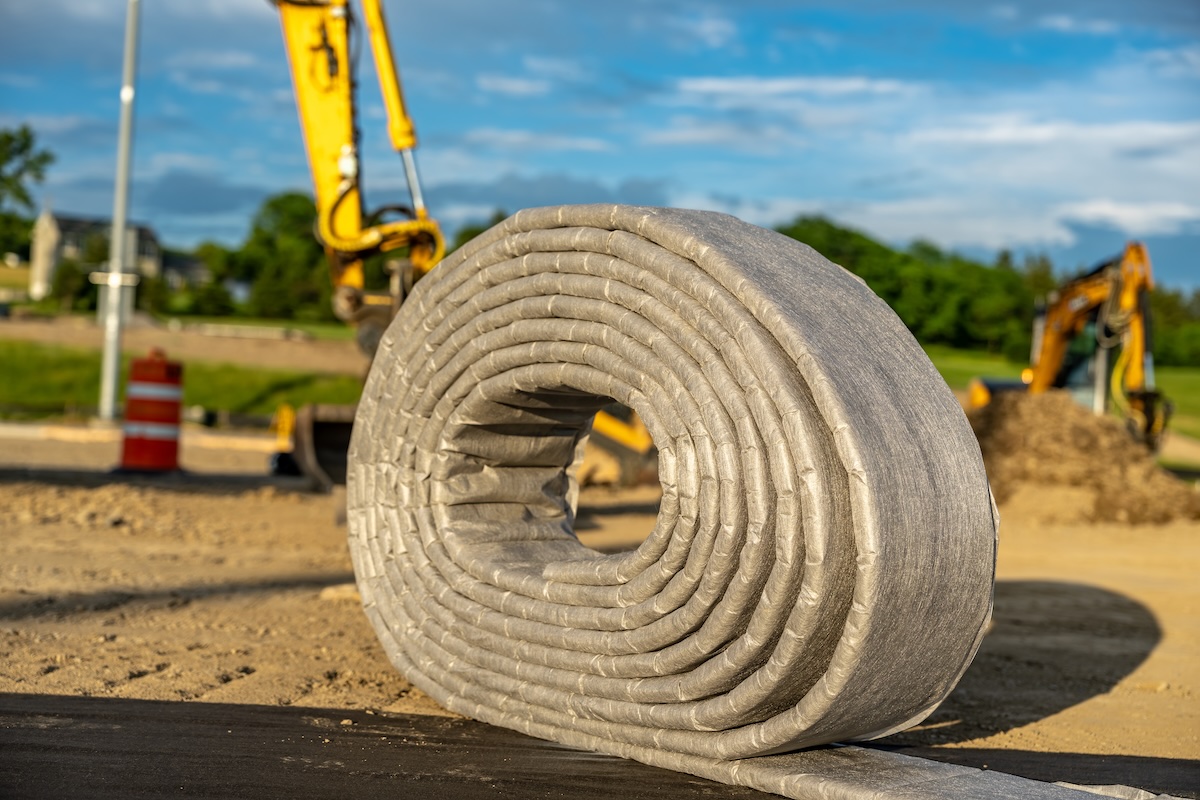
This is where things start to take shape. The ground is cleared, stripped, and leveled. Crews shape the grade to match the drainage plan, usually a subtle crown in the center of the field or directional slope toward water exits. Poor grading here will lead to standing water, surface wear, or safety issues down the road.
For natural grass, topsoil quality is important. Poor native soils may be amended with sand or compost to improve drainage and nutrient content. Soil tests will guide this. For synthetic turf, the focus is on building a stable, compacted base with drainage stone and possibly shock pads beneath the turf layer.
Any irrigation or drainage pipework is installed during this stage. Catch basins, trench drains, and outlet piping are dug in and tested before final base compaction. The end result should be a level, engineered platform ready to support years of play, without movement, ruts, or drainage problems.
Field Design and Layout Considerations
Field Dimensions and Line Markings
Every sport comes with its own required dimensions, tolerances, and field markings, and they’re not just suggestions. Compliance with governing body standards (NCAA, NFHS, FIFA, etc.) is required if the field is intended for sanctioned play.
Football fields are standardized at 120 yards by 53 1/3 yards including end zones. Soccer fields can vary more widely, especially at recreational or school levels, but must fall within minimums and maximums. Building baseball fields and softball fields demand precise pitcher-to-plate distances, baselines, and arc measurements that shape the field’s entire footprint.
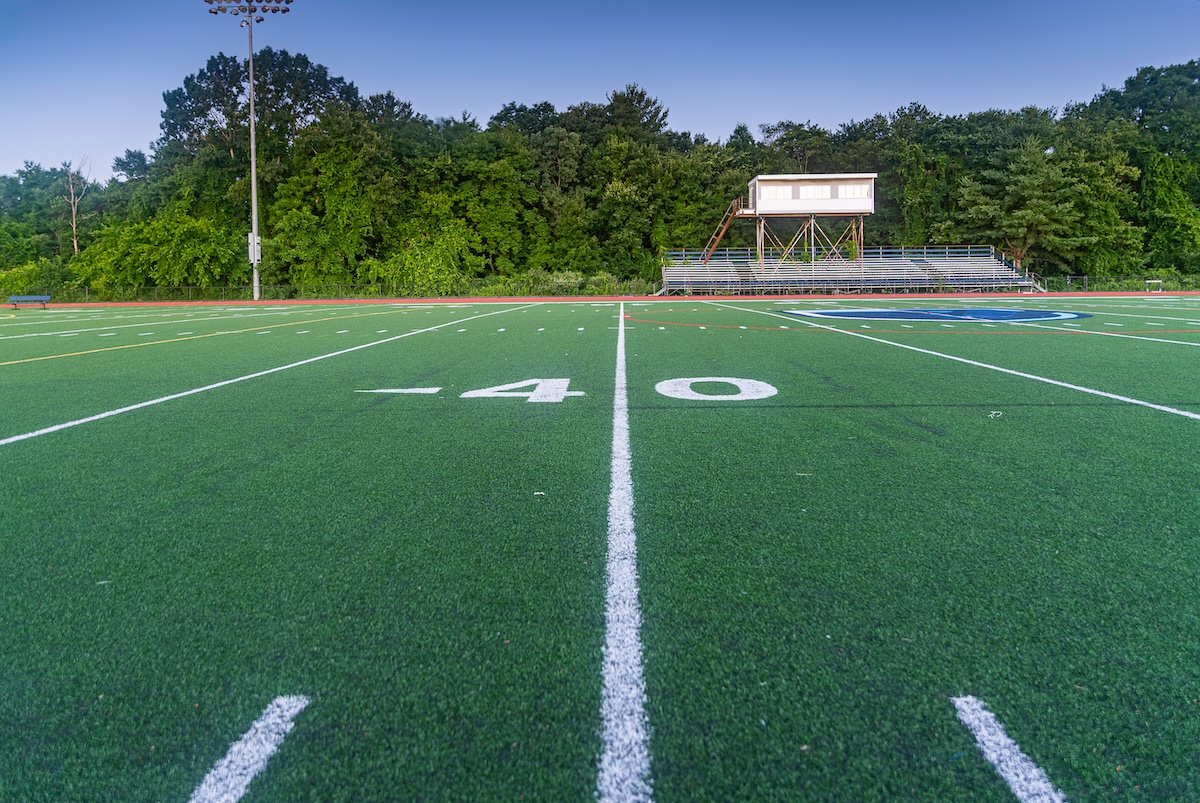
On grass play areas, straight lines for football fields and other athletic field markings are usually painted and must be reapplied frequently, especially after mowing or rain. Turf fields can use inlaid markings, permanent stitched lines and shapes made from contrasting turf colors.
While more expensive upfront, inlays reduce maintenance and ensure long-term consistency. For multi-sport fields, removable paint, overlays, or modular inlays are used to manage overlapping layouts without visual clutter or confusion.
A poorly marked field affects gameplay, safety, and even credibility, so plan for precision from the beginning.
Drainage Design

If water can’t leave the field quickly, it doesn’t matter how perfect the surface looks on day one, it won’t stay that way. Drainage design starts during planning but gets fully executed here.
There are two main types: surface drainage and subsurface drainage. Surface systems rely on grading, the field is sloped to move water into collection zones like trench drains or catch basins. This is especially common in grass fields, where natural infiltration also plays a part.
Subsurface drainage uses a grid of perforated pipes set in gravel trenches below the surface. This is standard for synthetic turf, where water needs to pass through the turf and infill into the sub-base before being carried away underground.
Slit drainage is another option, often used to upgrade existing fields. Narrow cuts filled with sand or stone connect the surface with subsurface pipes, speeding up water removal across wide areas.
The right system depends on soil conditions, surface material, expected rainfall, and the slope of the surrounding landscape. But all fields, especially those used year-round, need drainage capacity built in, not tacked on after problems appear.
Lighting, Fencing, and More
Lighting systems extend field usage into evenings, which is critical for schools, parks, and competitive facilities. LED fixtures are the current standard thanks to their longevity, reduced power consumption, and lower maintenance. The lighting plan should avoid shadows and hot spots and provide even illumination across the entire field, not just in the center.
Pole placement, aiming angles, and height must be designed to match the sport and minimize spill into neighboring areas. For multi-field complexes, centralized control systems and timers help manage energy usage and avoid unnecessary runtime.

Fencing provides perimeter control and safety. Chain-link is the most common for durability and visibility, but powder-coated or vinyl-coated options improve appearance and reduce rust. For baseball and softball fields, backstops and dugout fencing are a given. For soccer and lacrosse, higher netting systems behind goals help contain balls and protect spectators.
Additional features like access gates, maintenance entry points, or spectator barriers should be integrated into the overall layout early, not retrofitted later.
Safety Considerations
A well-built field should never be the reason someone gets hurt. That starts with the surface, whether grass or turf, it must be level, stable, and properly maintained. Ruts, divots, exposed edges, and compacted zones are injury risks that build up over time if not addressed.
Padding should be added around any fixed obstacles near the field of play, goalposts, fencing, scoreboard poles, or light bases. In baseball and softball, attention should be paid to transitions between infield and outfield, mound stability, and fence distances from the baseline.
Material choices also matter. Turf infill types affect impact attenuation and joint stress. Grass systems need adequate root development and organic matter to prevent slick or hard spots.
Design for player safety should never be an afterthought. Get it right upfront, and ongoing upkeep will be that much easier.
Maintenance
Natural Grass Fields
Grass fields require constant attention to stay playable. Mowing isn’t just aesthetic, it controls thatch buildup, encourages dense growth, and prevents weeds from creeping in. Most fields are cut multiple times per week during peak season using reel or rotary mowers, depending on surface type.

Watering is another ongoing task. Fields without automated irrigation can dry out fast, especially during summer or after heavy use. The goal isn’t just green grass, it’s deep, healthy roots that keep the surface resilient. Poor watering schedules lead to patchy growth, compaction, and increased risk of divots or sliding injuries.
Fertilization cycles must match the turf species and soil nutrient profile. Too much nitrogen causes rapid growth and mowing problems; too little weakens the stand and invites weed pressure. Aeration helps combat compaction, especially in high-traffic zones like goal mouths or between the hashes.
Seasonally, fields need overseeding to repair worn zones and prep for off-season dormancy. Dethatching may be needed in spring, and winterization steps protect irrigation systems and prevent frost heave damage in colder regions.
Without consistent care, the field’s performance starts to drop faster than expected.
Synthetic Turf Fields
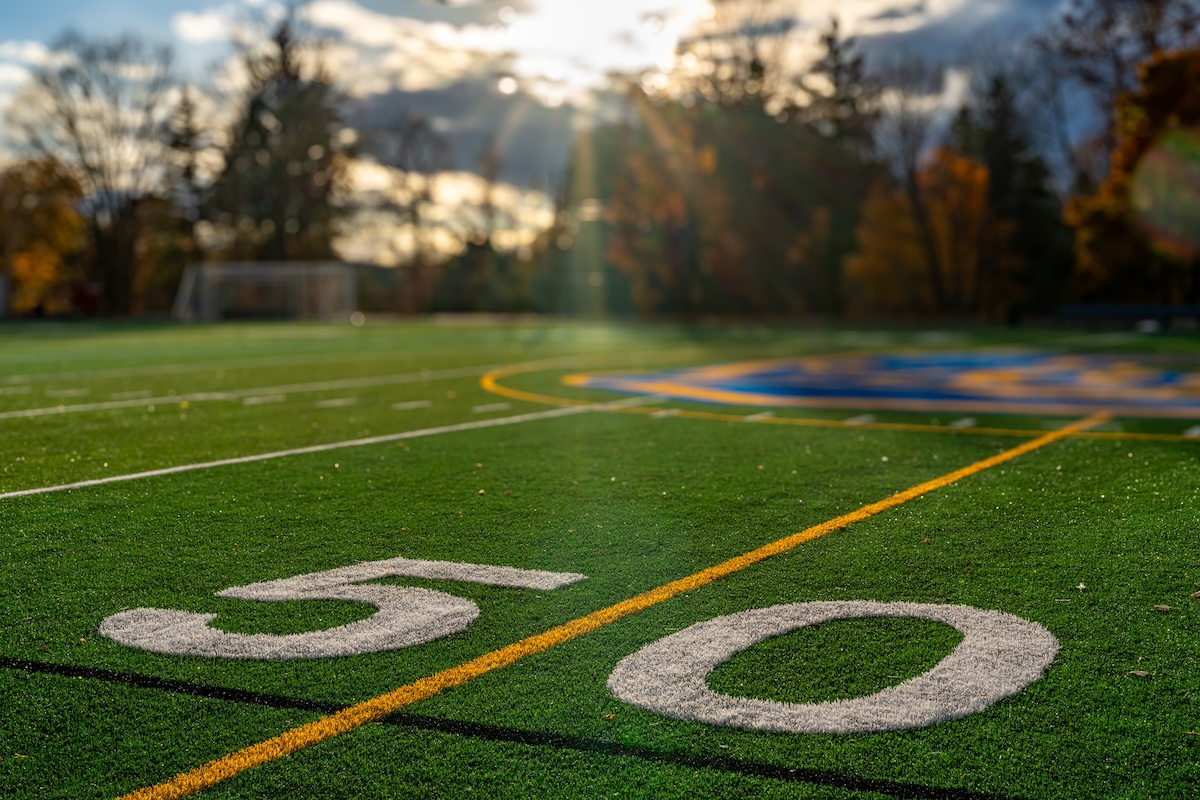
Artificial turf systems simplify maintenance dramatically—but like any surface, they benefit from structured upkeep to keep them performing at their best.
While artificial turf is far easier to maintain than living grass with no watering, mowing, fertilization, or chasing bare patches, it still benefits from a simple upkeep routine to keep it performing like new. The most important task is grooming the infill. Over time, infill migrates, especially near seams, sidelines, and goals, creating low spots and hard zones. Grooming redistributes the infill evenly and keeps the surface safe and consistent. Specialized brushes and magnet bars remove debris, straighten fibers, and pull out metal contaminants like cleats or screws.
Synthetic grass systems don’t trap mud, grow weeds, or attract pests like natural grass can, but turf still benefits from occasional surface cleaning to stay fresh and safe. This is especially important in warm or humid climates, where moisture can encourage bacterial buildup over time. Some facilities rinse fields periodically with water or mild solutions, while others use turf cleaning machines that combine vacuuming, brushing, and deodorizing in one pass.
Even with its durability and reduced day‑to‑day upkeep compared to natural grass, artificial turf still performs best when it’s inspected regularly. Also worth noting: turf fields have drainage systems underneath that can clog with silt, leaves, or debris from surrounding areas. If a turf field starts retaining water, the problem may not be the surface, it’s often what’s underneath.
Common Challenges in Sports Field Building and How to Overcome Them
Soil Issues/Erosion
Natural grass fields are especially vulnerable to erosion, particularly in high-traffic zones or sloped installations. Without proper soil stabilization and drainage planning, runoff can wash out root zones, form ruts, and expose subgrade material. The solution starts during site prep: use engineered soils, establish effective swales or perimeter channels, and reinforce areas prone to washout with geogrids or erosion blankets.
Synthetic turf doesn’t erode in the same way, but poor sub-base preparation can still cause problems. If the soil shifts or the base settles unevenly, the turf surface can ripple, dip, or pull apart at seams. That’s not just an aesthetic issue, it can create dangerous tripping hazards and costly repairs. Addressing this means compacting in lifts, checking moisture content, and using the right gradation of stone underlayment.
Compaction
Over time, both turf and grass fields suffer from compaction. For natural surfaces, it affects root oxygenation, water penetration, and playability. For synthetic fields, it reduces shock absorption and can make the surface feel less soft.
Preventative maintenance is important. Aeration and topdressing reduce compaction in grass systems. For turf, routine grooming and infill leveling preserve performance and help prevent the base layer from hardening under repeated stress.
Weather & Environmental Conditions
Excessive rain, prolonged drought, freeze-thaw cycles, and high heat all pose challenges. Poor drainage turns fields into swamps. Extended heat waves dry out grass or soften turf infill to the point of instability.
Design helps, but so does choosing materials suited to the region. For example:
- Turf systems with heat-reflective infill and UV-resistant fibers hold up better in hot climates.
- In colder regions, deeper drainage lines and frost barriers protect infrastructure from freeze damage.
Wind is a consideration during turf installation, especially in open sites or elevated areas. With proper planning, timing the install around local weather patterns and using weighted rollers or ballast when needed, sports field building companies and construction crews can keep materials stable and the process on schedule.
Scheduling & Logistics
For sports field builders and project stakeholders, tight timelines and seasonal limitations can be a common issue.
Even the best-laid plans can be tested by rain delays, freight hiccups, or overlapping projects during peak construction season. That’s why experienced sports field builders stay ahead of the curve by locking in key timelines, coordinating directly with suppliers, and building in enough flexibility to handle real-world site conditions.
Turf delivery dates, for instance, need to be aligned with a base that’s been fully prepped and approved—too early, and you risk material storage concerns. But too late, and you’re burning daylight. Naturally, weather can cause problems as well. If the base hasn’t had time to dry and settle after grading and compaction, forcing the schedule forward can backfire. Experienced, professional sports field construction contractors and project managers know how to adapt the pacing of a project without sacrificing the quality of the installation.
A good project timeline can keep everything moving without attempting to rush the steps that matter most. That’s the difference between a field that’s done on time and one that’s done right. And with proper scheduling and logistics, it’s very possible to achieve both.
The Bottom Line on Sports Field Builders
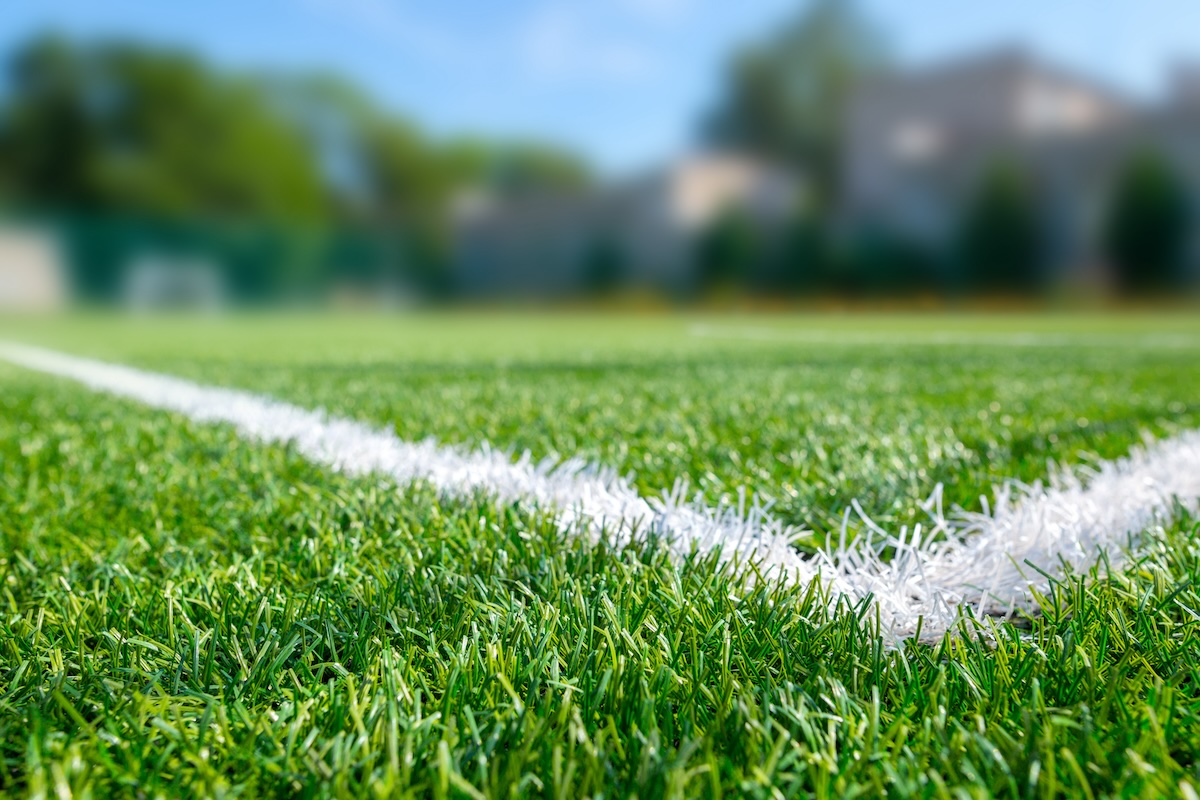
A great sports field starts with purpose and ends with execution. The most successful projects balance long-term performance with practical upkeep, blending smart design choices with surfaces tailored to how the field will actually be used.
What matters most is making early decisions that align with your goals, whether that’s maximizing field time, minimizing upkeep, or creating a surface that reflects the standards of your program or community. When every layer beneath the surface has been thought through, the finished field doesn’t just play better, it holds up better, for years.

