
Last Updated on March 3, 2026 by UDC Sports
Softball field construction sounds straightforward at first, because on paper it’s easy to picture: a diamond, an outfield, a fence line, a backstop, some dugouts, done. The real personality of a field shows up once it’s been through normal weather and normal use.
For instance, after the first big rain, you can find out quickly where the site wants to hold water and where it naturally wants to shed it. Those low spots can sit there and collect water until you’re wondering why the infield is still soggy when everything around it is drying out.
The same thing happens with edges and transitions. In athletic field construction, (turf-to-grass, infield skin-to-outfield, warning track edges, curb lines, lips at grade changes) are among the most failure-prone details. They’re also the spots players contact constantly: planting, cutting, decelerating, sliding, and fielding balls that take weird hops when an edge isn’t right. So if transitions are off, people notice fast.
From a distance, an infield line can look sharp and tidy. Up close, you can feel what’s going on. If there’s the start of a lip where two surfaces meet, you’ll notice it underfoot long before it looks like a problem in photos.
It’s not necessarily a catastrophic failure, it’s just the early sign that the build details are starting to drift, and that’s where good construction by a reputable contractor/sports field construction company pays off.
It’s these kind of things that make the difference between “how to build a softball field” in the abstract and “how to build a softball field that plays right, drains right, and stays right.” One version checks the boxes. The better version feels predictable when you run on it, drains the way you expect after a storm, and keeps its shape through a season of practices, games, and busy weekends.
How Softball & Baseball Fields Differ from the Sports Field Construction Company’s Point of View
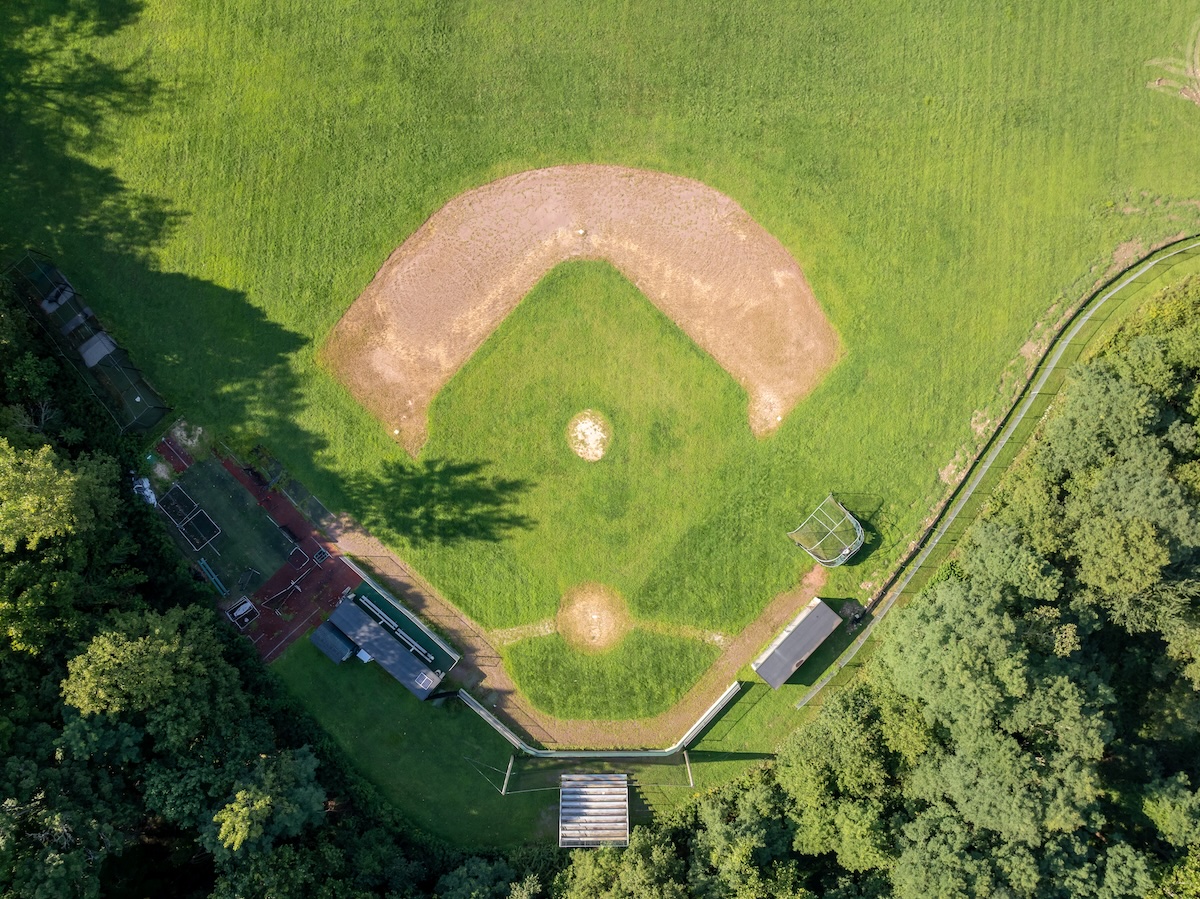
Softball and baseball fields are close cousins, but they’re not twins. From the stands they can look similar, and a lot of the construction vocabulary overlaps, but the way the games are played changes what “built right” looks like on the ground. If you account for those differences early, the project usually feels smoother from layout all the way through opening day.
- Softball fields are typically more compact, with different basepath and pitching distances depending on the level. That tighter footprint shifts the geometry of the infield cut, foul territory, and fence arcs. It also changes how the field “sits” on a site. On a softball build, small changes in placement can have a bigger impact because everything is closer together. The good news is that compact fields can fit well on tighter campuses or multi-field complexes, as long as the layout and grading plan are handled with care.
- Softball concentrates a lot of action in smaller zones: around the circle, at the front of the circle, in the batter’s boxes, and along the most common running and fielding lanes. Because the pace is quick and those areas get used over and over, the build details in those spots tend to matter more. When those high-traffic zones are reinforced thoughtfully and the transitions are crisp, the field stays consistent and players can trust what the surface is going to do.
- Softball has a larger ball and a lot of fast, close-in play. That means the “little things” show up quickly: a subtle low spot that collects water, a slight lip at an edge, a grade that’s just a touch off. On a well-built softball field, everything feels predictable underfoot and the ball behaves the way players expect, which makes the whole game feel better without anyone needing to put their finger on why.
- Softball fence distances and shapes are commonly different than in baseball field construction, which affects fencing scope, grading at the perimeter, and drainage planning near the edges. Because softball fields can be more compact, you’re often coordinating more closely with walkways, spectator areas, neighboring fields, or existing site features. When that coordination is done right, the field ends up feeling purposeful and comfortable instead of squeezed in.
- A turf softball infield usually benefits from extra attention to seam placement and reinforcement around the circle and batter’s boxes, simply because those areas take so much repetitive traffic. Hybrid builds (turf infield with grass outfield) can be a great solution, but they live or die on the transition detail. When that edge is built correctly, it stays stable and plays smoothly season after season.
The simple takeaway is that softball and baseball can share a lot of the same construction approach, but they have slightly different priorities. Softball asks for precision in a tighter footprint and durability in concentrated wear zones. When you build with that in mind, the payoff is a field that drains well, plays consistently, and feels “right” the first time teams take the field.
Multi-Sport Fields/Multi-Purpose Athletic Facilities
Softball construction often fits into a bigger plan, especially on school campuses and municipal complexes where the goal is less “one perfect field” and more “a multi sport facility that can handle real scheduling.” A well-designed site can support softball alongside baseball and other field uses.

One big unlock is planning the footprint as a shared sports complex instead of treating each diamond as a separate project. That means coordinating grading and drainage across the whole area so water moves where you want it to, not just toward the lowest field.
It can also mean thinking through circulation: where teams enter, where spectators walk, where maintenance equipment needs access, and how you keep conflicts down when two games are running at the same time.
Remember, softball and baseball can share a lot of supporting infrastructure. Back-of-house items like parking, paths, restrooms, concessions, storage, and utilities are often more efficient when they’re centralized. Even elements like fencing and netting can be planned as a coordinated system instead of a patchwork of one-off solutions. When that happens, the complex feels like it was built on purpose, and it’s easier to maintain.
From a field-surface standpoint, multi-use facilities also benefit from choosing systems that match how the site will be used. A hybrid approach is common: turf infields (or turf game fields) where wear is heaviest, with natural grass outfields or adjacent practice areas where play is lighter. That mix can keep the facility playable through rain and heavy seasons while still giving you flexibility for different sports and events. The key is doing transitions, grades, and drainage as a unified plan so each field plays consistently and the whole complex stays reliable, even when the calendar gets busy.
What Softball Field Construction Includes
A complete softball field build is usually a stack of smaller scopes that all depend on each other:
- Site evaluation and layout
- Clearing, rough grading, and fine grading
- Drainage (surface grading, subsurface piping, or both)
- Subgrade prep (proofing, stabilization when needed)
- Base layers (aggregate, stone, asphalt, engineered layers depending on the system)
- The playing surface (natural grass, turf infield, full synthetic, or a hybrid)
- Edge containment and transitions (the part that prevents lips and failures)
- Fencing, backstop, dugouts, bullpens, warning track (if included)
- Paths, ADA access, spectator areas (if included)
- Irrigation (for grass fields), plus any water management off the field
A lot of headaches come from treating those as independent line items. They’re not. The layout affects grading. Grading affects drainage. Drainage affects base design. Base design affects turf performance, grass health, maintenance time, and how the field holds up when it’s used hard.
Softball field layout construction
Layout is where the whole project starts behaving like a real softball field instead of “a flat area with some fencing.” You’ve got a few core layout decisions that show up in every build:
Orientation and sun/glare planning
This is the kind of decision that costs almost nothing early and becomes expensive later. If you can orient the field to reduce glare for hitters and fielders at common game times, you make the field friendlier to play on without changing a single material spec.
Establishing the playing geometry
Softball field dimensions and pitching distances vary by level and by rule set. The correct way to do this is boring and effective: you pick the governing rule set (league/association), confirm the dimensions you’re building to, and then lay it out with a surveyor or an experienced field builder who treats layout as precision work.
If someone waves their hand and says, “Softball is softball,” that’s your cue to slow down and verify. Small differences change fence arcs, infield cut geometry, base anchor locations, and how everything lines up once striping is done.
What changes cost during layout
The budget isn’t driven by the chalk lines. It’s driven by what the lines force you to build around them.
Here are layout-related decisions that have cost consequences:
- How much earthwork is needed to hit proper slopes without building a weird “plateau”
- Whether you’re building on a naturally draining site or fighting water the whole time
- Fence length and shape (a deep outfield arc adds up fast)
- Added features like bullpens, extended foul territory, or warmup areas
- How much turf square footage you’re committing to (infield-only vs full field)
If you’re trying to keep budget predictable, you want layout tied to a grading plan early, not sketched on the fly while equipment is already moving dirt.
The base and subgrade (what the field is sitting on)
People love to talk about turf brands and grass types. Builders worry about what’s under everything.
A softball field is only as good as its subgrade and base. That’s not a slogan. It’s a description of why some fields play well for years and others start moving, settling, and turning into maintenance projects.
Subgrade prep
The subgrade is native soil that you shape and compact to become the foundation layer. What you want here:
- Stable, consistent compaction
- No pumping or soft zones
- A finished grade that matches the drainage plan
- A surface that won’t settle unevenly after the first season
If the site has weak soils or high moisture issues, stabilization can enter the conversation. That can mean geotextiles, geogrids, lime/cement treatment, undercut and replacement, or other engineered fixes. The right approach depends on soil conditions and project goals.
Base layers
Base layers do a few jobs at the same time:
- Spread loads so the surface doesn’t rut or settle
- Create predictable drainage pathways
- Hold consistent grades and slopes
- Provide a stable platform for turf installation or healthy grass growth
On turf projects, base planarity is a big deal. Turf is forgiving in some ways, but it’s also honest: if the base is wavy, the surface will feel wavy. If the base holds water, you’ll find out quickly.
On grass projects, you’re balancing stability with healthy root-zone conditions. Too tight and you get drainage issues. Too loose and you get instability and unevenness.
Edge containment and transitions
This is where a lot of fields can start failing in year two and year three.
Transitions have to be built so that one surface doesn’t creep into the other, and so grades don’t drift. Examples:
- Turf to grass transitions that don’t create a raised edge
- Turf to warning track transitions that don’t become a trench
- Infield to outfield edges that don’t turn into a lip factory
A good build treats edges like engineered details, not like decorative trim.
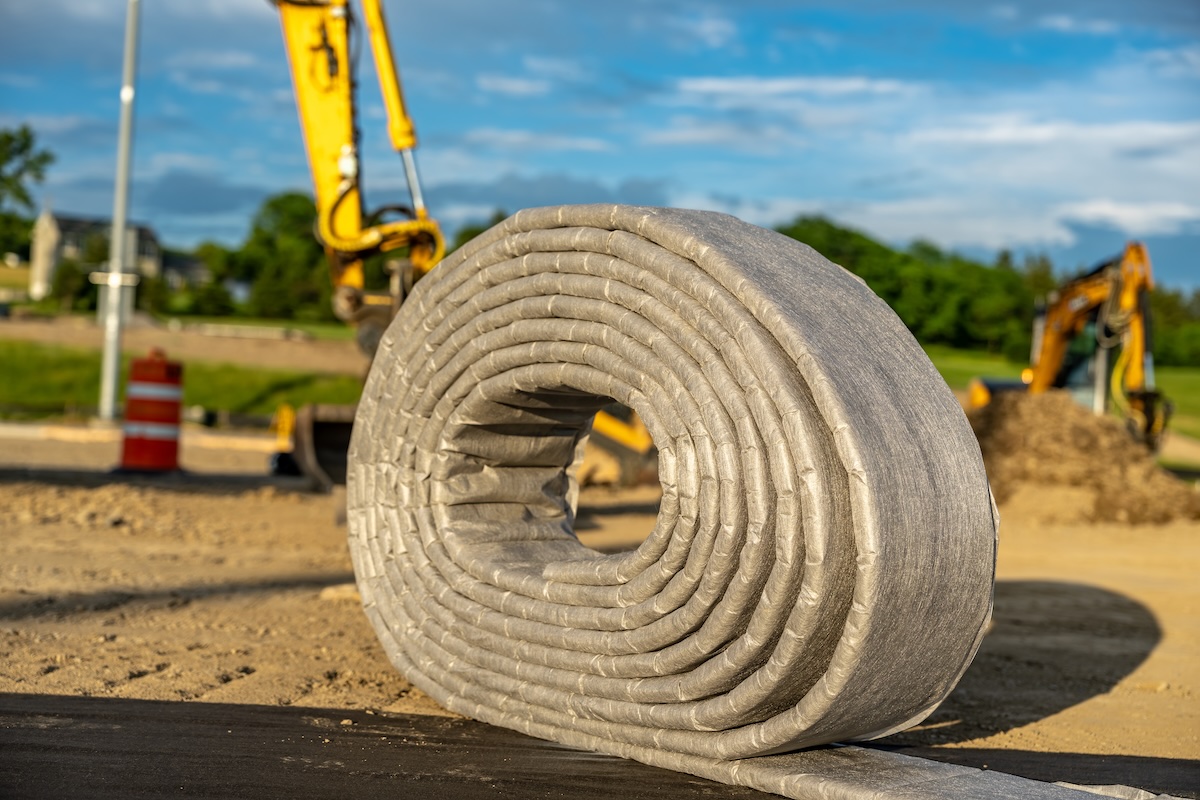
Drainage
Surface drainage (grading and slope)
A playable field has slope. It’s just controlled slope. Surface drainage is shaped into the field so water moves off the playing surface. The goal is to move water away without creating weird ball behavior or unsafe footing.
This is why fine grading is not an afterthought. You can have great materials and still end up with puddles if the surface grades are off.
Subsurface drainage (if the site requires it)
Some sites drain well on their own. Others don’t.
If you’re building in soils that hold water, or you’re trying to support heavy scheduling, subsurface drainage becomes part of building a reliable field. That can mean:
- Perimeter drains
- Trench drains in strategic zones
- Underdrain networks beneath turf systems
- Outfall planning (where the water goes once it’s collected)
| Drainage Component | What It Is | Primary Purpose | Key Design Notes | Common Failure Mode |
|---|---|---|---|---|
| Core Principle: Controlled Slope | A playable field has slope. It’s just controlled slope. | Move water intentionally without creating playability or safety issues. | Slope should be planned, consistent, and tied to the overall grading/drainage plan. | “Flat” surfaces that look nice at first but hold water in low spots. |
| Surface Drainage (Grading & Slope) |
Surface drainage is shaped into the field so water moves off the playing surface. | Get water off the surface quickly and predictably. | Fine grading is not optional. Great materials can still puddle if the surface grades are off. | Puddles and soft spots caused by subtle low areas or inconsistent finish grades. |
| Subsurface Drainage (If the site requires it) |
Drainage infrastructure below the surface used when soils hold water or scheduling demands fast recovery. | Remove water from the system so the field stays usable after rain and doesn’t stay saturated. | Best suited for poor-draining soils or heavy field use. Must be paired with a real outlet plan (outfall). | Drain lines that exist on paper but don’t move water because there’s no proper fall, outlet, or discharge path. |
| Perimeter Drains | Subsurface drains installed around the field edges. | Intercept water migrating toward/under the field and help relieve saturation along edges. | Needs proper fall and connection to an outlet; placement should match site flow patterns. | Edge saturation, soft perimeters, and lingering wet zones near fence lines or borders. |
| Trench Drains | Surface or near-surface channel drains placed in strategic zones. | Capture and redirect concentrated runoff where sheet flow isn’t enough. | Works best when placed where water naturally wants to collect or cross paths; must discharge properly. | Standing water at transitions or choke points due to “nowhere to go” discharge design. |
| Underdrain Networks (Beneath turf systems) |
Piped drainage networks installed beneath turf/base systems. | Move water out of the turf/base assembly to improve recovery time and reduce saturation. | Design must align with the turf system build-up and include cleanouts/maintenance access where appropriate. | Slow draining turf areas due to incorrect spacing, clogged lines, or poor integration with the base system. |
| Outfall Planning | Planning where collected water goes once it’s captured (discharge point). | Make the entire drainage system function end-to-end. | Drainage only works if water has somewhere to go. Outlet must have proper fall and an acceptable discharge location. | “We installed drain pipe” but the system can’t discharge, so water backs up or never leaves the site. |
| Key Reality Check | Drainage is a system, not a product. | Prevent “partial solutions” that look complete but don’t perform. | Installing pipe is not the same thing as building a functioning drainage system with proper outlet and fall. | Expensive drain installs that don’t solve puddling or saturation because the outlet plan wasn’t engineered. |
Grass vs Turf Softball Fields
Natural grass infield + natural grass outfield
This is the traditional approach.
The upside is obvious: it’s familiar, it can look great, and it can be cost-effective in the build phase if site conditions are friendly.
The tradeoff is ongoing maintenance. A grass infield can be a lot of work. It’s grooming, edging, managing wear, managing drainage, managing the base mix, and repairing high-traffic areas.
If the field is used lightly and maintenance support is strong, it can be a good plan. If the field is scheduled hard and maintenance is thin, this option often turns into a cycle of patching.
Turf infield + grass outfield (a very common hybrid)
This is where a lot of schools and facilities land because it solves the most common pain points without committing to a fully synthetic field.
What turf infield does well:
- Handles heavy wear in the highest-traffic zone
- Plays consistently
- Reduces downtime after rain
- Cuts down on infield dirt management and emergency repairs
The grass outfield keeps the project from ballooning in turf square footage, and it can reduce surface temperature concerns that some owners think about with full synthetic.
The transition detail is everything here. A hybrid field succeeds when the turf-to-grass edge is engineered so it doesn’t become a lip, doesn’t trap water, and doesn’t creep.
Full artificial turf field construction
This is the “maximum scheduling flexibility” option.
The big reason owners pick it is field availability. If you’ve got tournaments, stacked schedules, or a facility that can’t afford cancellations, full synthetic can be compelling.
The build needs to be disciplined: base planarity, drainage design, and seam/inlay execution become high priority. A full synthetic field is not hard to build poorly. It is very rewarding to build well.
Softball field construction costs
People ask for a single number. Builders hate giving a single number, because softball field construction costs can live in very different worlds depending on site conditions and scope.
A helpful way to think about budget is to break it into drivers. Here are the big ones that move the needle.
Earthwork and grading
This is often the biggest wildcard.
If your site is already close to the right elevations and drains well, grading can be straightforward.
If you’re fighting bad drainage, poor soils, or major elevation changes, earthwork can expand fast. Import/export of material, undercutting, stabilization, hauling, and compaction all add cost.
Drainage scope
Drainage can be minimal or complex. The more the site fights you, the more you need engineered help.
Subsurface drainage systems, outfalls, and water management off the field can add meaningful cost, but they also reduce the chance you’re rebuilding problem areas later.
Turf square footage and system complexity
A turf infield is a different budget story than a full turf field. It’s also a different build sequence.
Cost is influenced by:
- Total square footage
- Base build requirements
- Seam and inlay complexity (logos, cut patterns, warning track zones)
- Edge containment details
- Drainage layers integrated into the system
Fencing, backstop, netting, dugouts, bullpens, and accessories
These features are easy to underestimate. A backstop and fencing package can be a major slice of budget, especially if heights increase, netting becomes extensive, or safety requirements call for more robust systems.
Lighting, power, and site utilities (if included)
Lighting is its own universe. It’s not just poles and fixtures. It’s foundations, trenching, conduit, panels, controls, and coordination.
Paths, ADA access, spectator areas (if included)
Concrete and asphalt are expensive when they show up in long runs. These features also tend to expand after the initial plan when someone walks the site and realizes how people will move through the complex.
Maintenance capacity
This one is sneaky: the maintenance you can support should influence what you build.
If you build a system that demands constant attention and you don’t have staff/time, the “lower-cost build” can become a higher-cost problem over the next few seasons.
If you want a practical cost conversation with a contractor, the best approach is to define scope tiers up front. For example:
- A straightforward natural grass field with basic drainage and fencing
- A hybrid turf infield with grass outfield and upgraded drainage
- A full synthetic field with scheduling flexibility and higher up-front investment
That lets the contractor build real numbers around defined scopes instead of guessing what you mean.
Softball Field Construction Timelines

What affects how long it takes to build a softball field?
Softball field construction timelines are usually controlled by a handful of predictable factors:
- Permitting and approvals (site work, drainage, lighting if included)
- Weather windows for earthwork and base placement
- Material lead times (turf, fencing, lighting)
- Sequencing dependencies (you can’t rush fine grading and then hope turf hides it)
- Cure times where applicable (concrete, asphalt, certain stabilization methods)
A strong build schedule looks calm on paper because it respects sequencing. A chaotic schedule often comes from trying to overlap steps that need to be finished cleanly before the next step starts.
Hiring turf field construction companies for a softball field
If you’re hiring a turf construction company for a softball field, the question isn’t “can they install turf.” Plenty of crews can roll out turf and seam it together.
The question is: can they build the field system that turf depends on, and can they execute the softball-specific details that separate a good build from a future repair cycle? Consider vetting sports field construction companies by asking the following questions:
- How they verify base grades and planarity
- How they check compaction and stability
- How they handle soft spots and unexpected soils
- What their tolerance expectations are, and how they measure them
On softball fields, transitions are stress zones. So you might also ask about:
- Turf-to-grass transition details (especially on hybrid fields)
- How they prevent edges from becoming raised or settling
- How they keep water from pooling along seams and borders
- What edge containment method they use and why
Softball has very specific wear patterns. The areas that get punished are predictable: batter’s boxes, the front of the circle, base cutouts, sliding zones, and common running lines.
So that said, you also want a contractor who can talk about:
- Seam placement logic (not putting seams where wear is concentrated)
- Reinforcement strategies in high-wear areas
- How they handle base anchors and cutouts so they don’t loosen or deform the surface
FAQ: Quick answers to the big softball field construction questions
What is included in softball field construction?
It typically includes layout, grading, drainage, subgrade/base prep, the playing surface (grass, turf, or hybrid), and often fencing/backstop and other site features depending on scope.
How long does softball field construction take?
It depends on permitting, weather, earthwork scope, drainage complexity, and lead times for turf and fencing. A simple build can move quickly once sitework starts. A more complex build usually needs a schedule that respects sequencing.
What drives softball field construction costs the most?
Earthwork/grading, drainage scope, turf square footage (if used), fencing/backstop packages, and added features like lighting and hardscape.
What’s involved in building the layout for a softball field?
Confirming the rule set and dimensions, orienting the field for playability, staking precise geometry, and tying layout to grading and drainage plans so the field performs as designed.
Is artificial turf a good surface for a softball infield?
A synthetic grass infield is often chosen to handle heavy wear, reduce rain-related downtime, and improve consistency in the highest-traffic zone. It works best when transitions and base verification are handled with care.
Bringing It Home
A lot of the nice things about a softball field can be improved over time, and that’s a good thing. You can start with a solid core build and then keep polishing the experience as budgets and priorities allow.
Remember, accessories can get upgraded. Fencing can be improved or extended. Dugouts can get more comfortable. Maintenance routines can be dialed in as you learn how the field behaves through different seasons. Even the surface itself can be refreshed down the road when it’s time. Where you want to be especially thoughtful up front is everything that makes the field feel “right” before anyone ever steps in the batter’s box.

The grades, the drainage plan, the stability of the base, and the way transitions are built between surfaces all live in that category. When those pieces are done with care, the field works how it’s supposed to: sheds water the way it should, stays consistent underfoot, and keeps its shape through consistent use.
That’s the real goal of softball field construction done well. You end up with a field that plays predictably, holds up to practices, games, and busy weekends, and gives coaches and players a surface they can trust. It’s the kind of project where the payoff is simple: fewer headaches, fewer surprises, and a field that feels like it belongs there.

