
Last Updated on December 3, 2025 by UDC Sports
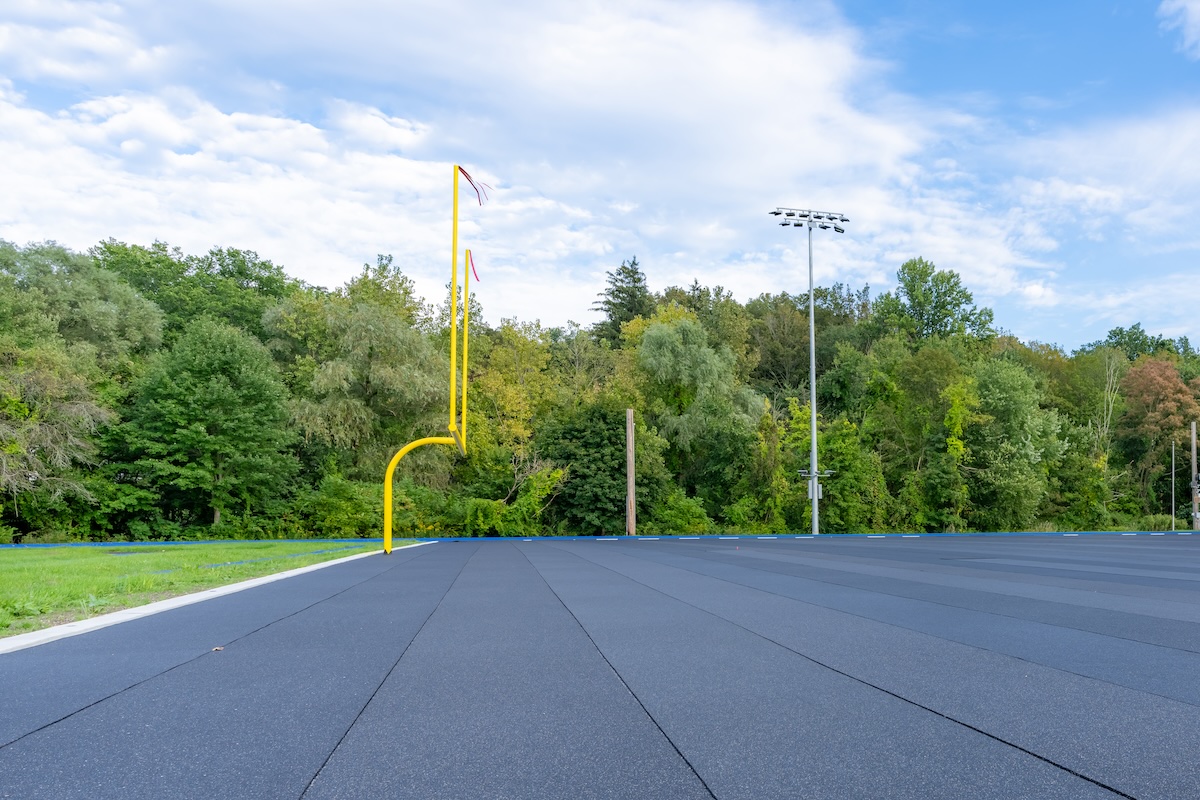
Athletic field replacement projects don’t start with a clean slate—they start with the field that’s already there. By the time an artificial turf playing surface reaches its tenth season, the signs are familiar: G-max scores creep past acceptable limits, seams may start to open under stress, and so on.
That’s when the conversation shifts from upkeep to replacement—and what to do with the thousands of pounds of turf about to come off the ground.
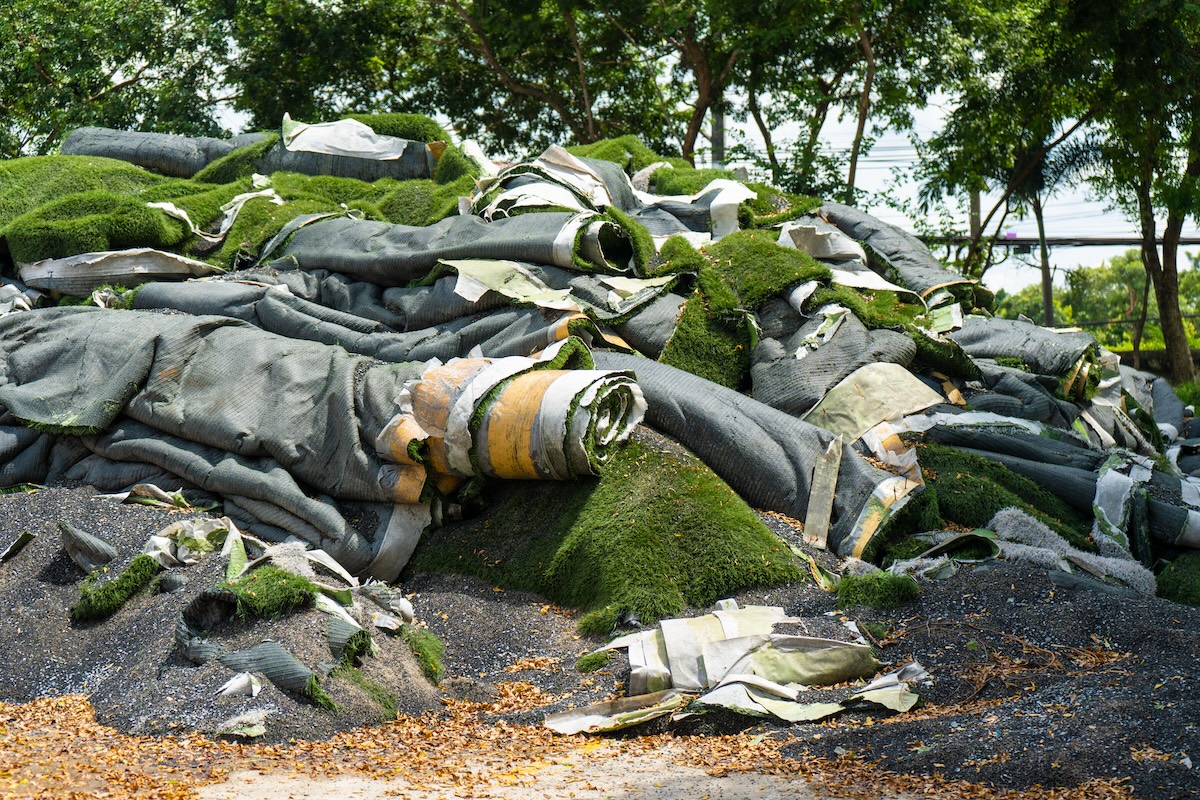
A decade ago, that question didn’t have a good answer. Early synthetic turf systems often ended up rolled and forgotten, piled up in lots, stored behind maintenance sheds, or dumped at landfills when disposal rules were less restrictive. Those days are mostly gone. Environmental standards, municipal RFPs, and recycling/reuse initiatives have pushed the industry to find better answers.
The industry had to evolve. Companies like ReTURF built systems for reclaiming and re-using old fields at scale, giving owners a way to close the loop instead of adding to the waste stream.
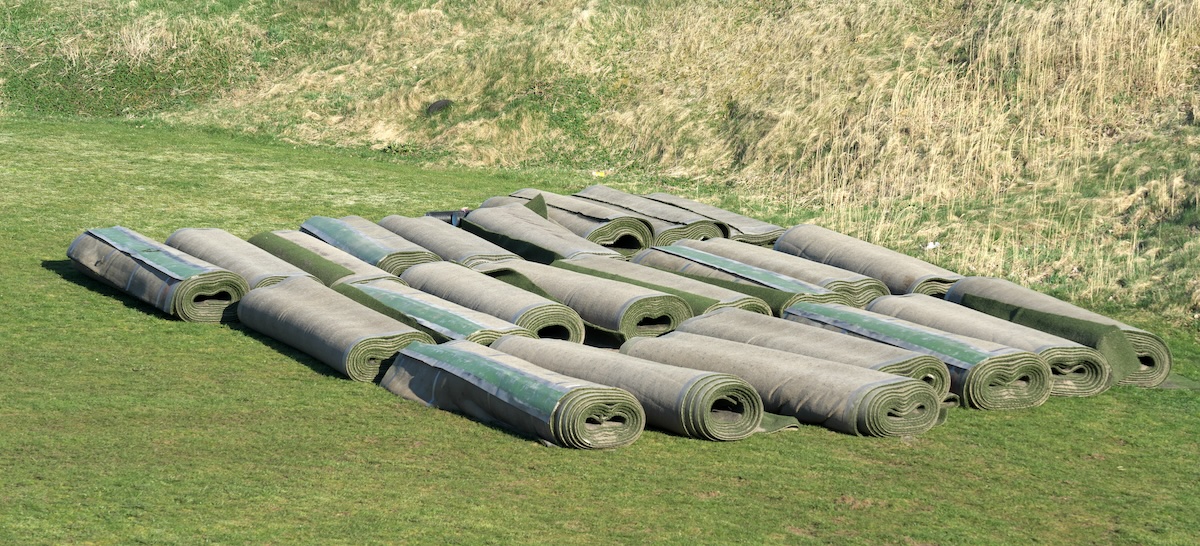
Today, a professional artificial turf sports field removal project can run on two tracks: prepping the site so the replacement stays on schedule, and capturing as much reusable material as possible. Everything matters—the cut pattern, the infill extraction method, the order of operations. When the workflow is tight, crews move fast, costs stay predictable, and the outgoing turf gets a legitimate second life instead of a trip to the landfill.

The sections below lay out some things that field owners and facility directors should know about that process. Synthetic turf removal may seem straightforward from the sidelines, but it’s built on a chain of technical decisions that determine cost, timeline, and downstream environmental impact.
How Artificial Turf Fields Reach End-of-Life
Every synthetic grass field has its own “fingerprint” of wear. Early wear shows up in high-traffic lanes — centerfield, goal mouths, midfield logos. Infill migrates, fibers split, and the shock pad (if present) begins to show compression memory. Grooming can delay this curve, but eventually the system loses the engineered performance that it had when it was first installed.
By the end of the lifecycle, a variety of things can happen:
- Infill density increases, limiting shock absorption
- Rubber and sand levels drift enough to require constant top-offs
- Fiber height drops from abrasion
- Seams require frequent repairs
- Drainage slows as fines accumulate in the profile
These factors all influence how removal will be staged and what recovery rates can realistically be achieved.
A modern replacement project isn’t driven by looks alone. Objective testing — especially surface impact metrics like G-max and HIC — determines whether the field still performs within established safety thresholds.
Overview of the Removal Process
Athletic field removal looks straightforward: cut the turf, roll it up, get it out of the way. But in practice, it’s a coordinated sequence with tight tolerances. The quality of removal affects three areas: the speed of resurfacing, the amount of material recovered, and the cost of disposal for anything that cannot be reused.

A typical removal might follow this order:
- Pre-removal survey – documenting seams, infill depth, pad conditions, drainage status, and any subsurface concerns that could affect machinery or timing.
- Infill extraction – using specialized equipment to lift and separate infill from the turf carpet while minimizing fiber damage.
- Turf cutting – slicing the field into manageable strips with controlled blade depth to avoid gouging the base layer.
- Rolling and staging – forming tight, uniform rolls that can be loaded, transported, and processed without collapsing.
- Pad separation – if the field has a shock pad, it’s lifted and stacked separately for recycling/reuse evaluation.
- Final base inspection – grading, checking edge stability, re-leveling low spots, and confirming the surface is ready for installation crews.
When this workflow runs cleanly, it reduces the amount of rework required before installing the new system. A field can be stripped fully in one to two days, depending on size and weather.
ReTURF’s Second-Life Model

ReTURF’s process takes recovered used turf and gives it structured placement in new environments. They aren’t simply reselling used turf — they’re running it through quality checks that sort it into practical use categories.
The workflow includes:
- Inspection for fiber wear and seam integrity
- Cleaning to remove excess infill and debris
- Minor repairs to extend functional life
- Sorting based on pile height, backing condition, and usability
- Redistribution to appropriate end users
These channels include pet facilities, playgrounds, multi-purpose recreation spaces, gyms, batting cages, and even large landscaping projects. By placing turf in environments that match its remaining performance profile, the material continues to deliver value without overstating its capabilities.
How Turf Field Removal Quality Affects Recycling/Reuse Potential
Recycling and reuse programs depend on cleanly separated components.
Recycling breaks components down so they can be turned into new products or materials. That can mean shredding the turf to separate the plastic fibers from the backing, screening infill for reuse in other industries, or processing pads into new foam or rubber goods.
Reuse means material is used again largely as-is. The turf carpet, infill, or pad is inspected, cleaned, maybe repaired a little, and then installed in a different setting. For example, reclaimed turf might go to a practice field, batting cage, or dog park where performance standards are lower. The fibers and backing stay intact—they’re just redeployed somewhere else.
Once the infill, pad, and turf carpet mix together, the material becomes exponentially harder to repurpose.
- Turf carpet holds its structure if rolled without folding or twisting
- Infill can be reclaimed as long as it hasn’t been contaminated with subbase fines
- Shock pads retain reuse potential if they’re lifted in intact, consistent sheets
- Edge transitions (nail boards, anchor systems) require precise removal to avoid contaminating the load
Each of these streams reduces the volume of material headed to landfill. The difference is significant: a single full-size field can produce hundreds of cubic yards of debris if handled as waste. Recovery programs capture most of that volume before it reaches a disposal site.
Common Artificial Turf Sports Fields that Can Be Removed and Reused
A Technical Look at Modern Sports Field Removal
A synthetic turf field can be taken up quickly, but the speed comes from preparation, not force. The crews that specialize in removal typically rely on workflow standardization more than specialty gear, and that’s what keeps the process predictable. Each field varies slightly — infill type, shock pad structure, seam layout — but the removal pattern stays close to the same.
A modern sequence often looks like this:
- Material Assessment and Surveying
Before machines touch the field, technicians usually log infill depths, seam conditions, drainage issues, and pad layout. This dictates cutting patterns and helps prevent equipment surprises. Some crews mark the field on a grid to track where each material type originated, especially when different zones have noticeably different wear. - Infill Extraction
Removal teams typically use mechanical infill extractors that pull rubber and sand up through the turf fibers while leaving the subbase untouched. These machines lift and sift material so it can be bagged or loaded for processing. Clean separation at this stage shapes the entire recycling potential downstream. If infill mixes heavily with base stone or fines, its reuse options narrow. - Precision Cutting
Turf is cut into long strips using adjustable-blade tractors or walk-behind cutters. Depth control is important — slicing deep enough to break the backing without scoring the aggregate below. A subbase that stays intact reduces installation prep work later, and it also keeps non-turf material out of the recycling stream. - Rolling and Removal
Once cut, the turf is rolled tightly around cores or mandrels. Consistent roll diameter matters for transport; uneven rolls are harder to stack and more prone to deforming during loading. Many removal crews bind rolls at the midpoint and ends to prevent unwinding. - Shock Pad Separation (If Present)
Pad systems vary widely. Some peel up in large sheets, others come up in tiles, and some require mechanical scraping. Pads are usually stacked separately from turf so they can be evaluated for potential reuse or recycling. - Final Surface Checks
After turf and pad are cleared, the base is inspected for settlement, edge failures, or drainage issues that weren’t visible before. Many installers redo laser grading at this stage, even if the base is in good shape, because a slight releveling now prevents compaction issues under the next field.
Each one of these steps is straightforward on its own. The complexity comes from keeping all materials separated, undamaged, and clean enough for downstream repurposing.
How Removal Equipment Influences Material Recovery
Specialized equipment isn’t always strictly required, but the choice of tools affects what can be reclaimed. For example:
Infill harvesters produce cleaner blends than manual scraping.
Tracked removal machines distribute weight evenly, reducing base disturbances.
Adjustable-depth cutters prevent gouging and reduce contamination.
Roll-handling attachments make loading safer and reduce damage to the backing.
The crews that recover the most usable material tend to focus on consistency rather than speed. A field can be stripped aggressively in a few hours, but doing so often creates a mixed waste stream — turf, pad, infill, and fines all mashed together — that limits any option besides disposal.
Transportation, Staging, and Loadout Logistics
Once the field is rolled and stacked, logistics determine the rest of the timeline. Trucks, trailers, loading paths, and staging areas all shape how smoothly the material moves off-site.
A typical loadout plan accounts for:
Roll length and weight — some full-size rolls weigh over a thousand pounds
Trailer configuration — flatbeds, enclosed trailers, or high-capacity haulers
Site access — narrow service roads can bottleneck removal crews
Weather windows — wet infill can add significant weight and complicate handling
Facilities with limited staging space often schedule a continuous haul-off pattern. Others may stage turf on-site for several days, especially when recyclers request specific roll sequencing.
The Economics of Removal, Recycling, and Disposal
Field owners tend to focus on installation costs, but the economics of removal play a major role in the overall project budget. Where the material goes after it leaves the field determines a large share of that cost.
Major cost drivers include:
- Labor and machinery for removal
- Trucking and fuel
- Disposal fees for any non-recoverable components
- Processing fees charged by recycling or reuse facilities
- Volume and weight, which influence transport pricing
Recycling rarely eliminates costs outright, but it often reduces disposal tonnage significantly. A full-size field sent directly to landfill can create hundreds of cubic yards of waste. When components are separated and recovered cleanly, the disposal footprint drops.
Second-Life Uses for Used Turf
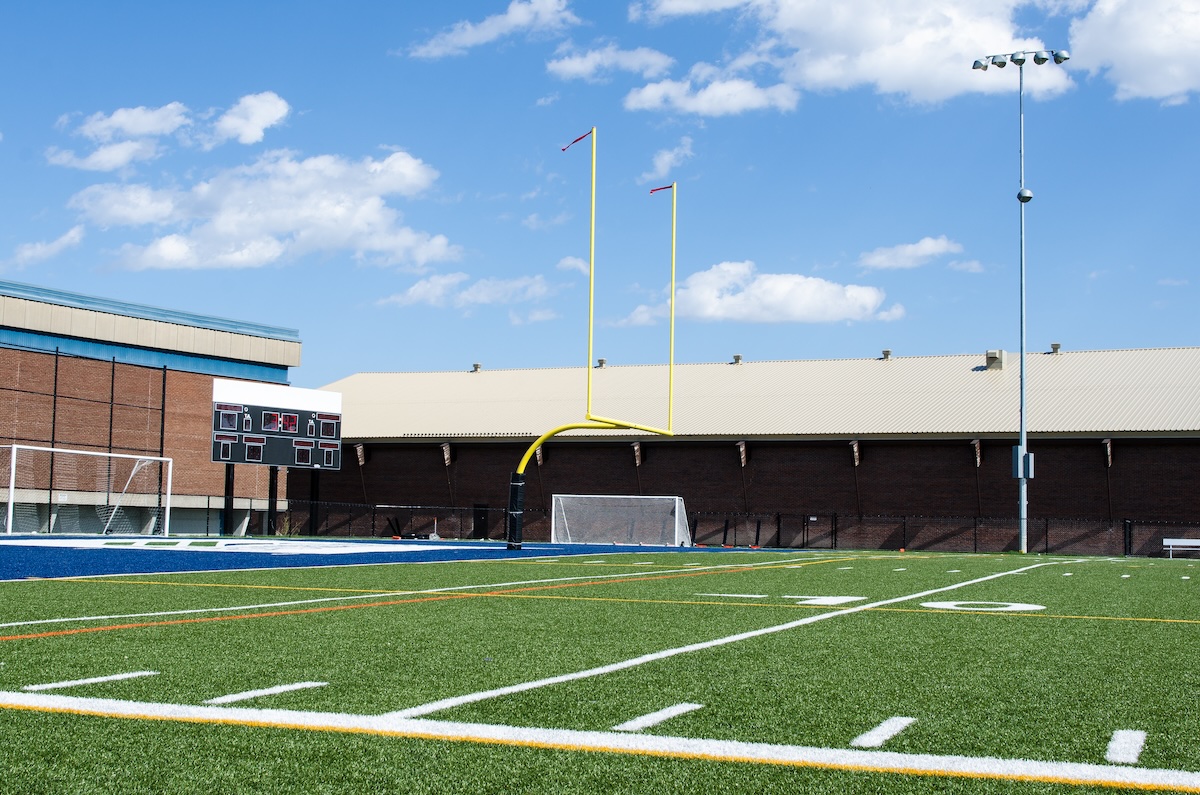
The material pulled from a sports field doesn’t need to be in perfect condition to remain useful. Many fields entering replacement age still have years of functional life left in applications that don’t experience the same performance demands as competitive athletics.
Common destinations for reclaimed turf include:
- Multi-purpose recreation spaces
- Pet facilities
- Playground surfacing
- Batting cages and training lanes
- Temporary event flooring
- Landscaping projects
- Low-impact practice areas
The suitability of turf for these uses depends on three variables: remaining pile height, backing integrity, and how gently it was removed. A field with strong fibers but heavily contaminated backing might still work for landscaping. A field with uniform backing but shorter fiber height might be most appropriate for dog parks or indoor training spaces.
The same applies to infill and pad materials. When separated properly:
Rubber infill may be screened and reused in non-athletic settings.
Sand infill can be cleaned and repurposed.
Shock pads often retain consistent impact characteristics and may see a second installation cycle.
Many recyclers run these materials through inspection, cleaning, and categorization before sending them downstream. That gives the material a predictable second life and reduces questions about performance.
Environmental Accounting for End-of-Life Turf
Synthetic turf workflows now include environmental considerations as part of standard planning. Landfill diversion has become a priority for many municipalities, and many removal contractors adopt internal diversion targets even when not required.
Environmental accounting typically includes:
- Tracking total recovered tonnage by material type
- Documenting disposal volumes for non-recoverable material
- Calculating reduction in landfill volume compared to full disposal
- Estimating avoided manufacturing demand through reuse
This data often becomes part of project reporting, grant documentation, or compliance requirements. Some facility managers use these metrics to justify long-term capital budgets by showing lifecycle efficiency.
What Facility Managers Should Expect During Removal
Turf removal is usually one of the fastest parts of a full sports field replacement, but it has more moving pieces than many owners anticipate. The existing athletic field being removed essentially becomes a construction site. Heavy machinery operates continuously, and trucking may run for hours.
Some of the most common considerations include:
- Temporary field closure
- Noise during infill extraction
- Increased vehicle traffic
- Short-term access limitations for maintenance crews
- Security or fencing during staging
- Dust control on windy days
Once removal is complete, the site transitions directly into base inspection and any required remediation. Most installation teams prefer to begin resurfacing as soon as the base is confirmed sound.
How Athletic Facilities Can Prepare for Future Field Removal
A turf field that’s 8 to 10 years from needing to be replaced doesn’t exactly keep anyone up at night—that is, it doesn’t feel “urgent.” It’s easy to think of that next cycle as a far-off problem—something for the next coach, the next budget, the next facilities director. However, the groundwork for a smooth removal usually starts on day one.
 The way the seams are aligned, how the base is compacted, even where the edge terminations end up—all those little installation decisions quietly determine whether that future decommissioning turns into a clean, methodical job or one full of buried fasteners and wasted material.
A few design choices at installation can make the eventual decommissioning far simpler.
- Consistent seam layout across the length of the field
- Clear edge termination systems that avoid burying fasteners under concrete or asphalt
- Stable base compaction that won’t produce fines that later contaminate infill
- Shock pad selection designed for both longevity and ease of separation
- Drainage profiles that resist fines migration
Even something as simple as keeping seam maps on file helps years later, especially when different facility managers or maintenance teams cycle through. Removal crews can benefit from knowing what’s beneath the surface, as much as they rely on what they see above ground. It’s not absolutely necessary in the sense that a field can be replaced without it—but when a field has inconsistent seams, buried edge hardware, or an unstable base, removal naturally becomes a little more of a demolition project rather than a controlled disassembly. In the end, the yield of reusable material will be lower.
The Current State of the Turf-Removal Ecosystem
The synthetic turf industry is in a transition period. For years, the main challenge was simply dealing with the volume of material reaching end of life. Now the emphasis is shifting toward structured recycling channels and consistent second-life markets.
A few broad trends as of 2025/2026:
- Infill recovery equipment is improving, producing cleaner material with fewer contaminants
- Shock pads are lasting longer, increasing the number of projects where pads remain suitable for another cycle
- Turf grading systems are becoming more standardized, allowing reclaimed material to be matched to second-life applications more precisely
- Transportation networks are expanding, making it easier to move reclaimed turf to regional reuse facilities
- Municipalities are adopting diversion targets that influence how contractors plan removal workflows
These developments create a more predictable end-of-life model than the industry had a decade ago. Removal once stood as the least engineered portion of a turf lifecycle; now it operates with clear sequencing and expectations.
What a Smooth End-of-Life Project Looks Like
When planning, surveying, equipment, and coordination align, removal becomes one of the most controlled phases of a replacement project. The field transitions from playable surface to clean subbase in a short window, and material begins its path toward reuse or recycling without interrupting the installation schedule.
A well-executed removal usually shows several traits:
- Field edges detach cleanly with minimal contamination
- Infill arrives at processing facilities in uniform batches
- Turf rolls maintain structure during loading and transport
- Shock pads come up intact or in predictable sections
- The base remains level, intact, and ready for grading
Each step supports the next and reduces corrective work before installation begins.
Final Thoughts

Synthetic turf systems are engineered for durability, but every field reaches the point where reshaping the surface for another decade of use becomes necessary. When that moment comes, the removal phase forms the bridge between two generations of play. A deliberate, well-structured process preserves the base, separates material streams, and provides a clear pathway for turf, infill, and pad components to be used again.
Across the industry, reuse and recycling channels continue to expand. Removal contractors refine their workflows, recyclers improve sorting and processing, and facility owners increasingly consider end-of-life outcomes during initial planning. This creates a more consistent and accountable lifecycle from installation through replacement.
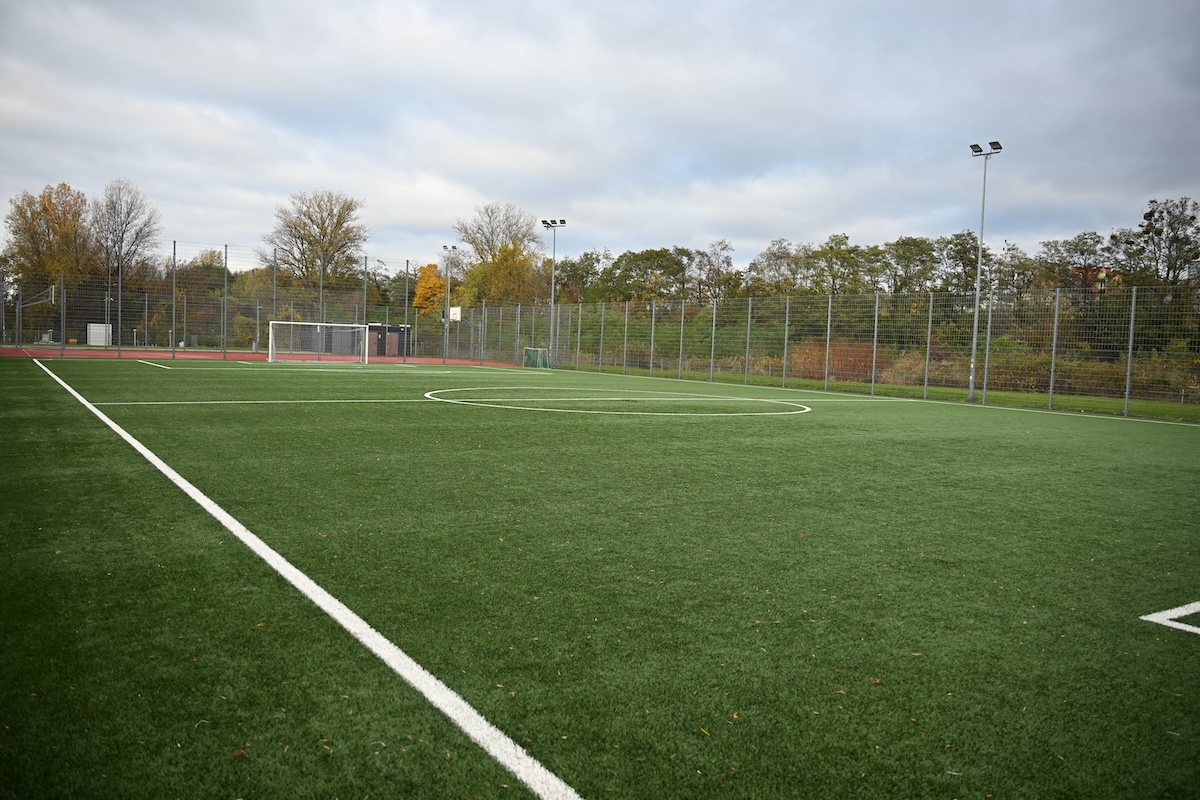 A modern field doesn’t have to just vanish or end up in a landfill after it’s taken up. The materials still have value. The trick is knowing how to move it through that next stage without blowing the schedule or the budget. Once you’ve seen how sports field removal and reuse fits together — from the haulers to the screeners to the reclaim yards, you can see that it’s still field work, just on the other side of the lifecycle.

