

Last Updated on September 5, 2026 by UDC Sports
A well-built synthetic field gives a program a long run of dependable seasons. And like any playing surface that gets used hard, it eventually reaches the point where a new one serves the athletes better.
Fibers gradually lay over, infill settles and shifts, seams begin to show their age, and the field starts playing a little differently than it did at installation. That change happens slowly enough that it can be easy to spot from the outside… but hard to notice from the sideline.
How Long a Turf Football Field Usually Lasts
You may see a variety of years cited for a synthetic sports field, because warranty terms differ by manufacturer and system. Football field builders can tell you that, in practice, how long a given artificial turf football field will last varies quite a bit from field to field. And typically, how much the field is used matters a lot more than how old it is.
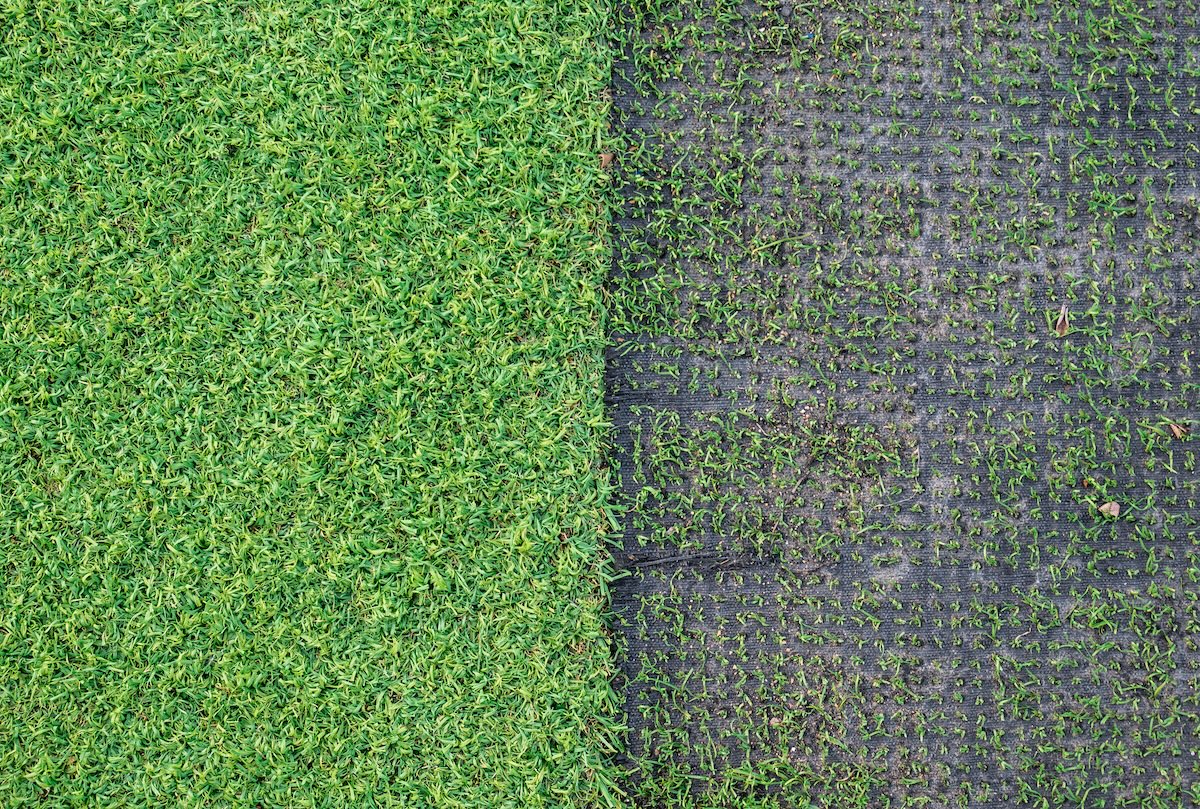
For example, think about a high school field carrying varsity and JV football, soccer, lacrosse, band practice, PE classes, and whatever the community books on weekends. That field is going to wear out well ahead of one that hosts a single varsity program. Two fields installed the same week can be years apart in condition by year 6.
Publicly documented replacements at universities, school districts, and park systems generally land in that same range, and facilities staff tend to cite the same short list of reasons: fibers thinning out, seams going weak, and footing that isn’t what it was.
Signs a Field Is Reaching the End of Its Life
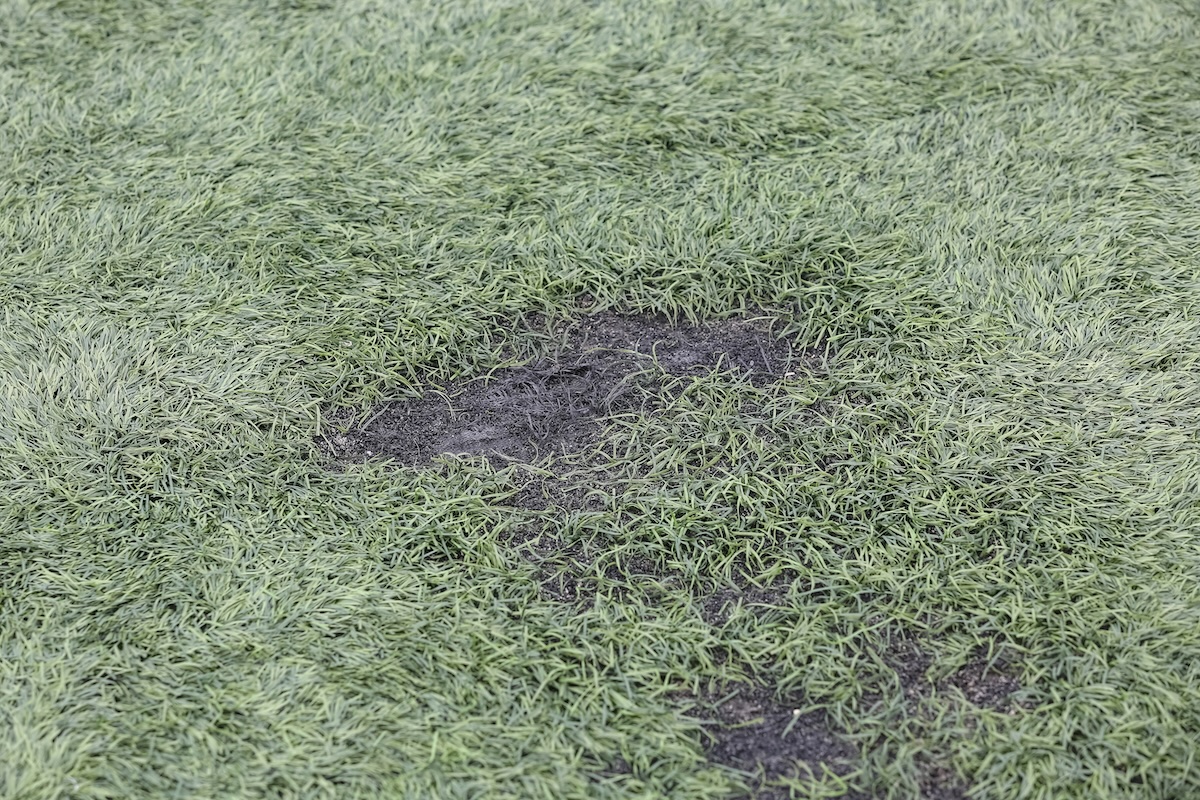
Field wear follows a recognizable pattern, and most of the signals appear well before a field becomes unusable. Fibers go first, the surface hardens, then the seams and drainage begin to show it.
The five below are the ones facility operators and field builders watch for. Any of them can appear on a healthy field as an isolated maintenance item, so the pattern matters more than any single observation.
Fiber Wear and Matting
Turf fibers on sports fields naturally thin, split, and lay over with use. High-traffic zones show it first, meaning between the hash marks, in front of the benches, and in the end zones near the goal lines. Fibers that no longer stand up after grooming are worn rather than dirty, and no amount of brushing brings them back.
Compare a worn area against a corner of the field that sees almost no traffic. The difference in fiber height and density is usually obvious once the two are seen side by side.
Rising Gmax Readings
Gmax measures the impact force a surface transmits, and it is the closest thing to an objective end-of-life indicator a field owner has. Values rise as infill compacts and fibers flatten, meaning the surface gets harder over time.
The relevant standard for football fields is ASTM F1936, which establishes a maximum permissible value, with ASTM F355 as the referenced test method. A field trending upward across successive tests is telling you something even while it remains within specification, and that trend line is more useful for planning than any single reading.
Seam Separation
Turf panels are joined with seaming tape and adhesive, and those joints carry years of cleats, grooming equipment, and thermal expansion. Seams that have begun to lift, separate, or show a visible line are a maintenance item early on and a replacement signal when they recur across the field.
Inlaid markings sit on the same principle, so numbers, hash marks, and logos pulling at their edges point the same direction.
Drainage Slowing Down
A synthetic field should shed a heavy rain and be playable shortly afterward. When water begins standing on the surface, or the field takes noticeably longer to clear than it used to, the cause is usually infill compaction or fines that have worked down into the base over the years.
This one deserves a closer look. Slow drainage sometimes indicates a problem in the base rather than the surface, and the two lead to different projects.
Infill That Will Not Stay Where It Belongs
Infill migrates toward low spots and out of high-traffic areas, and top-dressing corrects it up to a point. When a field needs infill added on a schedule rather than occasionally, or when depth varies noticeably across the surface, the system is working against itself.
One sign on its own usually means a repair. Several appearing together, particularly alongside a Gmax trend moving the wrong way, is the pattern that points toward replacement.
Getting an Objective Assessment
Field condition is difficult to judge by eye, since the decline happens gradually across many seasons. A formal assessment gives a program measured values to plan and budget against.
An evaluation typically covers Gmax testing across a grid of locations, fiber height and condition measurements compared against the original specification, infill depth readings across the field, seam and inlaid marking inspection, and drainage observation. Where the surface has clearly failed, an assessment can also establish that plainly. Some institutions have closed fields on the strength of an engineering report finding no usable life remaining.
Testing on a set schedule builds a trend line over time, which gives a program several budget cycles of warning before a replacement is needed.
Replacement Versus Rebuild
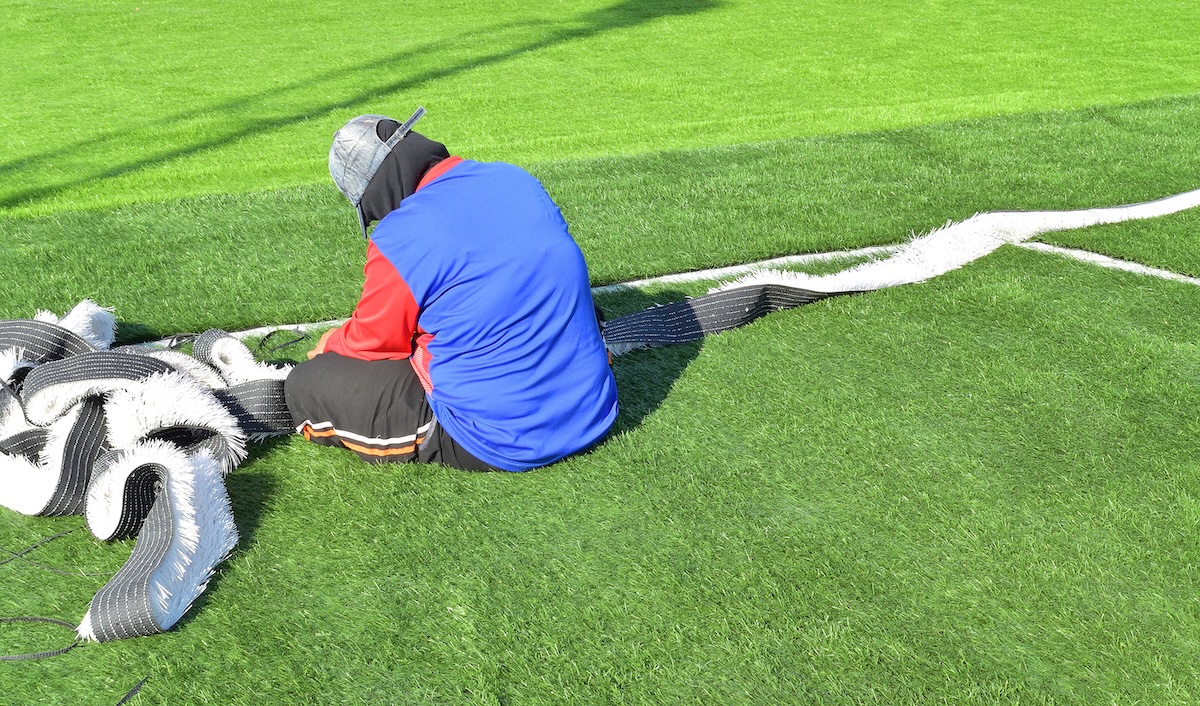
These are two different projects, and which one a field needs depends entirely on the condition of what sits beneath the turf.
Surface replacement includes removing existing sports field turf and infill, inspects and refreshes the existing base, and installs a new system on top of it. The drainage network, the aggregate base, and often the perimeter systems all carry over. It is the shorter, less disruptive project, and it is what most fields need at end of life.
A full rebuild goes down through the base. This becomes necessary when drainage has failed, when the base has settled and lost its grade, or when the original construction was inadequate and the new surface would inherit the same problems. It is a longer project with a scope closer to new construction.
The assessment is what establishes which one applies. A field with worn fibers and a sound base is a simple surface replacement. A field with standing water and low spots may have a base problem that replacing the turf would only cover up.
What Can Carry Over
A replacement preserves more of the existing facility than the term suggests. The base and drainage generally remain if they are sound. Perimeter curbing, goalpost foundations, sleeving, fencing, netting, and lighting typically stay in place.
Shock pads are the interesting case. Some pad systems are specified to be replaced with each turf cycle, while others are built to last through more than one, and municipal park systems managing multiple fields often plan around that distinction. Whether an existing pad stays or goes is a question for the assessment, and it meaningfully changes the scope of the project.
Planning Around the Season
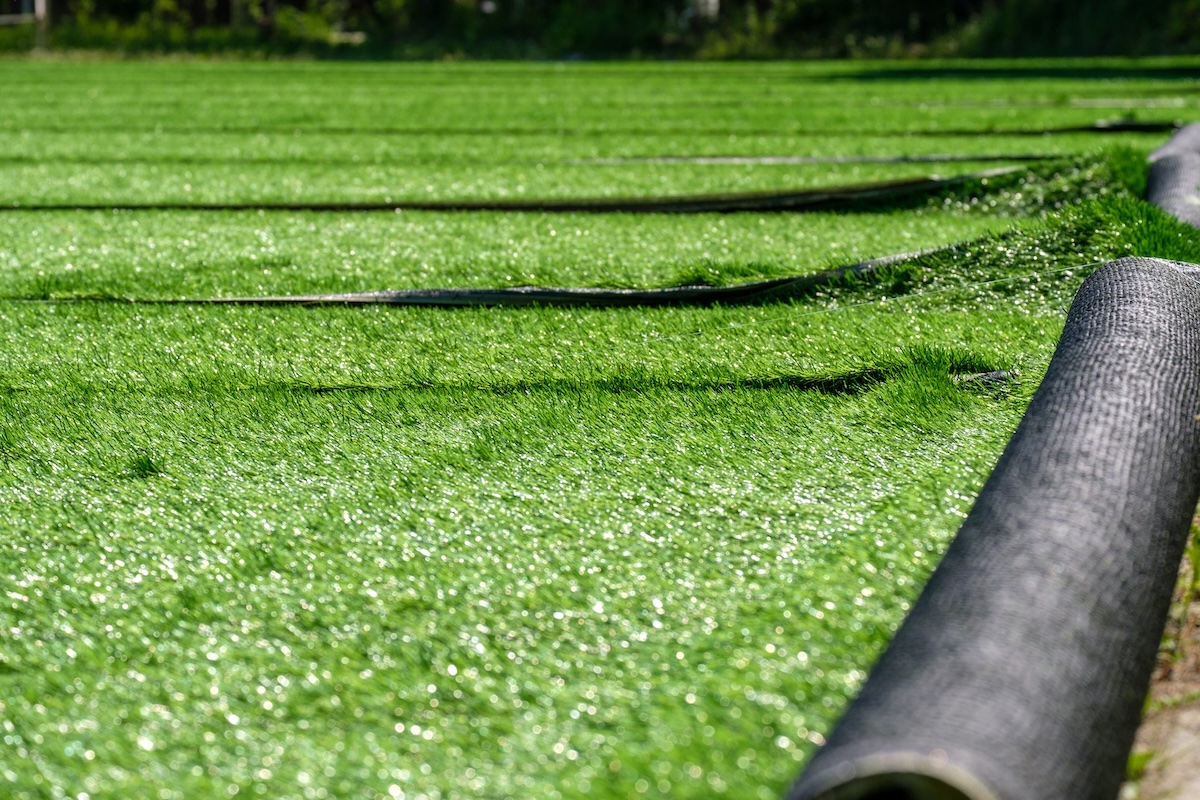
Replacement projects are scheduled into the gap between seasons, which for football usually means the window between spring and August practice. That window is fixed, it is short, and every program in the region is competing for the same crews within it.
Working backward from a fall opener, the assessment, the specification, the procurement process, and the contractor’s own calendar all have to fit ahead of the work. Public entities carry bid requirements that add time on the front end, and funding approval or a capital campaign adds more.
Programs that identify a replacement two or three years out have room to sequence all of that comfortably. A shorter runway narrows the options on both scheduling and specification.
Getting More Life Out of the Field You Have

Maintenance does not stop a field from aging, though it changes the slope of the curve considerably.
Regular grooming keeps fibers upright and redistributes infill before it settles into permanent low spots. Debris removal prevents organic material from breaking down into the infill and impeding drainage. Addressing seams early keeps a small separation from becoming a long one. Rotating practice locations spreads wear that would otherwise concentrate between the hashes. And periodic Gmax testing catches a hardening surface while top-dressing can still bring it back.
None of this makes a field last forever. It does often add seasons, and it keeps the timing of a replacement within the program’s control.
Frequently Asked Questions
Q: How long does an artificial turf football field last?
A: A service life of roughly 8 to 12 years is commonly cited, though warranty terms vary by manufacturer and system. Usage matters more than age. A field carrying multiple sports, multiple levels, and community events reaches end of life considerably sooner than one hosting a single varsity program.
Q: How do I know if my field needs to be replaced?
A: Watch for worn fibers that stay flat after grooming, seams separating in more than one location, water standing on the surface, infill needing constant top-dressing, and Gmax readings trending upward across successive tests.
One of those usually means a repair. Several together point toward replacement, and a formal assessment converts the impression into something you can budget against.
Q: Does the base have to be replaced too?
A: Usually not. Most end-of-life fields need a surface replacement, where the old turf and infill come off, the existing base is inspected and refreshed, and a new system goes down on top. A full rebuild becomes necessary when drainage has failed or the base has settled out of grade, which the assessment establishes before scope is set.
Q: Can we get another season out of a worn field?
A: Sometimes, and it depends on why the field is worn. Cosmetic wear and a surface still testing within specification is a different situation from a field with rising Gmax readings and separating seams. Where the question is safety performance rather than appearance, testing gives a clearer answer than a visual inspection.
Q: When should we start planning a replacement?
A: The work happens in the offseason window, which is short and in demand across every program in a region. Assessment, specification, procurement, funding approval, and the contractor’s calendar all precede construction, and public bid requirements add time. Two to three years of lead is comfortable; a few months is not.
Q: What happens to the old turf?
A: It is removed in sections, along with the infill, and hauled off site. Some material is recycled or repurposed depending on the system and the options available regionally. Removal and disposal are part of a replacement project, and how they are handled is a reasonable thing to have defined in the scope.
A turf field rarely fails suddenly. It declines through a recognizable sequence of fiber wear, hardening measured by rising Gmax, seam separation, and slowing drainage, all of which appear well before the field becomes unusable. Tracking that sequence over time is what gives a program the runway to budget for the work and set the timing.
UDC Sports is a general contractor specializing in sports field construction, handling both new athletic field construction and the replacement of fields that have reached the end of their service life.

