
Last Updated on September 18, 2026 by UDC Sports
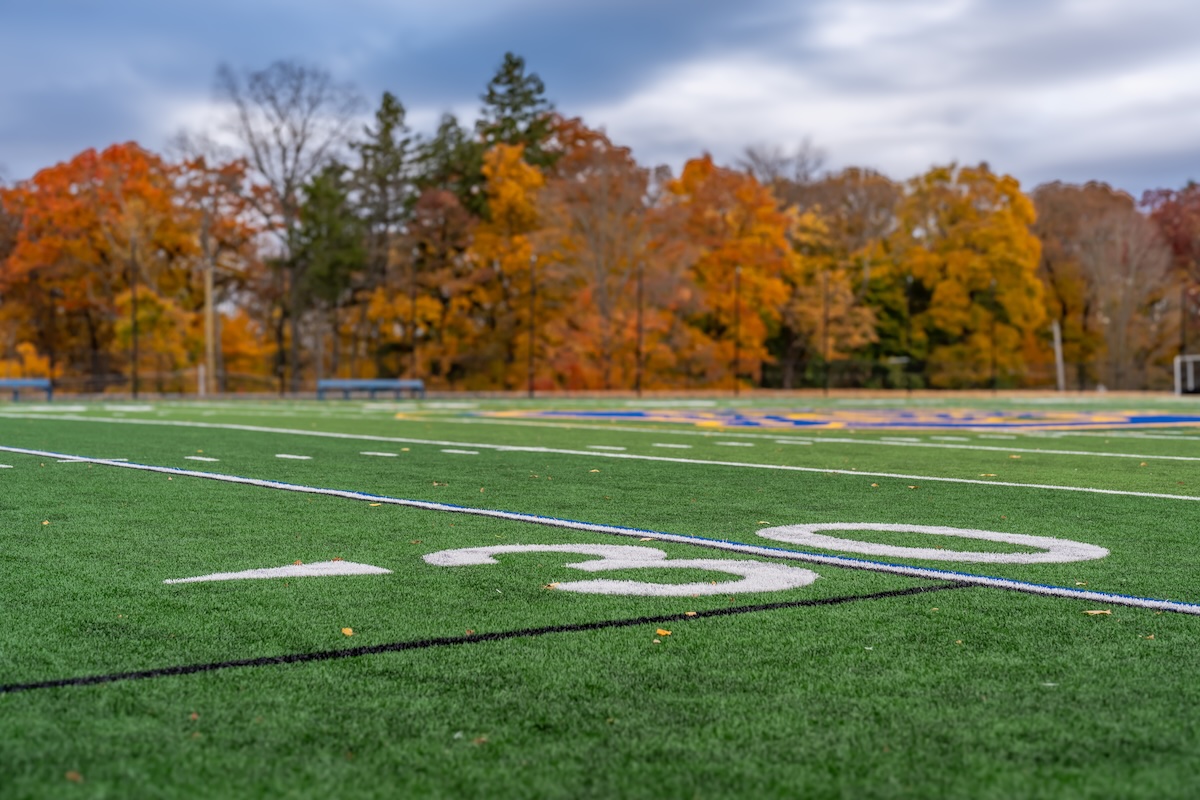
There’s something satisfying about seeing a fresh field under the lights, with the school colors looking sharp at midfield. Getting there starts with a working budget and a plan that fits the program. The athletic department has a season to prepare for, and the facilities team has a full calendar of practices, games, and community events to accommodate.
On the sports construction side, the starting point is the field already in place. Its footprint, the usable infrastructure beneath it, and the turf system selected for the replacement help define the work and shape the budget.
When it’s time to replace a turf football field, the replacement costs depend on the area being replaced, the selected turf system, removal and installation work, and the preparation needed for the existing base. Infill, shock pad requirements, and the field’s markings also contribute to the project’s scope.
These are familiar parts of planning a new turf sports field replacement. Together, they establish what the work involves and how the new surface will serve the program.
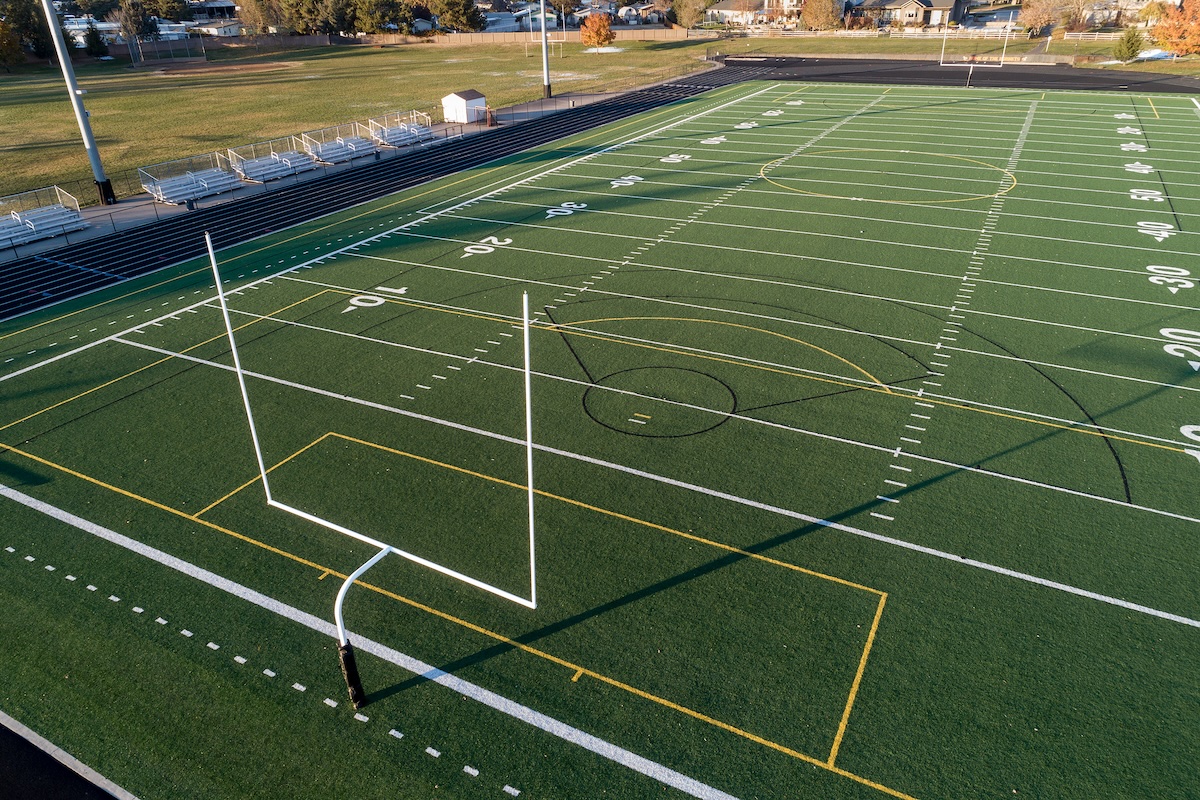
An existing synthetic turf football field has a head start: there’s already a developed site and a constructed field beneath the playing surface. Where the aggregate base and drainage remain suitable, they can support the next turf system. Reusing that infrastructure removes the need to construct those elements again. A surface replacement can concentrate on taking out the old turf, preparing the base, and installing the new playing surface.
The contractor’s assessment establishes what can stay and what preparation is needed. That may include evaluating the base’s grade, stability, and drainage, along with its suitability for the proposed system. A worn playing surface alone doesn’t establish that the foundation needs rebuilding.
This makes the existing field an important part of the replacement budget. The site’s usable infrastructure carries forward into the next installation, and the preparation work is based on its condition.
The Area Being Replaced
A football field’s game markings don’t describe every square foot of turf at the facility. The replacement area can extend beyond the sidelines and end lines into the surrounding runoff areas. A shared football and soccer facility may also have a wider turf footprint to accommodate its layout.
The actual replacement boundaries help determine the quantity of turf and infill, as well as the amount of surface to remove and install. With the same system and scope, a larger area requires more material and installation work.
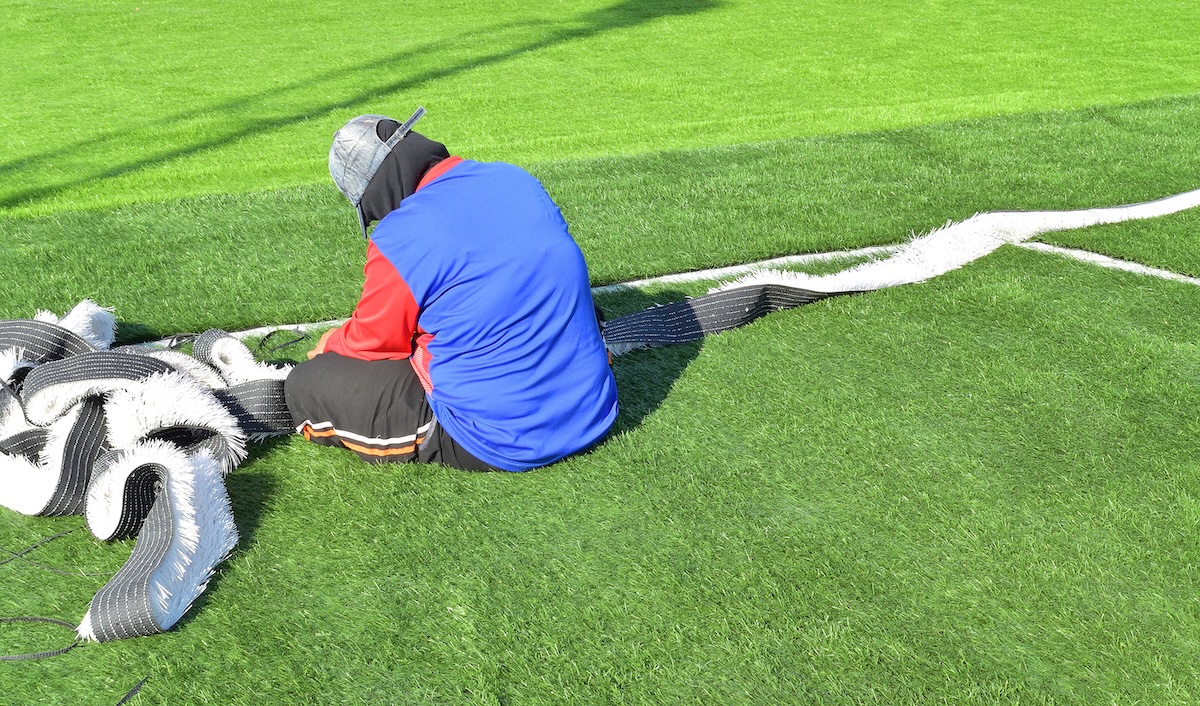
For an existing facility, the current footprint provides a defined starting point. A replacement can follow those established boundaries, with any planned changes incorporated into the design.
The space around the playing field has a purpose, too. Athletes, officials, and sideline personnel use areas beyond the game markings, and those areas belong in the overall surface plan. The project’s dimensions account for the facility as it will be used.
The Turf System Selected
Synthetic sports turf comes in different configurations, with variations in fiber construction, pile height, backing, and infill. The selected combination helps determine the material requirements and installation specifications for the replacement.
Those choices are shaped by the program. A field hosting football, soccer, physical education, and community events has several uses to accommodate. The selection process considers the sports being played, expected use, maintenance resources, and applicable performance requirements.
A school’s weekly calendar can say quite a bit about what it needs from a field. Friday night may get the attention, but the surface also has to accommodate Tuesday’s practice, Wednesday’s PE classes, and the rest of the schedule.
The existing field provides useful context for that selection. Its layout, usage history, and maintenance experience help the project team identify suitable options for the next installation.
For budgeting, the turf product is considered as part of the complete system. The carpet, infill, and any underlying pad work together, and their specified arrangement determines what will be installed.
Infill
In an infilled sports turf system, the material between the fibers contributes to the surface’s performance. Depending on the system, sand and performance infill provide ballast, support the fibers, and contribute to cushioning and traction.
Different systems use different materials and quantities. Options include sand and rubber combinations, as well as systems using other mineral, synthetic, or plant-based materials. Those choices are coordinated with the selected turf and any underlying pad.
The infill material and its specified application rate determine the quantity needed across the replacement area. They also form part of the installation process, as the infill is distributed and worked into the surface according to the system’s requirements.
Routine care is another consideration during selection. The facilities team will maintain the completed system, so its maintenance requirements belong in the planning process alongside the field’s intended use.
Shock Pads
Some synthetic turf systems incorporate a shock pad beneath the carpet. The pad contributes to impact attenuation, and certain products also provide drainage functions. Its role depends on the system’s design.
On a replacement project, an existing pad may be a reusable component. Its suitability depends on the particular product, its condition, and the proposed new surface. Where reuse is appropriate, the pad can remain part of the field’s next installation.
Other projects incorporate a new pad, while some turf systems are designed without a separate pad. The selected arrangement forms part of the overall system specification and material requirements.
This is another way the field already in place helps shape the replacement. The project team evaluates the existing components alongside the requirements of the new surface.
Removing the Existing Turf
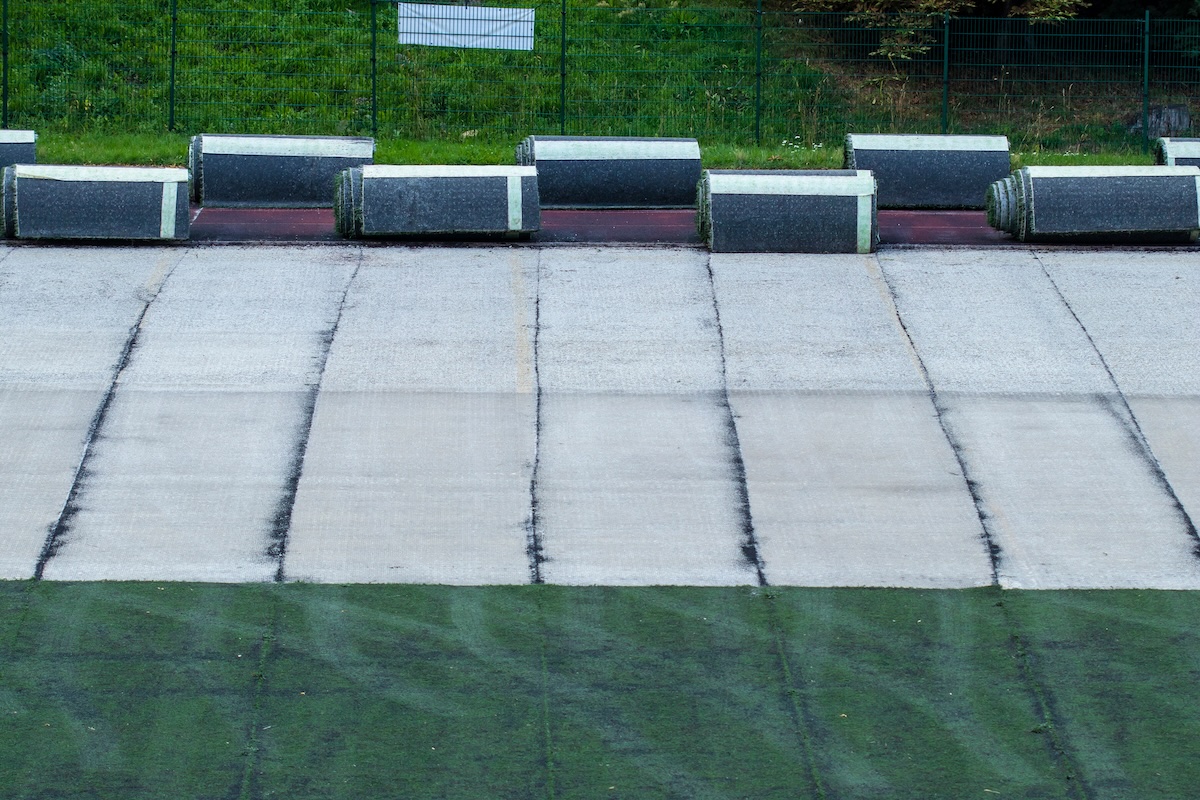
Replacing a field includes removing the surface that has carried the program through its previous seasons. The old turf and infill are handled as part of the transition to the new installation.
Labor, equipment, loading, and transportation contribute to that work. The removal approach is coordinated with whatever base or pad the project intends to retain, allowing the next stages of preparation and installation to proceed.
UDC’s sports field removal services include project management, labor, equipment, and material shipping offsite.
Recovery, reuse, recycling, or disposal arrangements depend on the existing materials and the options applicable to the project. Material handling is incorporated into the removal plan so the field can move through each stage of replacement.
The Field Layout Being Installed
A replacement gives the program an opportunity to carry its familiar field design forward or refresh the layout for the coming seasons. Football lines, numbers, hash marks, and any planned end-zone lettering or midfield logo all belong in that design. Shared facilities may also incorporate markings for soccer or lacrosse. Permanent markings can be created using colored turf inlays.
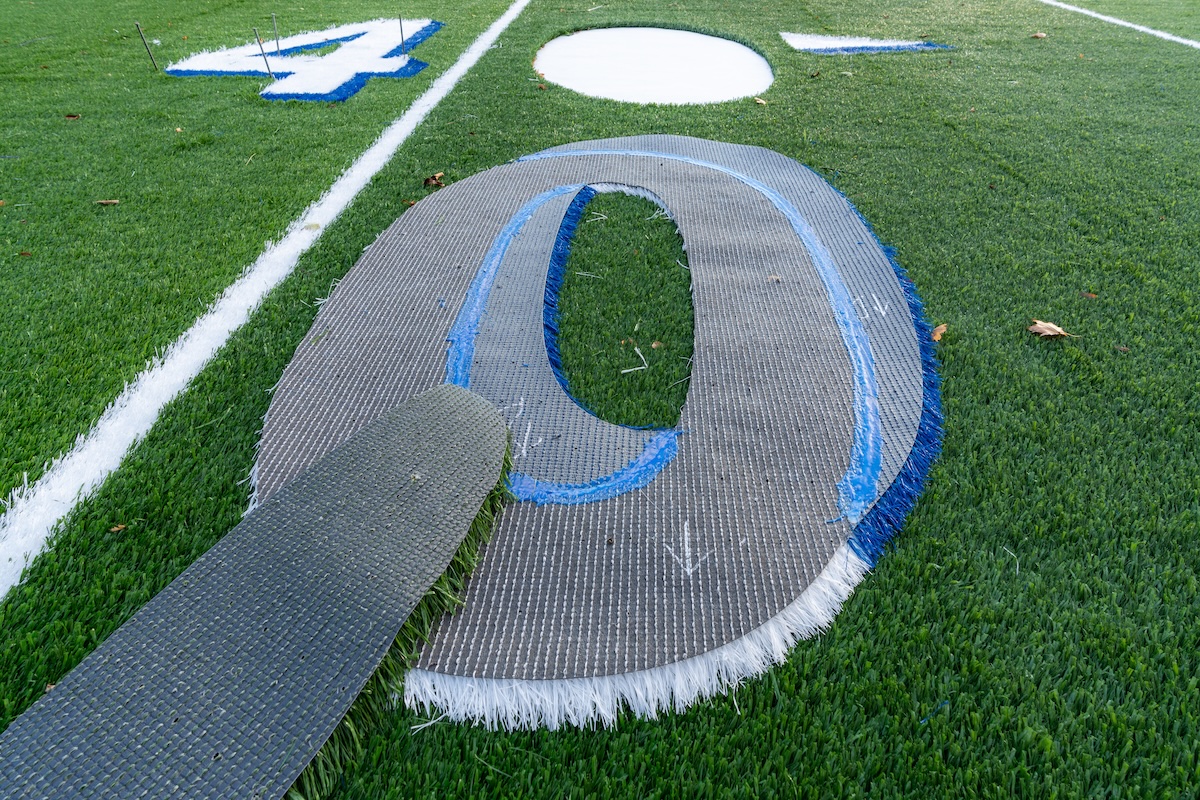
The selected graphics and marking arrangement contribute to the materials and installation work. Their size, configuration, and method of incorporation are included in the field design.
This is the part of the project that people can picture immediately. The new end zones. The school colors. The logo everyone will see from the stands. Those visible details are developed alongside the playing lines and the rest of the surface.
The approved layout brings those elements together. Installation then includes assembling the turf, incorporating the specified markings, applying infill, and completing the finishing work.
What Goes Into a Turf Replacement Project?
The replacement budget reflects the work required to move from the existing field to the completed surface. Each part has a defined role in that process.
| Project component | How it contributes to the work |
|---|---|
| Replacement footprint | Establishes the area to be removed, prepared, and surfaced |
| Existing surface removal | Includes handling the old turf and infill, loading, and transportation |
| Base preparation | Prepares the retained foundation for the selected turf system |
| New turf system | Determines the turf product, infill, and pad arrangement |
| Field layout | Defines the sports markings, lettering, and graphics being installed |
| Installation | Brings the specified materials together into the finished playing surface |
| Completion | Includes finishing work and the inspections or testing specified for the project |
These components are coordinated as one replacement project. The field area establishes material quantities, the system specification guides installation, and the existing infrastructure determines the preparation involved.
How Square Footage Relates to Project Cost
Square footage is useful for calculating material quantities and describing the size of the installation. It gives the project team a consistent basis for measuring the replacement area.
The total project cost also reflects the selected materials and the work involved in removing, preparing, and installing the surface. That combination is why an estimate is developed around the particular field and its replacement plan.
Once the footprint and system are established, those details provide a basis for project-specific pricing.
Planning Around the Program’s Needs
The replacement plan takes shape around how the field will be used and when it needs to be available. Football may be the primary sport, with other activities sharing the same surface throughout the year.
Existing plans, information about the installed system, and field maintenance records can support the contractor’s assessment where those materials are available. The facilities team’s experience also helps describe how the field has performed during daily use.
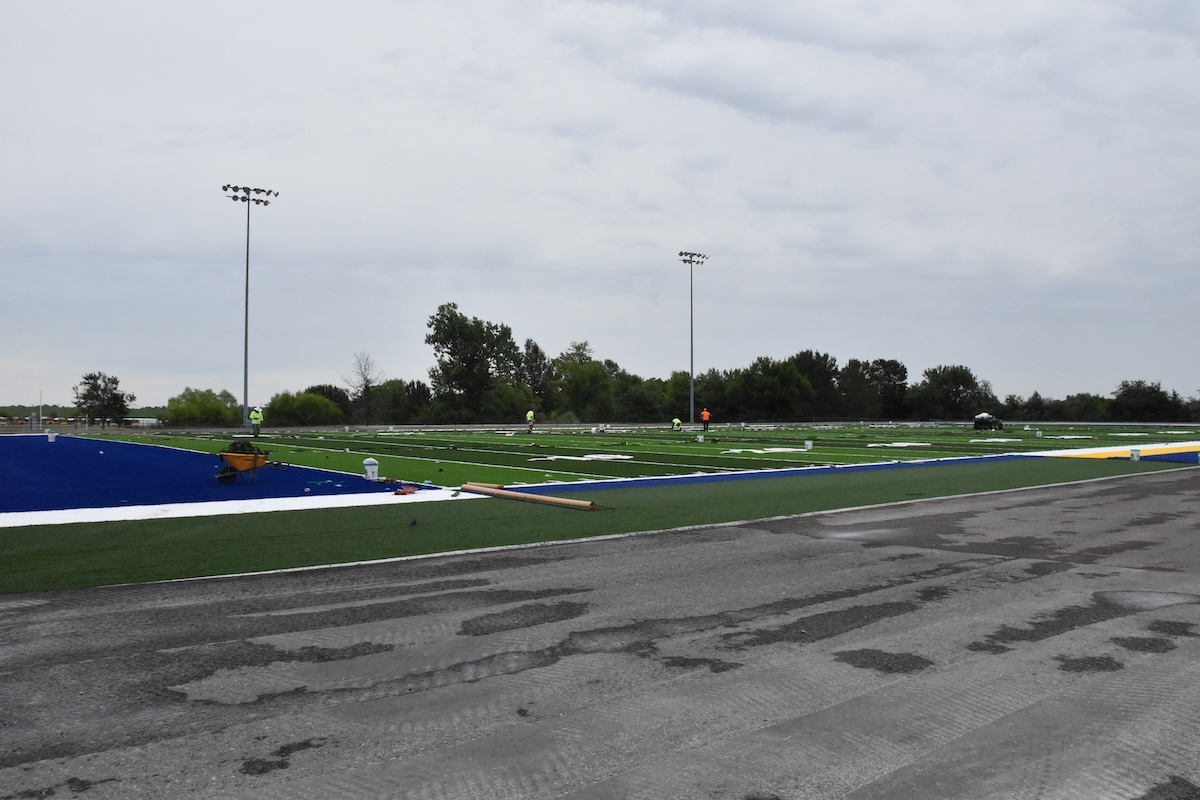
That information contributes to decisions about the next turf system, the layout, and the preparation work. A program continuing with its current sports and field boundaries already has a useful framework for the replacement.
The construction schedule is coordinated with the facility’s calendar. Practices, games, school activities, and community use all help establish the intended work period and return-to-use date.
For an athletic department, that calendar can be nearly as familiar as the field itself. The replacement planning process brings those operational needs together with the sports facility construction sequence.
Football Field Turf Replacement Cost Questions
Q: Does the Base Have to Be Replaced With the Turf?
A: An existing base can remain when its condition and suitability support the new system. The assessment determines what preparation is needed. Replacing worn turf doesn’t automatically require rebuilding the base and drainage.
Q: Does Every Replacement Need a New Shock Pad?
A: The answer depends on the specified system and what is already installed. Some existing pads can be retained after evaluation. Other projects include a new pad, and some turf systems are designed without a separate pad.
Q: Can the New Field Keep the Same Layout?
A: A replacement can retain the existing footprint and marking arrangement when they remain suitable for the program and applicable requirements. The design can also incorporate planned updates to colors, graphics, or sports markings.
Q: How Is a Replacement Different From Building a New Field?
A: A replacement begins with an existing facility. Suitable infrastructure can remain in use, allowing the work to focus on the surface and its preparation. New field construction includes establishing the site and building the infrastructure needed to support the playing surface.
Planning Your Football Field Turf Replacement
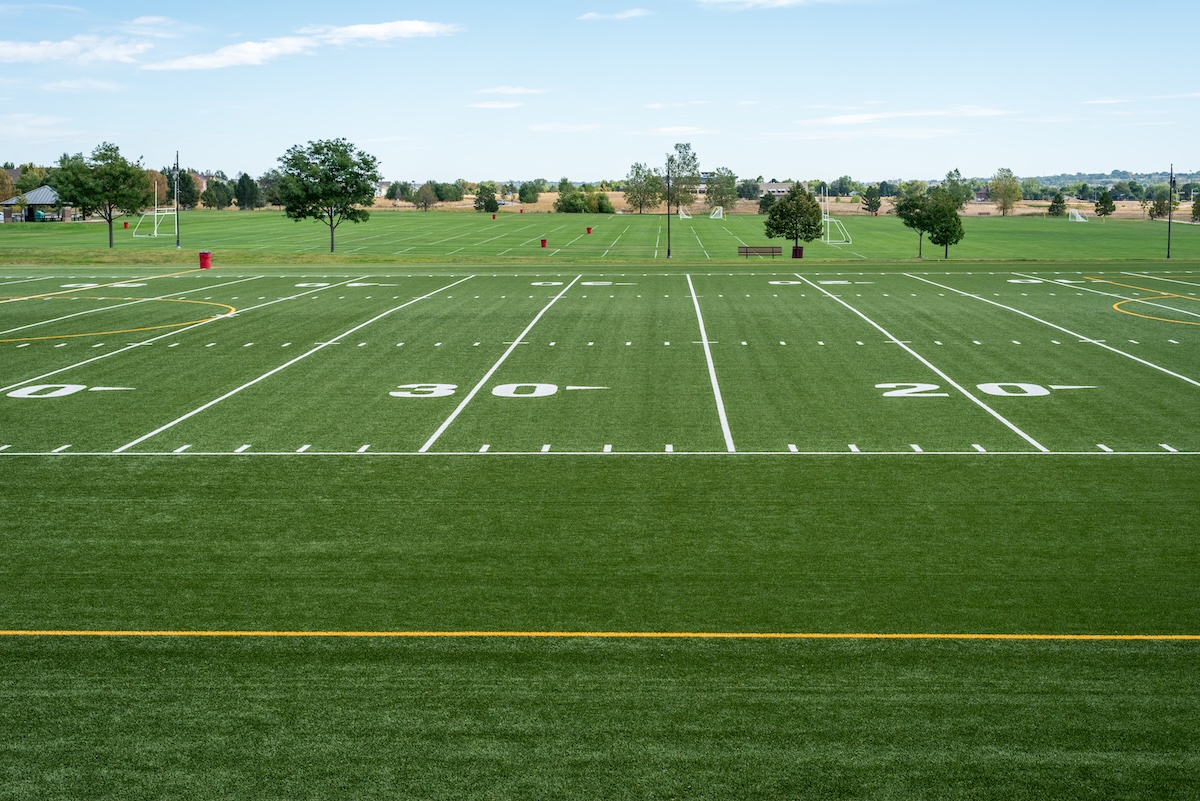
A football field replacement budget develops from the facility’s existing condition, the selected surface, and the work involved in installation. Usable infrastructure carries forward, the new system is matched to the program, and the layout prepares the field for its next seasons of use.
UDC Sports provides sports field construction, removal, and replacement services. If your program is preparing for its next turf surface, contact UDC Sports to discuss a replacement project for your facility.

