
Last Updated on October 30, 2026 by UDC Sports
An artificial turf field that has supported years of practices, games, and community events eventually needs a new playing surface. Schools, churches, parks departments, and athletic programs will often call this project “resurfacing, ” hough it also goes by turf replacement or sports field renovation.
Now in many cases, this work replaces the top layers of the field, the turf and the infill worked into it, while the stone base and drainage underneath stay in service once an inspection confirms that they are sound.
Resurfacing begins with taking the old system out. Artificial turf removal and recycling clears away the worn carpet, the infill, and any pad that won’t be reused, then sends those materials on for reuse or recycling. How carefully the first phase is handled affects how much material can be recovered, and how ready the field is for what comes next, whether that’s a new turf sports field installation, grass, or a drainage upgrade.
What Artificial Turf Field Resurfacing Includes
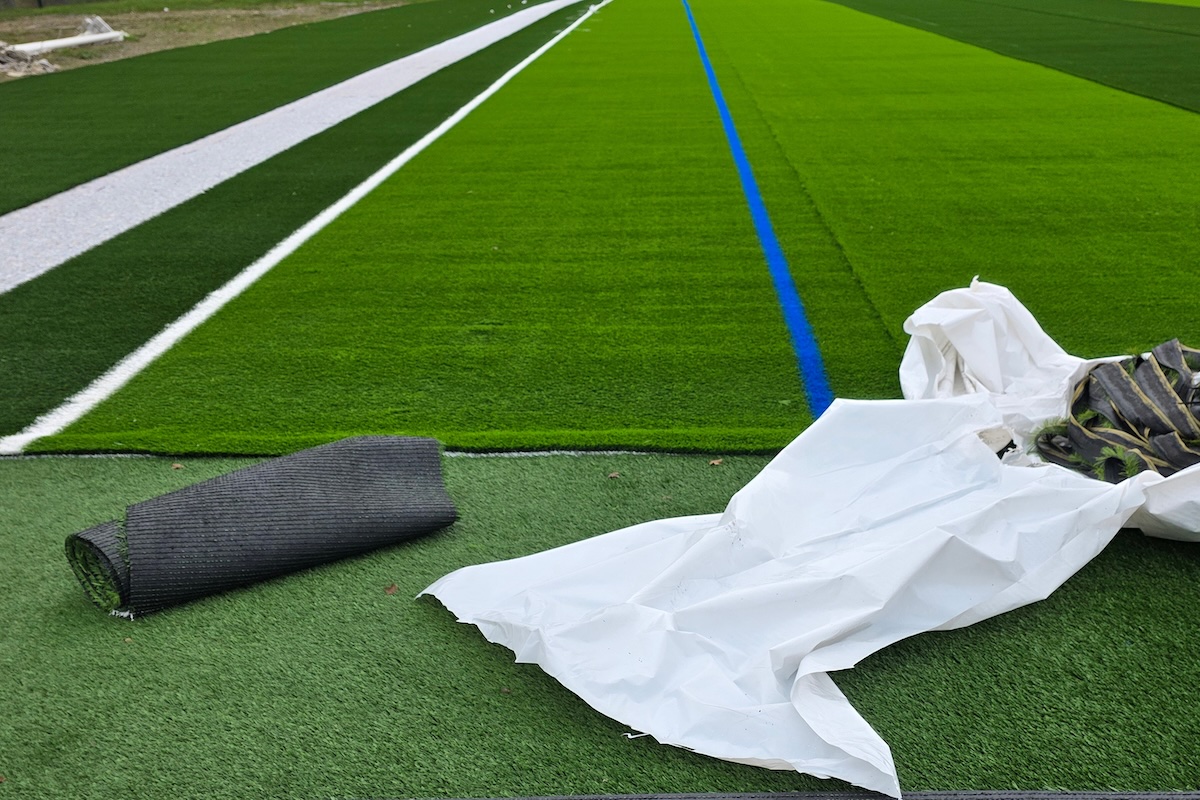
A synthetic turf sports field is built in layers. Resurfacing treats each layer differently:
On top you have the turf carpet: synthetic fibers tufted, or stitched, into a backing.
You also have the infill, which is a granular material such as sand, crumb rubber, or some other possible alternatives, that sits between the fibers to hold them upright, add weight, and help with cushioning and traction.
Some fields will also have shock pads, a resilient layer under the carpet to absorb impact and, in some products, also helps with water drainage.
Beneath all those layers is the stone base, compacted crushed aggregate that supports the field and carries water down to the drainage system. The layers under artificial turf are designed to work as one system, so each is evaluated once the old surface comes off. Here is how each layer is typically handled during a resurfacing project.
| Layer | What It Does | What Typically Happens During Resurfacing |
|---|---|---|
| Turf carpet | Provides the fibers and the playing surface | Cut into strips, rolled, and shipped off site for reuse or recycling |
| Infill | Supports the fibers and adds weight, cushioning, and traction | Extracted and collected, then screened for reuse or sent for recycling |
| Shock pad (if present) | Absorbs impact, and some products also aid drainage | Evaluated for condition and compatibility, then kept in place, lifted, or replaced |
| Stone base | Supports the field and moves water toward the drains | Inspected, repaired where needed, and laser graded |
| Drainage system | Carries water off and away from the field | Checked while the field is open and upgraded if needed |
Signs a Turf Field Is Ready for Resurfacing
In the field (no pun intended) of sports construction, the turf doesn’t wear out all at once. You have fibers in high-traffic areas like goal mouths, the center of the field, and sideline team areas that usually flatten and thin first, and the surface can feel harder underfoot as infill compacts or moves around.
Seams that need repeated repairs, infill that needs frequent topping up, and water that lingers after storms are some other common indicators, though there are many potential signs.
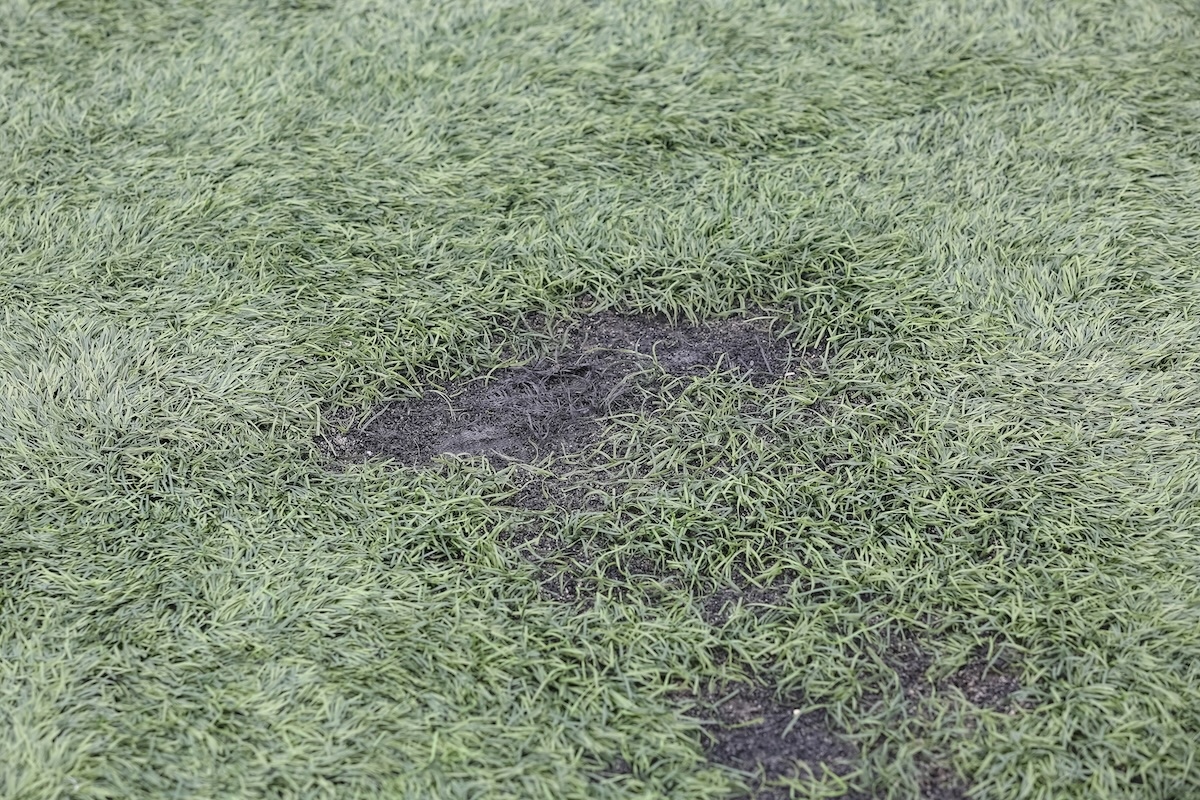
The service life of any given turf sports field can depend heavily on hours of use, maintenance, and climate, so 2 fields installed the same year can reach this point at different times.
Impact testing: A G-max test drops a weighted device onto the surface and records how sharply it stops, and higher readings indicate a harder surface. ASTM International publishes a standard specification for this kind of in-field impact testing on synthetic and natural turf.1 The Sports Turf Managers Association’s guide for athletic directors and school boards recommends testing on a regular schedule, with more frequent testing for heavily used artificial turf fields.2
A rising trend in impact test readings, together with visible wear, can signal that the need for sports field resurfacing is either approaching or already here. The indicators used to judge when to replace a turf football field largely apply to soccer, lacrosse, and multi-sport fields as well, since those surfaces are built from the same components.
How Artificial Turf Removal Works
Removal is the most visible part of a resurfacing project, and much of it is planned before any equipment arrives. That planning confirms what system is in the ground, how the infill and any pad will be handled, where turf rolls and bulk bags of infill will be staged, and how trucks will reach the field. The order of work varies with the turf system and equipment, but a typical sequence looks like this.
Pre-removal walk-through
The turf product, infill type and depth, pad type, and seam layout are confirmed, along with site access and the staging areas where turf rolls and bulk bags of infill will wait for pickup.
Infill extraction
Machines pull sand and rubber out of the carpet and collect them, often in large bulk bags. Keeping infill free of base stone and debris preserves the option to screen and reuse it.
Cutting the carpet
The turf is cut into strips, often along existing seams, with blades set to leave the base and any pad below undisturbed. A clean cut keeps the base surface intact for the next installation.
Rolling and loading
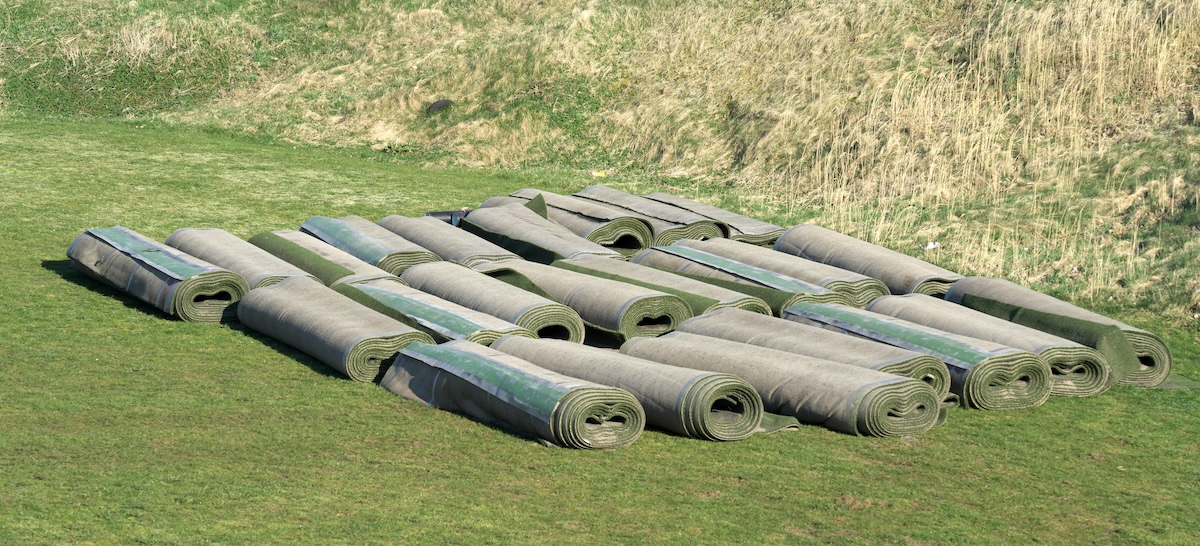
Strips are rolled, secured so they hold together, and loaded for transport off site. From there, they typically go to a facility that sorts, processes, and prepares turf for reuse or recycling.
Lifting or protecting the pad
A pad that is being replaced is lifted and stacked separately. A pad that is staying is protected while the carpet comes off, then evaluated before the new turf goes down.
Base inspection
With the field open, the stone base and drainage are checked for soft spots, settlement, and other areas that need repair. Repairs come first, followed by grading for the new surface.
Keeping each material separate during removal leaves more reuse and recycling options available afterward. Field size, weather, and infill type all affect how long turf field removal takes, and wet infill is heavier and slower to extract than dry material.
What Happens to Old Turf and Infill After Removal?
A full-size turf field holds a large volume of turf carpet, sand, and rubber, and there are several ways to keep those materials in use. The U.S. Environmental Protection Agency ranks waste management approaches from most to least preferred, with reducing and reusing at the top, recycling next, and disposal at the bottom.3
The Synthetic Turf Council, the artificial grass industry’s trade association, publishes a guideline that encourages owners to look at recycling, reuse, and repurposing options for each part of the system before choosing disposal.4
Reuse keeps a material working in a similar role. Turf with usable life remaining can be inspected, repaired where needed, and installed in lower-impact settings such as practice areas, batting cages, indoor training spaces, and landscaping.
Infill can sometimes be screened, meaning sifted to remove debris and fine particles, and reused in a new field or elsewhere. The Synthetic Turf Council notes that reused infill is often blended with new material and may need testing to confirm it meets the requirements of the system it goes into.4
Recycling technically means breaking materials down so they can become new products. Depending on how the carpet was made, used turf can be processed into raw materials, and the recycled turf can go toward new artificial turf fields. Shock pads have their own paths: some manufacturers accept recovered pads for recycling, and some pads find second uses outside of sports fields.4 Which of these second-life uses for removed turf fits a given field will all depend on each material’s condition, and how cleanly it was able to come out.
UDC Sports works with ReTurf, an artificial turf recovery and recycling specialist, to keep removed turf out of landfills. Through that partnership, removed turf can be shipped to one of ReTurf’s Rx3 facilities, where it is processed, repaired if needed, and made available by the roll for used turf applications.
The Synthetic Turf Council’s guideline describes a two-part chain of custody certification: the first part records the project and its materials, and the second tracks where each load ends up.4 Owners with sustainability goals or board reporting requirements sometimes ask about documentation like this while planning a resurfacing project.
What Happens to the Shock Pad, Base, and Drainage?
The parts of a turf field below the surface took significant earthwork and material to build. When the stone base and drainage are in good condition, the new surface can go down on a foundation that is already in place, and the project can concentrate on the layers that wear out.
Each layer is judged on its own condition once the old turf is off. The open field is also a practical time to address issues that may have developed over the years, such as a low spot that holds water or a drain line that has slowed down.
Shock Pads
A shock pad adds impact absorption under the turf carpet, and some products are designed to help water move off the field as well. The Synthetic Turf Council notes that some pads last through more than one turf carpet.4 Whether an existing pad can stay depends on its condition, its compatibility with the new turf system, and testing, so that decision usually follows an inspection after the carpet comes up.
The Stone Base
The base is checked for soft areas, settlement, and buildup of fine particles, often called fines, that can slow drainage. Repairs are made where needed, and the base is then laser graded, which uses laser-guided equipment to restore precise, consistent slopes across the field. A well-graded base helps the new surface drain evenly and play the same from one end to the other.
A resurfacing project can expand into a rebuild. When an inspection finds widespread settlement or drainage that needs replacement, the project may extend down through the base, which brings it closer to new construction in schedule and scope.
Drainage
Drainage work is simpler to schedule while the field is already open. Collector drains, outlets, and perimeter lines can be inspected and cleaned, and removal can serve as the first step of a larger sports field drainage upgrade, such as adding drains in low areas or improving where water leaves the site.
Choosing the New Field Surface
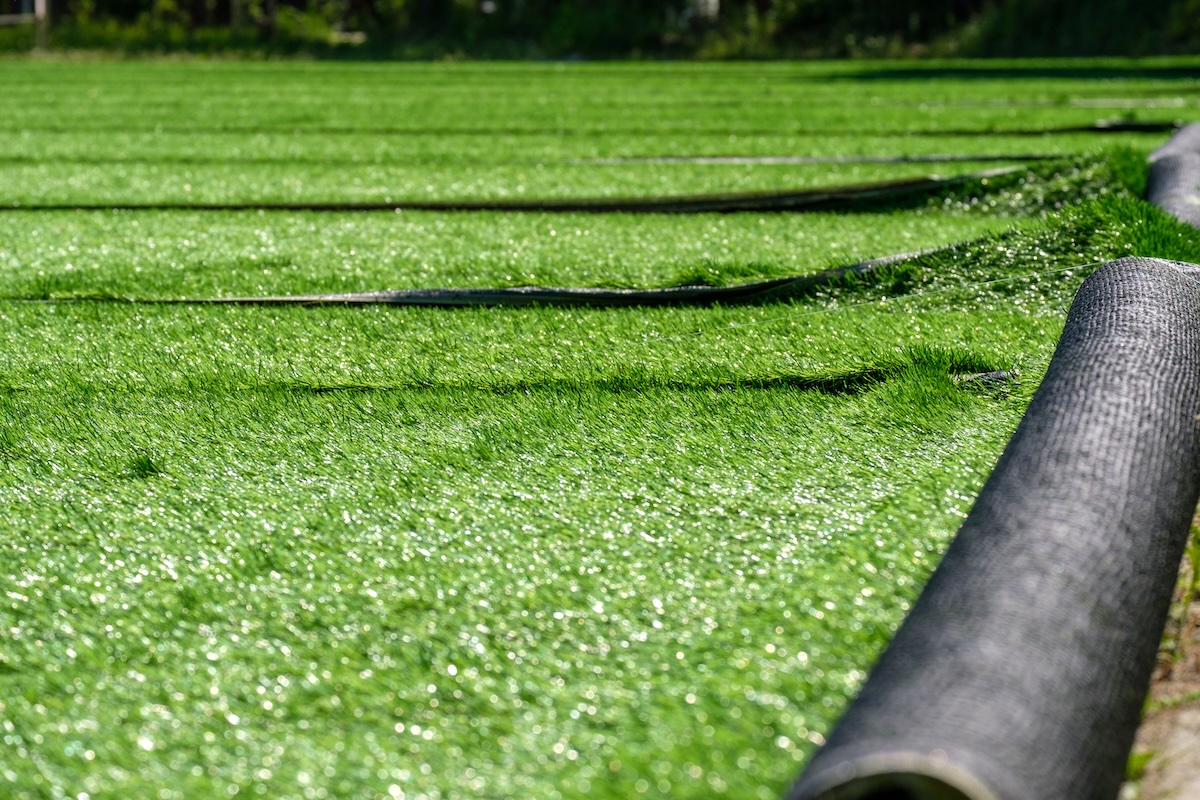
Resurfacing usually ends with a new artificial turf system, and removal also makes other choices possible. A field can be prepared for a different turf product than the one it had, converted to natural grass, or rebuilt as a hybrid system, depending on how the field will be used and the maintenance it can receive.
The Sports Turf Managers Association’s guide is written for athletic directors, school boards, and municipalities, and it lays out construction and maintenance considerations for synthetic and natural fields side by side.2 Each path below starts a little differently once the old turf is out.
A new artificial turf system
Fiber types, pile heights (fiber lengths), infill options, and pads have continued to develop, so a replacement field doesn’t have to match the original. The base is typically repaired and laser graded, and owners can revisit infill, add or keep a shock pad, and update inlaid lines and logos, which are colored turf sections built into the carpet.
Natural grass
Converting to grass typically means building a rootzone, the growing layer where grass roots live, over subsurface drainage, along with irrigation and time for the grass to establish before regular play. ASTM International publishes a standard guide for building high-performance sand-based rootzones for athletic fields.5
A hybrid system
Hybrid fields combine natural grass with synthetic fibers that reinforce the playing surface. They aim for the feel of grass with added durability, and they generally follow natural grass construction and care, including irrigation and mowing.
Because those paths begin differently, the choice of new surface is usually settled before removal starts. A field headed for new turf keeps its base for regrading, while a natural grass conversion may involve removing or reworking base stone to make room for a rootzone, drainage, and irrigation. Removal and sports field surface installation are typically planned together, so the base is left ready for the surface that follows.
Planning a Field Resurfacing Project
Timing tends to be the first constraint in synthetic turf resurfacing. Programs typically need the field back before a particular season, so the work is often scheduled for the offseason, and public owners may need added lead time for budgeting, approvals, and bidding.
Starting early leaves room to settle the new surface, line up materials, and work around the school year or league calendar.
Having some records from the original installation can help everyone involved in the construction plan the work. The Synthetic Turf Council advises owners to know their existing system’s type and manufacturer, and the Sports Turf Managers Association recommends keeping a maintenance log throughout a field’s life.2,4 Useful records include:
- The turf manufacturer, product, and installation date
- Infill type, depth, and records of infill added over the years
- The shock pad product, if one was installed
- Construction drawings, seam layouts, and drainage plans
- Maintenance logs and past G-max test results
Partial records are still useful. Gaps can typically be filled in during an on-site evaluation, when the existing system can be identified, the infill sampled, and the condition of the base and drainage reviewed before removal is scheduled.
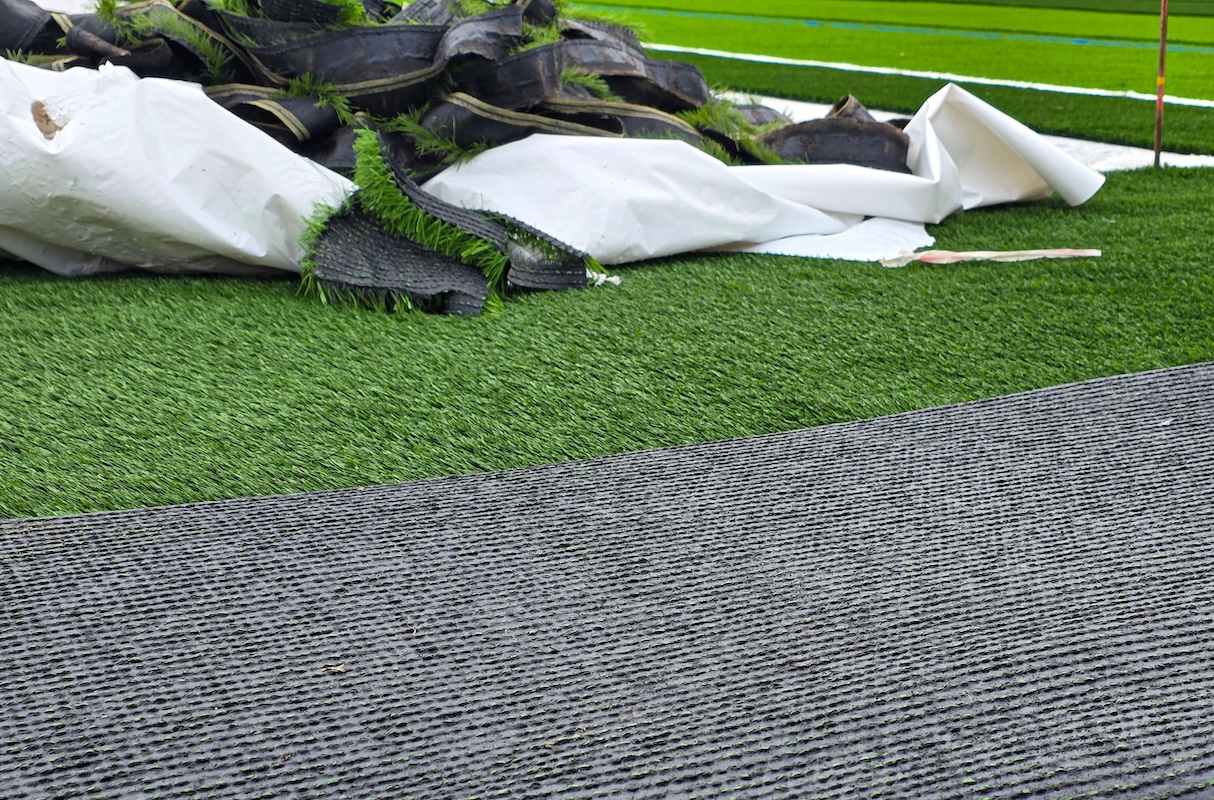
Because the field will be closed during the work, resurfacing is also a practical time to update other parts of the facility, such as line markings and logos, goals, protective netting, or scoreboards.
Once the new surface is in, an initial round of impact testing records a baseline that later tests can be compared against.1
With the timing set, the records gathered, and the evaluation done, many of the open questions are answered before the first roll of old turf comes up.
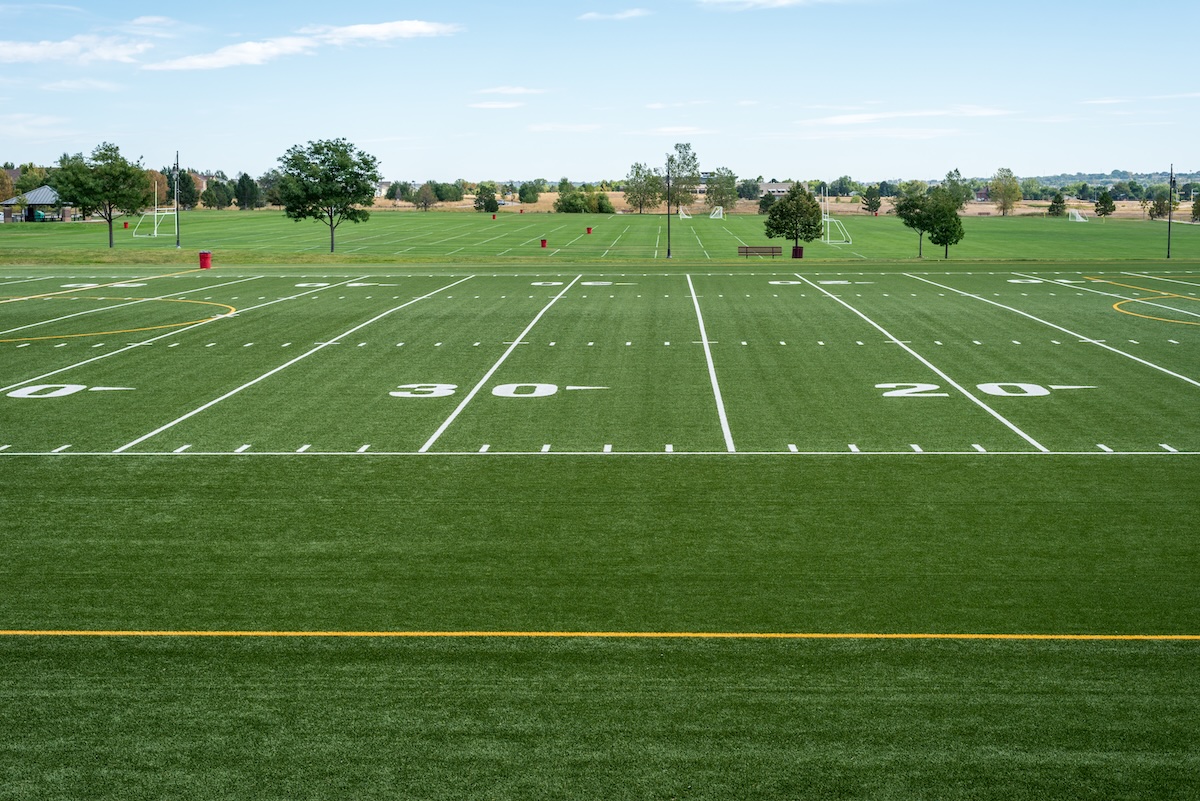
The rest of the construction follows in order: turf removal, base work, the new sports field installation, and testing, with the old materials all gathered up and headed for disposal or reuse. And the gates finally open on fresh lines, a new playing surface, and plenty more Friday nights and Saturday youth leagues ahead.
Artificial Turf Field Resurfacing FAQs
Q: What does it mean to resurface an artificial turf field?
A: Resurfacing replaces a worn turf playing surface. The old fibers and infill come out, the layers underneath are inspected and repaired as needed, and a new surface is installed, often on the existing stone aggregate base.
Q: How often does a turf field need to be resurfaced?
A: There is no single schedule. Hours of use, maintenance, climate, and the system installed all affect a field’s service life, so condition and test results are used to judge timing. Usage is a major factor in how often turf football fields are replaced, and the same holds for soccer, lacrosse, and multi-sport fields.
Q: Can old artificial turf be reused?
A: In many cases, yes. Turf with usable life remaining can be inspected, repaired, and reused in lower-impact settings such as batting cages, practice areas, and indoor training spaces. Turf that isn’t suited for reuse can be recycled instead.
Q: Does the stone base have to be replaced?
A: Often it does not. A base that is stable, drains well, and holds its grade can usually be repaired where needed and laser graded for the new surface. Widespread settlement or drainage failure is what typically moves a project toward a rebuild.
Q: What affects the cost to resurface a turf field?
A: Field size and the new turf system set the starting point. Handling of the old materials, base repairs and grading, drainage work, shock pad decisions, and line markings or logos all add to the scope, which is why estimates are prepared field by field. On a football field, the replacement footprint, the selected turf system, and the condition of the existing base are central to turf replacement costs.
Q: Can an artificial turf field be converted to natural grass?
A: It can be. The turf, infill, and any pad come out in much the same way, and the field is then rebuilt for grass, typically with a rootzone, drainage, and irrigation, followed by time for the grass to establish before regular play. Maintenance plans change as well, since natural grass needs mowing, irrigation, and other ongoing care.
Q: What is infill screening?
A: Infill screening runs used infill through screens to separate out debris, fiber fragments, and fine particles. Screened sand or rubber may be reused in a new field or another application, depending on its condition and the specifications of the system it is going into.
Q: How long does it take to resurface a turf field?
A: Removal is often the quickest phase. Base repairs and grading, installation, infill, and markings follow, and weather can extend any of them, so overall schedules are set project by project once the scope is known.
Rsurfacing starts with the field that is already there: how it was built, how it drains, and what the program needs from the next surface. An on-site evaluation brings those details together into a plan for removal, recycling, and the new playing surface.
UDC Sports provides artificial turf removal, infill removal and screening, and turf recycling through its work with ReTurf, with project management, labor, equipment, and off-site shipping of materials included in its removal services. To plan a resurfacing project, contact UDC Sports or call 828-518-5787.
References
1. Standard Specification for Impact Attenuation of Turf Playing Systems as Measured in the Field (F1936-19). ASTM International. View source
2. A Guide to Synthetic and Natural Turfgrass for Sports Fields: Selection, Construction and Maintenance Considerations, 4th Edition (2018). Sports Turf Managers Association. View source
3. Sustainable Materials Management: Non-Hazardous Materials and Waste Management Hierarchy. U.S. Environmental Protection Agency. View source
4. A Guideline to Recycle, Reuse, Repurpose and Remove Synthetic Turf Systems (October 2017). Synthetic Turf Council. View source
5. Standard Guide for Construction of High Performance Sand-Based Rootzones for Athletic Fields (F2396-11, reapproved 2019). ASTM International. View source
The information above is general. Field conditions, product specifications, and local requirements vary, and project details are confirmed through an on-site evaluation.

