
Last Updated on May 6, 2026 by UDC Sports
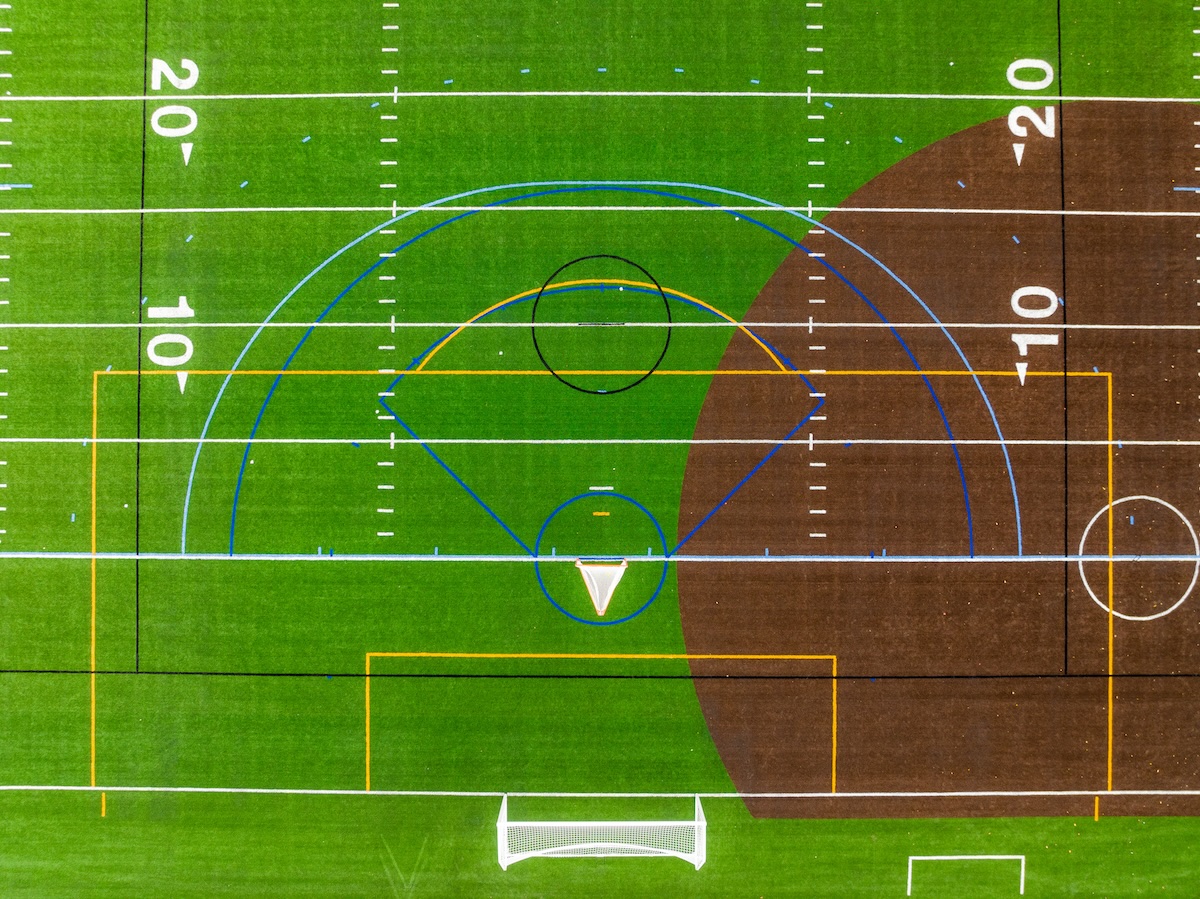
Synthetic turf athletic fields are no longer designed for just one sport. Many schools, parks, recreation departments, and private athletic complexes now expect a single field to support multiple programs throughout the year. A modern sports field might host football on Friday nights, soccer practices during the week, lacrosse tournaments in the spring, youth camps in the summer, physical education classes during school hours, and community events on weekends.
Many sports can successfully share the same synthetic turf field when the layout is planned carefully. In fact, there are far more workable combinations than you might realize.
Football and soccer may be the most common pairing, but they are far from the only option. Sports field turf striping combined with creative sports facility design can help a single field support multiple uses. Lacrosse, rugby, field hockey, flag football, PE programs, marching band, youth sports, training zones, and recreational programming can all be incorporated into the same athletic field design depending on the goals of the facility.
The possibilities are extensive, and every project is different. So a well-planned sports field construction project is less about finding one “correct” combination and more about building a field that matches the way the facility will be used.
Why Multi-Sport Turf Fields Are So Common

Synthetic turf field construction represents a significant investment, so many organizations want the surface to support as many practical uses as possible.
Building separate athletic fields for every sport is often unrealistic due to:
- Limited land availability
- Construction costs
- Maintenance demands
- Scheduling limitations
- Space restrictions on school campuses
- Growing community sports participation
A properly designed multi-sport synthetic turf field allows facilities to maximize usable space while creating more scheduling flexibility across multiple seasons.
This approach is especially common in:
- High schools
- Colleges
- Municipal athletic complexes
- Community recreation facilities
- Sports training centers
- Youth sports parks
- Shared-use athletic campuses
One field can potentially serve several teams, age groups, and organizations throughout the year. That doesn’t mean every field should include every possible sport, but it does mean there are usually more workable combinations than might be obvious at first glance.
The Most Common Multi-Sport Field Combinations
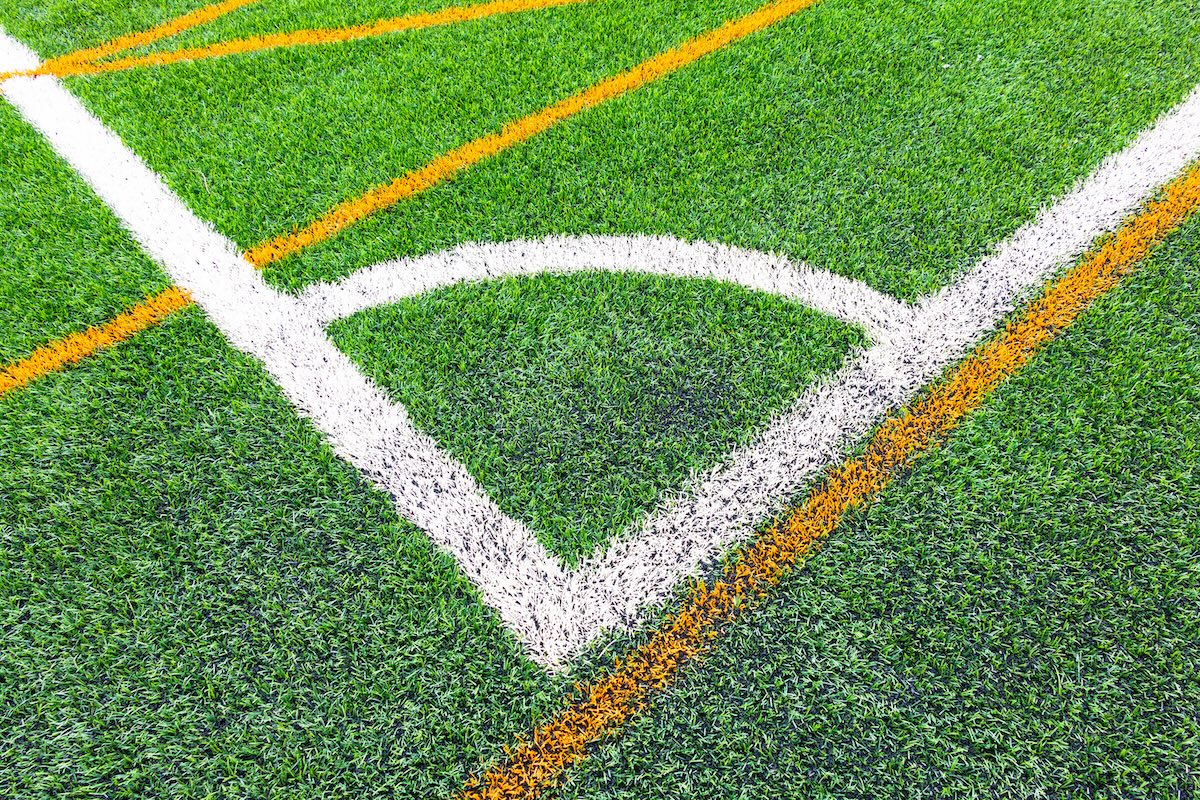
Some combinations appear more frequently because the sports naturally fit together from a layout and dimensions standpoint.
Football + Soccer
Football and soccer are among the most common shared synthetic turf field combinations.
Both sports use large rectangular playing surfaces, making them relatively compatible from a field construction and striping perspective. Many school stadium fields are designed primarily around football while incorporating soccer markings as a secondary layout.
This setup works well because:
- Both sports fit similar field orientations
- Shared goal areas are manageable
- The field dimensions are relatively compatible
- Seasonal overlap is often limited
- Schools commonly support both programs
Building a football/soccer field can function very well when line colors and visual priorities are planned correctly during the sports field construction process. You have to make sure the primary sport reads naturally at game speed while secondary markings stay visible without dominating the surface. But experienced sports field builders will also pay close attention to things like midfield congestion, sideline overlap, bench locations, goal placement, and how the field will look under stadium lighting, rather than purely on a design drawing.
Football + Soccer + Lacrosse
Adding lacrosse is extremely common on modern synthetic turf athletic fields.
Many schools and recreation departments build fields that support:
- Football in the fall
- Soccer across multiple seasons
- Lacrosse in the spring
This combination allows one field to remain highly active throughout much of the year.
Lacrosse does introduce additional striping considerations, including:
- Creases
- Restriction areas
- Substitution zones
- Specialized scoring areas
However, experienced sports field construction contractors regularly design layouts that allow all three sports to coexist without overwhelming the field visually.
In many regions, this has become one of the standard multi-use turf field models.
Soccer + Field Hockey
Soccer and field hockey often share synthetic turf facilities, particularly at schools and community athletic complexes.
These sports can work together effectively because:
- Both rely on rectangular field layouts
- The playing surfaces are compatible
- Seasonal scheduling can complement each other
- Shared facilities reduce construction costs
Field hockey does include unique markings and striking circles, so careful striping design becomes especially important.
A good multi-sport field design should allow athletes to identify their playing boundaries quickly without confusion during gameplay.
Football + Rugby
Rugby can often be integrated into football-focused athletic field construction projects.
The larger rectangular field footprint makes the combination feasible, especially at:
- Community sports parks
- Colleges
- Shared athletic facilities
- Municipal recreation complexes
Rugby markings differ significantly from football markings, so visibility and line hierarchy are important. The field should still feel organized rather than overcrowded.
Some facilities choose permanent rugby markings, while others use temporary or seasonal striping depending on how frequently the sport is played.
Soccer + Lacrosse
Soccer and lacrosse are another very common pairing, particularly at parks and recreation facilities.
These combinations are popular because:
- Both sports benefit from synthetic turf surfaces
- The seasons complement each other well
- Shared rectangular field footprints simplify planning
- Youth and adult leagues can use the same space
Many community athletic complexes now build fields specifically intended to support both sports from the beginning.
Youth Sports Overlay Fields
Not every shared turf field combination involves full-size varsity sports.
Many sports field construction projects include:
- Cross-field youth soccer layouts
- Small-sided training fields
- Flag football markings
- PE activity zones
- Recreational practice grids
This approach allows one full-size field to support multiple simultaneous activities, especially during youth programming and camps.
A large synthetic turf field can sometimes host several smaller games or practices at once when the layout is planned strategically.
The Possibilities Extend Far Beyond the Most Common Combinations

The combinations listed above are only a starting point.
In reality, multi-use athletic field construction can support a wide range of sports and activities depending on:
- Available space
- Program priorities
- Community demand
- Scheduling needs
- Age groups
- Governing rules
- Budget considerations
- Future growth plans
Some facilities combine:
- Football, soccer, lacrosse, and rugby
- Soccer, field hockey, and lacrosse
- Football, PE, marching band, and youth flag football
- Soccer training zones with recreational programming
- Varsity athletics with youth overlays
Others may include combinations that are unique to their school district, municipality, or athletic organization.
There is no universal list of acceptable combinations because synthetic turf sports field construction is highly adaptable. A layout that works well for one community may look completely different in another.
That flexibility is one of the biggest advantages of modern multi-purpose sports facility design.
Not Every Sport Combination Needs Permanent Lines
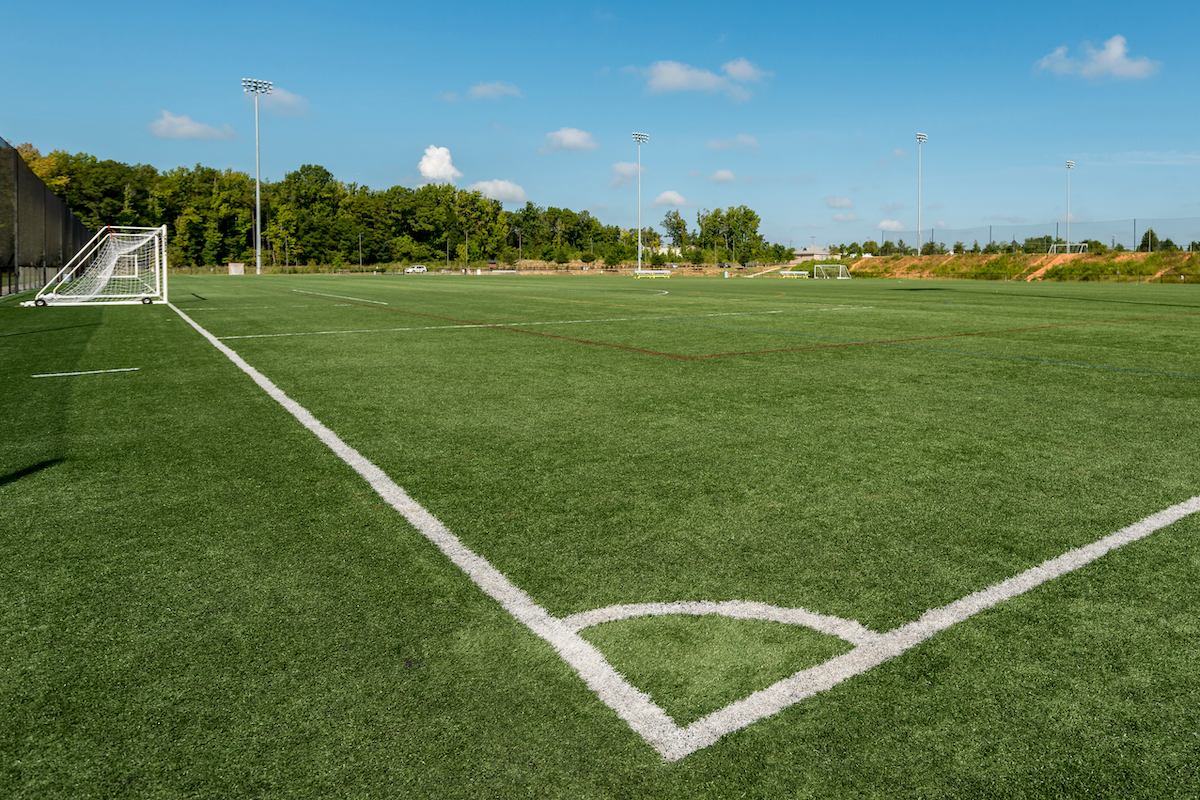
One misconception is that every supported sport requires permanent field markings. That isn’t always necessary. Many facilities use a combination of:
- Permanent inlaid lines
- Painted seasonal markings
- Temporary event striping
- Portable practice layouts
- Cones and movable training systems
For example:
- Football and soccer may receive permanent markings
- Lacrosse may use painted seasonal lines
- Youth programming may rely on temporary layouts
- Camp activities may use movable training zones
A well-designed sports field construction project accounts for both current and future programming needs without making the field feel visually cluttered.
How Sports Field Construction Affects Multi-Sport Compatibility
Naturally, successful multi-use athletic fields can’t be created with good striping alone. The overall sports field construction process has to factor in as well. Some important planning considerations include:
- Field dimensions
- Drainage systems
- Base construction
- Turf selection
- Shock absorption
- Lighting
- Goal placement
- Sideline space
- Spectator flow
- Equipment access
- Safety runoff areas
A field designed for one sport only may not function efficiently once additional sports are added later.
That is why many organizations now discuss long-term multi-use goals early in the athletic field construction planning process.
The earlier these conversations happen, the easier it becomes to build a field that supports multiple sports naturally.
Schools Often Need the Most Flexibility
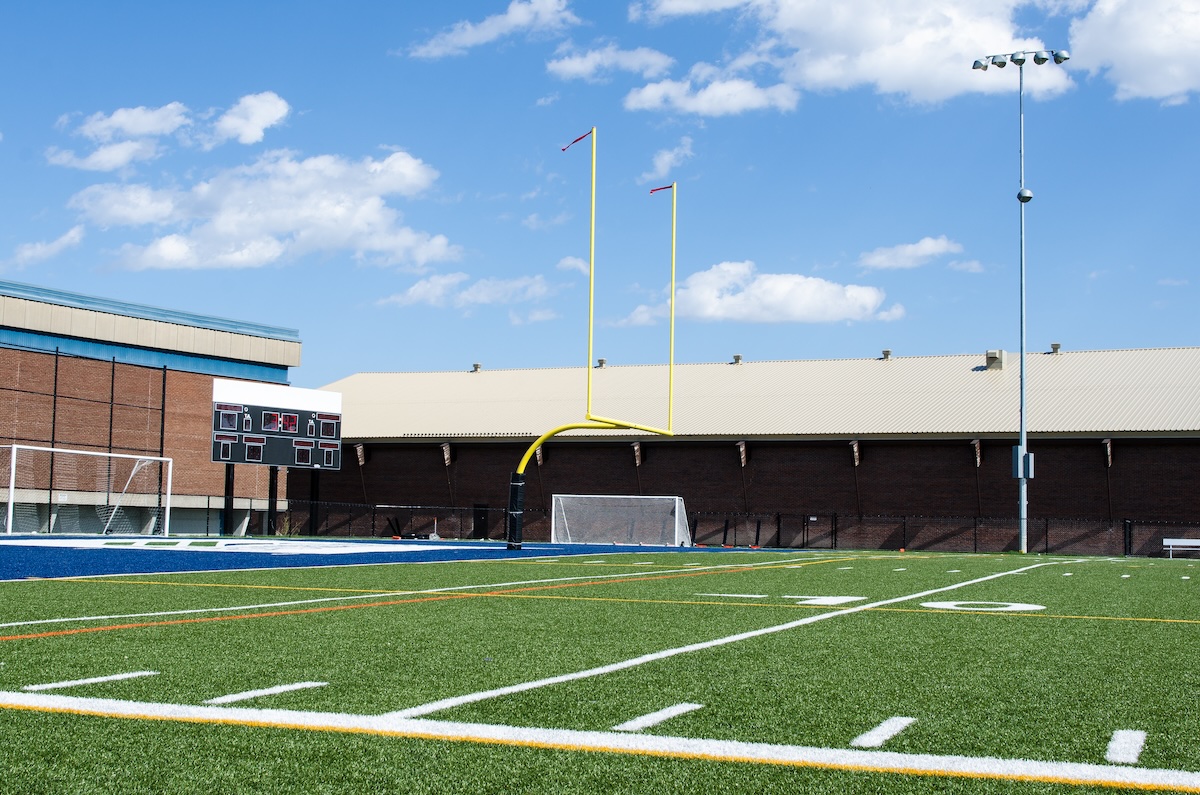
Schools frequently require the broadest mix of athletic field uses.
One synthetic turf field may need to support:
- Varsity athletics
- Junior varsity programs
- Middle school sports
- PE classes
- Marching band practice
- Community events
- Youth sports
- Summer camps
This is where thoughtful multi-sport sports field construction becomes especially valuable.
A school may not even know all the sports the field will support 10 years from now. New programs can emerge over time, and athletic participation trends can shift.
Designing with flexibility in mind allows facilities to adapt more easily in the future.
Parks and Recreation Facilities Often Use the Widest Variety of Combinations
Community athletic complexes and recreation departments often need even more flexibility than schools.
These facilities may host:
- Adult leagues
- Youth leagues
- Tournaments
- Clinics
- Camps
- Open recreation
- Seasonal rentals
As a result, parks departments often benefit from athletic field construction plans that allow multiple configurations over time. One weekend might involve full-size soccer matches, while the next includes youth lacrosse and flag football tournaments.
Some recreation fields support combinations that would rarely appear on a traditional school stadium field. Again, the possibilities are extensive, which is why planning around community usage matters more than forcing a standard template onto every project.
Private Athletic Facilities May Prioritize Training Versatility
Private sports complexes and training facilities often approach field sharing differently.
Instead of focusing only on official game layouts, they may prioritize:
- Training grids
- Small-sided games
- Skill development areas
- Flexible rental setups
- Multi-age programming
- Coaching efficiency
In these environments, synthetic turf field construction may emphasize versatility more than traditional stadium presentation.
Some facilities intentionally avoid excessive permanent markings so they can reconfigure the field for different users more easily.
The Best Multi-Sport Fields Are Planned Around Realistic Usage

A successful multi-use field is not simply one with the most lines.
The best fields are designed around realistic daily use.
That includes understanding:
- Which sports matter most
- Which programs use the field most often
- Which layouts require official dimensions
- Which uses are occasional
- How practices will function
- How scheduling will work year-round
Some facilities may only need two sports permanently integrated into the surface. Others may successfully support five or six activities through a mix of permanent and temporary layouts.
There are many combinations that can work well when the planning process reflects operational needs.
Questions to Consider Before Combining Sports on One Turf Field
Before finalizing a multi-sport athletic field construction project, it helps to think about:
- Which sports will use the field most often?
- Which sports require official game markings?
- Will youth programs use the field?
- Will the field host tournaments?
- Are future sports being considered?
- Which lines should be permanent?
- Which layouts should remain flexible?
- How busy will the field be throughout the year?
- Will practices happen simultaneously?
- How important is visual simplicity?
These conversations help determine which combinations make the most sense for the facility.
Some Combinations Work Better Than Others, but Creative Sports Facility Design Can Help
Certain sports are naturally going to fit together more easily because of similar field shapes or scheduling compatibility. But that said, many successful athletic field construction projects involve combinations that are highly customized to the local community, and a newly-constructed athletic facility does not need to look exactly like every other facility to function well.
Creative planning can allow:
- Shared practice spaces
- Rotating seasonal layouts
- Hybrid recreational programming
- Future sports expansion
- Youth overlays
- Multi-age training environments
As synthetic turf sports field construction continues evolving, facilities are becoming more creative in how they use limited athletic space.
Building a Multi-Sport Turf Field Starts With the Right Plan
The number of sports that can share the same synthetic turf field is larger than many people expect. Football, soccer, lacrosse, rugby, field hockey, youth sports, PE programming, camps, and training activities can all potentially coexist on the same surface when the field is planned carefully.
And even beyond the combinations discussed here, there are many additional layouts and programming approaches that may work well depending on the needs of the facility.
That flexibility is one of the biggest strengths of modern sports field construction.
A thoughtfully- designed synthetic turf field can support athletes, schools, recreation departments, and communities for years while helping facilities get more value from the same amount of space.

