

Last Updated on June 2, 2026 by UDC Sports
A football field is one of the most heavily used assets at many schools, parks, universities, and sports complexes. Between practices, games, physical education classes, community events, and seasonal weather conditions, football fields experience constant wear throughout the year. Whether you’re maintaining a synthetic turf football field or a natural grass playing surface, routine inspections and proactive upkeep can help support long-term field performance, appearance, and usability.
This football field maintenance checklist provides a general overview of common maintenance considerations for athletic facilities. Because field conditions, usage levels, climate, and construction methods vary significantly from one facility to another, maintenance programs should always be tailored to the specific field and its operational requirements.
For more information about planning, engineering, and construction, see our guide to turf football field installation.
Why Football Field Maintenance is Important
A football field is one of the hardest-working assets on any athletic campus. Between practices, games, physical education classes, community events, and seasonal weather, the playing surface is exposed to constant stress throughout the year.
Regular maintenance helps preserve field conditions, support player performance, and extend the lifespan of the facility. It also gives field managers an opportunity to identify small concerns before they become larger, more disruptive problems.
Areas that receive repeated foot traffic may begin to show signs of wear. Drainage patterns can change over time. Field markings fade, edges become less defined, and routine use can gradually affect the overall consistency of the surface. Severe weather, maintenance equipment, and everyday use can all contribute to changes that may require attention.
A proactive maintenance program helps facilities stay ahead of these issues. Rather than waiting for noticeable deterioration to occur, regular inspections and upkeep allow maintenance teams to address developing concerns as part of normal operations, helping protect the long-term condition and functionality of the field.
A consistent maintenance strategy helps facility managers address these concerns before they develop into larger repair or renovation projects.
General Football Field Maintenance Checklist
Regardless of surface type, most football fields benefit from regular visual inspections because the people who spend time on the field are often the first to notice when something changes. A worn area near the hash marks, a section that seems to hold water longer after rain, a loose piece of fencing, or a damaged sideline transition may seem minor at first, but small issues have a habit of becoming larger maintenance projects when they’re overlooked.
✓ Playing surface condition
✓ Drainage performance
✓ Field markings
✓ Sideline conditions
✓ Goal post areas
✓ Player access points
✓ Spectator access areas
✓ Safety concerns around the field perimeter
✓ Fencing and gates
✓ Lighting infrastructure
✓ Team bench areas
✓ Storage and maintenance access routes
Taking the time to routinely walk the facility and observe conditions firsthand can help identify concerns early, while they’re still relatively easy to address.
Synthetic Turf Football Field Maintenance Checklist
One of the most common misconceptions about artificial turf football fields is that they require no maintenance. While synthetic turf generally requires less ongoing maintenance than natural grass, routine care remains an important part of long-term field management.
Most synthetic turf maintenance programs focus on preserving field consistency, managing surface debris, monitoring wear, and maintaining overall field appearance.
Surface Cleaning
Football fields can accumulate leaves, litter, dirt, and other debris throughout the year. Regular cleaning helps keep the field presentable and may support drainage performance.
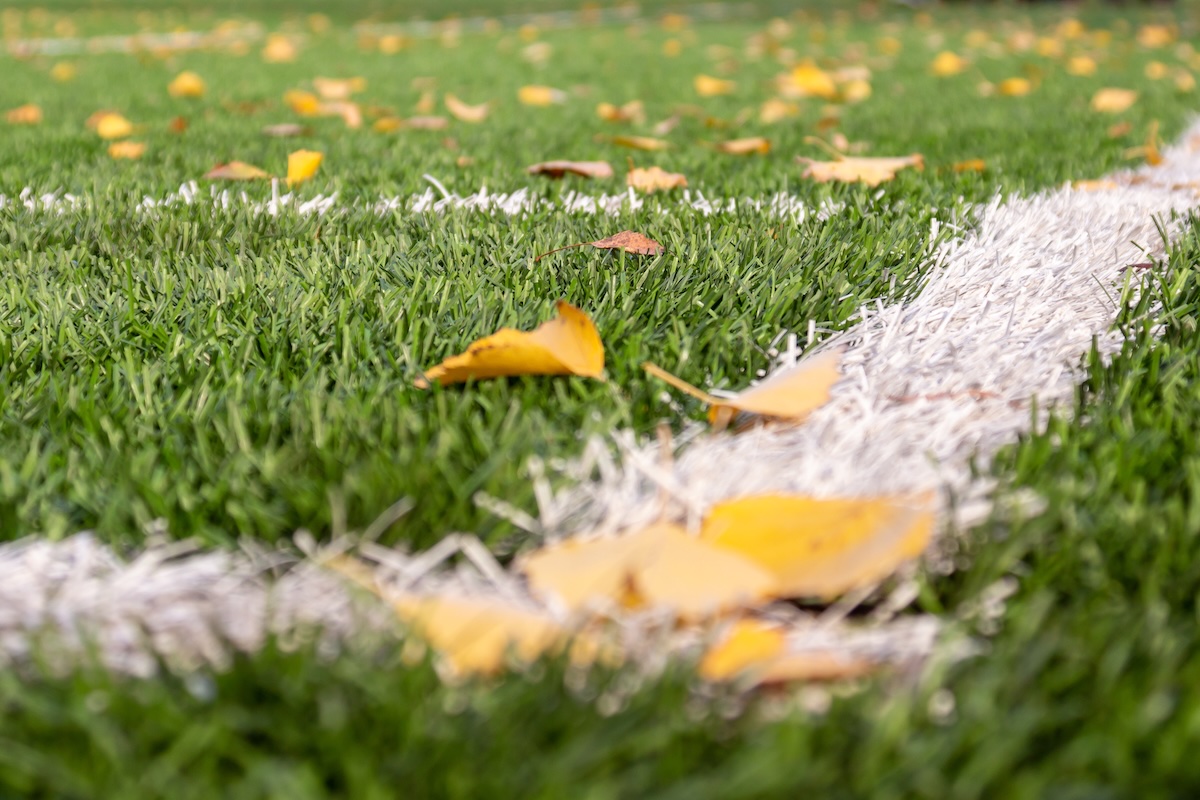
Items commonly removed from synthetic turf fields include:
- Leaves
- Grass clippings from adjacent areas
- Trash and litter
- Organic debris
- Windblown materials
Monitoring High-Traffic Areas
Certain portions of a football field naturally receive more use than others.
Areas often monitored closely include:
- Midfield
- Hash mark areas
- Sidelines
- Goal lines
- Team bench zones
- Player entry locations
These locations may show signs of wear earlier than lower-traffic portions of the field.
Seam and Edge Inspections
Synthetic turf systems contain seams, perimeter transitions, and anchoring systems that should be inspected periodically.
Facility operators often look for:
- Visible separation
- Edge lifting
- Surface irregularities
- Changes near perimeter conditions
Addressing small issues early can help prevent larger repair projects later.
Field Marking Maintenance
Depending on the type of field and marking system used, maintenance considerations may include:
- Monitoring painted lines
- Visually inspecting inlaid markings
- Evaluating field logos
- Reviewing multi-sport line visibility
Note: Inlaid turf markings are essentially zero maintenance — that’s the whole point of them. They’re cut into the field during installation, and they’re done. You’re not having to worry about repainting before homecoming, or chasing faded hash marks during the season, or having officials complain that they can’t see the sideline.
Painted markings are a different story. Plan on repainting multiple times a season when the field is being used.
If you’re building a new sports field, inlaid markings may be worth the upfront premium.
Natural Grass Football Field Maintenance Checklist
Natural grass football fields typically require a broader maintenance program because the playing surface is a living system that responds to weather, usage, and seasonal conditions.
Maintenance requirements vary significantly depending on climate, grass species, field construction, and available resources.
Mowing & Turf Management
Routine mowing is one of the most visible components of natural grass field maintenance.
Field managers typically consider:
- Grass density
- Surface uniformity
- Seasonal growth patterns
- Overall field appearance
Irrigation Monitoring
Many natural grass football fields rely on irrigation systems to support healthy turf conditions.
Maintenance may include:
- Inspecting sprinkler heads
- Checking irrigation coverage
- Monitoring system operation
- Identifying leaks or damage
Managing Wear Areas
Natural grass fields often experience concentrated wear in predictable locations.
Common high-use areas include:
- Center field
- Goal lines
- Team sidelines
- Practice zones
These areas frequently require additional attention throughout the season.
Monitoring Soil Conditions
Field performance can be influenced by underlying soil conditions.
Facility operators often monitor:
- Compaction
- Drainage performance
- Surface firmness
- Turf health indicators
Football Field Drainage Maintenance Checklist
Drainage is one of the most important aspects of football field performance. Both synthetic turf and natural grass systems depend on effective water management.
Poor drainage can contribute to field closures, surface deterioration, and maintenance challenges.
Inspect Drainage Structures
Drainage systems vary from facility to facility, but inspections often include:
- Drain inlets
- Outlet structures
- Perimeter drainage areas
- Collection points
- Stormwater infrastructure
Monitor Standing Water
After significant rainfall events, facility managers often evaluate how water moves across and away from the field.
Recurring areas of standing water may indicate developing drainage concerns that warrant further evaluation.
Watch for Erosion
Drainage-related erosion can affect areas surrounding the football field as well as access routes and spectator spaces.
Regular inspections help identify changes before they become more significant issues.
Football Field Infrastructure Checklist
Maintaining a football facility involves much more than the playing surface alone.
Supporting infrastructure should also receive periodic attention.
Goal Posts
Inspect goal posts and related components for signs of wear, damage, or movement.
Field Lighting
Lighting systems are often critical to facility operations.
Maintenance considerations may include:
- Fixture inspections
- Pole evaluations
- Electrical system reviews
- Operational testing
Fencing and Gates
Perimeter fencing helps manage access and protect facility assets.
Routine inspections may focus on:
- Gate operation
- Fence condition
- Security concerns
- Damage from weather or impacts
Bleachers and Spectator Areas
Public-use facilities often include seating areas, walkways, and viewing spaces that require ongoing maintenance and inspection.
Seasonal Football Field Maintenance Checklist
Pre-Season Maintenance
Before practices and games begin, many facilities perform a comprehensive review of field conditions.
- Inspect playing surface
- Review drainage systems
- Evaluate field markings
- Inspect equipment
- Address offseason repairs
- Verify facility readiness
In-Season Maintenance
During active football seasons, maintenance efforts often focus on preserving field conditions and identifying emerging issues.
- Monitor wear patterns
- Remove debris
- Inspect infrastructure
- Evaluate drainage performance
- Address minor repairs
Off-Season Maintenance
The offseason often provides an opportunity for larger projects that may be difficult to complete during periods of heavy use.
- Conduct deeper inspections
- Plan repairs or renovations
- Review maintenance records
- Evaluate future capital needs
- Schedule specialty services if needed
Common Football Field Maintenance Concerns
While every facility is different, some issues appear more frequently than others.
- Poor drainage
- Surface wear in high-traffic areas
- Damaged field markings
- Compaction concerns
- Infrastructure deterioration
- Debris accumulation
- Weather-related damage
- Edge and perimeter issues
Routine inspections can help identify these concerns before they affect field usability.
Many maintenance tasks can be performed by facility staff, but certain situations may benefit from professional evaluation.
Examples may include:
- Recurring drainage problems
- Significant surface deterioration
- Major repair projects
- Field renovation planning
- Specialized turf maintenance needs
- Infrastructure assessments
Qualified sports field contractors can often help identify underlying issues and recommend appropriate solutions for specific site conditions.
Final Thoughts

A football field maintenance checklist provides a practical framework for protecting athletic facilities and supporting long-term field performance. While every facility’s maintenance program will look slightly different, regular inspections, proactive upkeep, and timely repairs can help extend the useful life of both natural grass and synthetic turf football fields.
Whether managing a school stadium, municipal sports complex, community recreation facility, or multi-sport athletic venue, a structured maintenance approach can help keep football fields in good condition throughout the year.
Note: Maintenance requirements vary based on field type, climate, construction methods, manufacturer recommendations, usage levels, and local conditions. This article is intended for general educational purposes only and should not be considered a substitute for guidance from qualified sports field professionals, contractors, engineers, or manufacturers.

